Why Can’t You See Your Baby at Night? (It’s Not the IR LEDs — It’s the Filter)
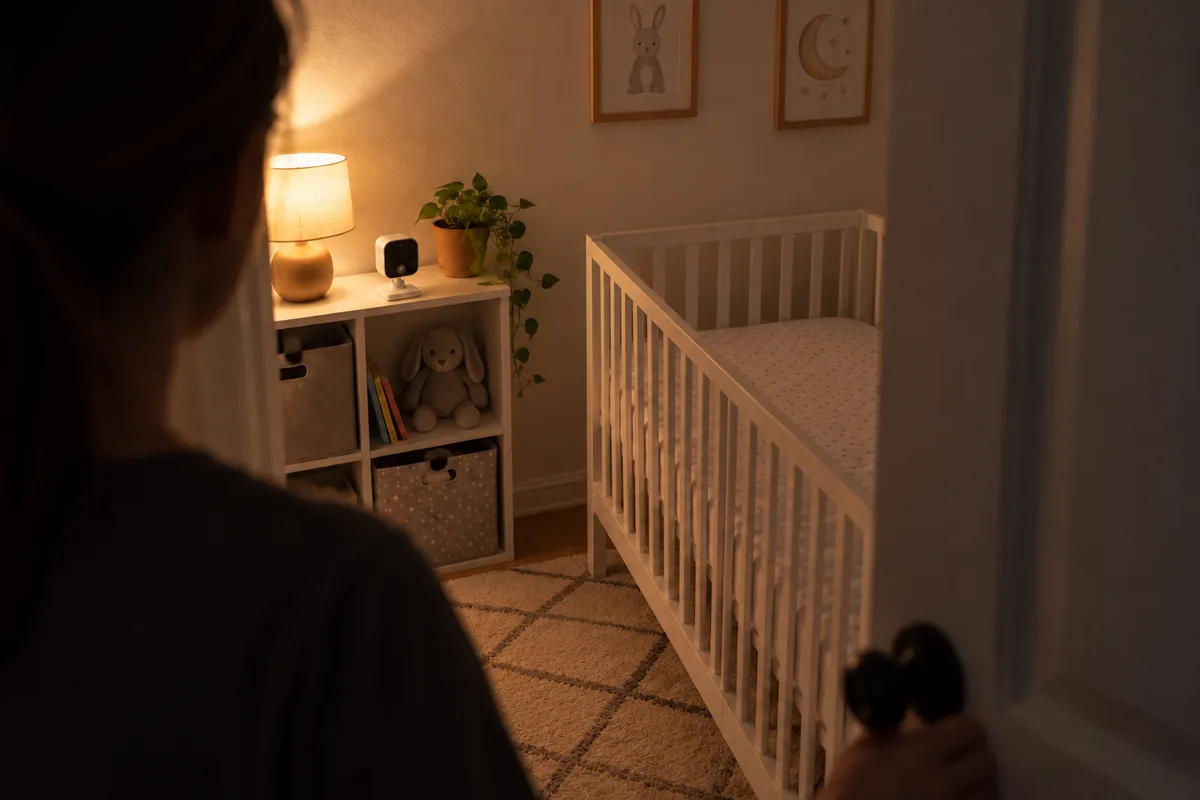
I still remember the first time I turned a prototype’s night vision on in our darkened test room.
The lights went off. The IR LEDs kicked in. And the monitor’s screen filled with what I can only describe as grey soup. The baby doll was maybe a meter away, and I genuinely couldn’t tell whether its eyes were open or closed. That’s the moment I understood why "night vision" is the single most complained-about spec in this category — because too many products promise it, and too few actually deliver it.
If you’re sourcing baby monitors, this is the spec that separates a product parents trust from one they return. So let me walk you through where it actually breaks — because it’s almost never where sellers think it is.
Why Does Night Vision Fail When the Spec Sheet Says "Clear IR Vision"?
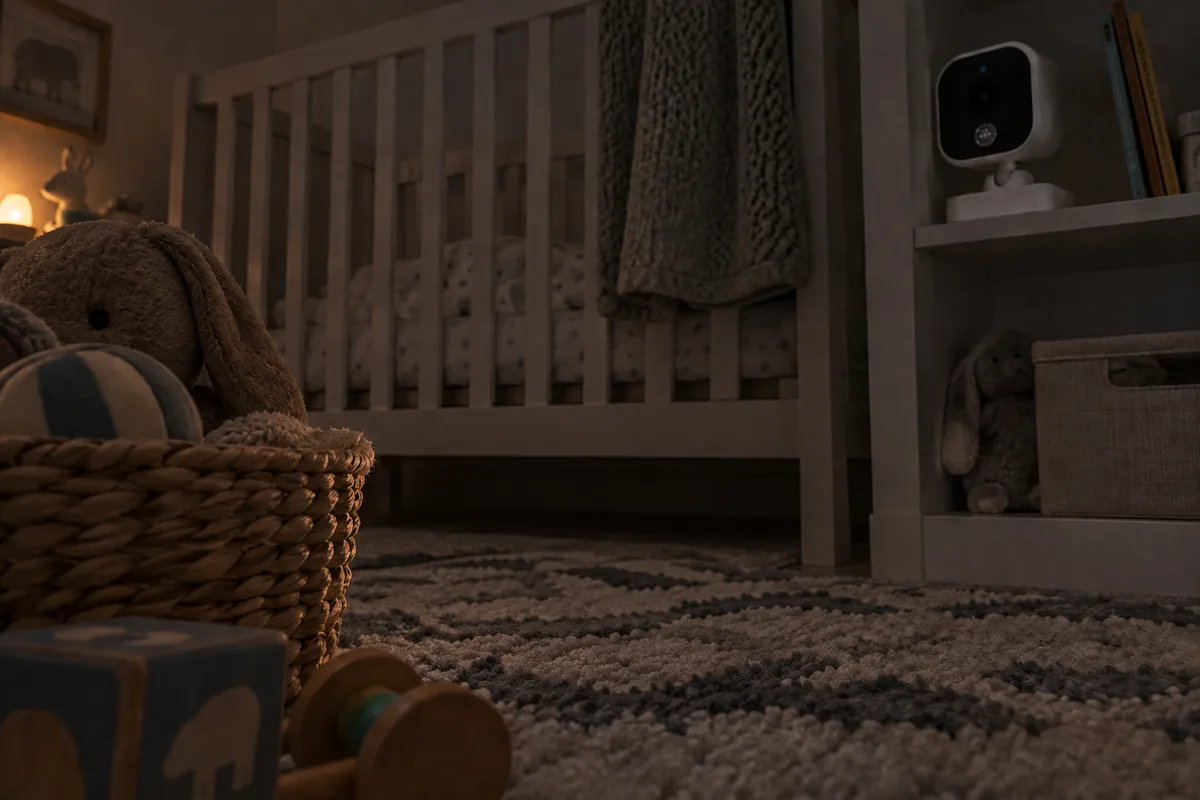
Parents check on their child far more at night than during the day. And the most consistent complaint across baby monitor reviews is that night vision is "too dark," "too blurry," or simply unusable beyond a meter or two.
Here’s the part most people miss: the problem is almost never the IR LEDs. The LEDs are doing their job — flooding the room with infrared light the human eye can’t see. The failure happens in the tiny optical component sitting between the lens and the sensor.
That component is the IR-cut filter. Get it wrong, and every dollar you spent on brighter LEDs is wasted before the light ever reaches the sensor.
What’s Actually Sitting Between the Lens and the Sensor?
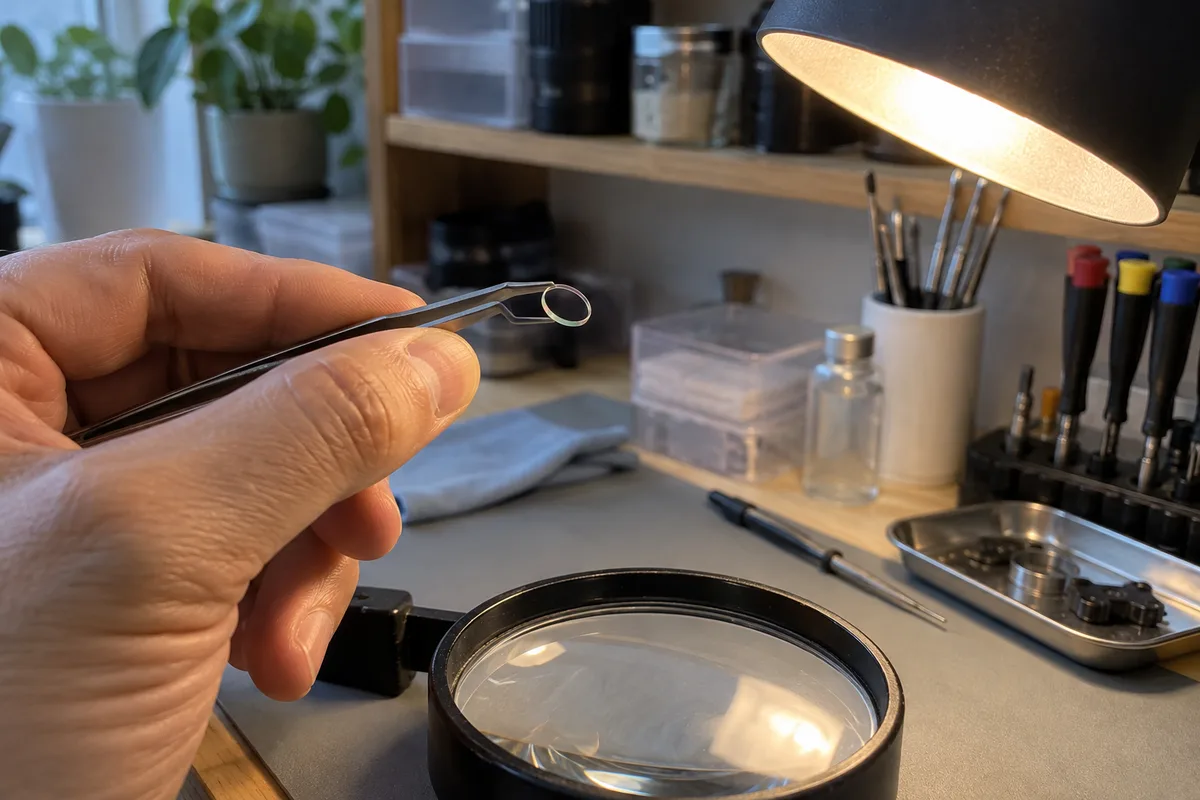
An IR-cut filter is a small piece of coated glass that decides what happens to infrared light on its way to the CMOS image sensor. It has two jobs, and they pull in opposite directions:
- Daytime: It must block infrared. If it doesn’t, IR wavelengths contaminate the color image and you get that permanent pink/purple cast nobody wants.
- Nighttime: It must let infrared through. In a dark room, IR is the only light source available once the LEDs turn on.
The Compromise That Costs You Returns
For cost reasons, most legacy monitors use a single dual-spectrum filter — one piece of coated glass trying to do both jobs. The result is a filter that’s mediocre at everything:
| Issue | Cause | Result |
|---|---|---|
| Daytime color shift | Incomplete IR blocking | Reddish/purplish image even in bright light |
| Weak IR at night | Same coating only passes a fraction of IR | LEDs work hard, sensor still starved |
| No optimization for either mode | One coating compromises both roles | Mediocre day and night |
A single optical filter of this type typically transmits only a fraction of the infrared that hits it. In practical terms, most of your IR LED output never reaches the sensor. And if that sensor is a low-end VGA chip to begin with, you get the grey-soup image I saw in our test room.
How Does a Mechanical Dual-Filter (ICR) Fix What a Single Filter Can’t?
The fix is conceptually simple but demands precision manufacturing: replace the single compromise filter with two dedicated filters and switch between them mechanically — what the industry calls an ICR (IR-cut removable) mechanism.
Here’s how it works:
- A tiny actuator physically slides one filter out of the optical path and the other in.
- Daytime filter: Optimized for full-spectrum visible light with complete IR blocking. Color comes back true-to-life.
- Nighttime filter: Optimized for maximum IR transmission. The LEDs illuminate the scene efficiently, and the sensor finally gets a clean signal.
The difference is objective and testable. When a monitor moves from single-filter to dual-filter:
- Effective IR illumination jumps dramatically — we’ve measured roughly a 3× improvement in usable IR at the sensor
- Daytime color is restored — no more permanent pink tint
- Usable night range extends from about 1–2 meters to 4–6 meters with the same LED power
- Facial detail becomes visible — parents can finally tell whether the baby’s eyes are open or closed
What Should You Actually Verify Before You Order?
When you’re evaluating suppliers, night vision comes down to four questions. Ask for evidence on each — not claims.
1. Is the filter single or dual?
Don’t accept "IR night vision" as an answer. Ask directly: Is this a single dual-spectrum filter, or a mechanical dual-filter (ICR) system? If the vendor can’t answer clearly, they likely don’t control their own optical design — which means they can’t fix it for you later either.
2. What’s the sensor’s low-light sensitivity?
Higher-resolution sensors (720P / 1MP and up) generally have larger pixel sites and better low-light behavior than legacy VGA. Ask for the sensor model number and its minimum illumination figure, usually rated in lux.
3. Which IR wavelength, and how many LEDs?
850nm LEDs produce a faint red glow you can see; 940nm LEDs are invisible to the eye but less efficient. Count, arrangement, and lens angle all determine whether coverage is even or spotty in the corners.
4. How do they measure night vision range?
A credible answer names the test environment (complete darkness), the distance at which a face stays identifiable, and whether they use the unit’s own IR illuminator or external help. Vague answers usually mean no real testing was done.

What About the Moving Parts? (The Reliability Question Nobody Asks)
Dual-filter systems add a mechanical component to every camera module. That actuator has to cycle reliably tens of thousands of times over the product’s life. If it sticks — from dust, poor lubrication, or sloppy assembly — the camera can get permanently stuck in day or night mode.
This is where factory discipline matters more than the datasheet. When I audit a camera-module line, I look at three things:
- Cleanroom conditions — dust is the #1 enemy of moving optical parts
- Cycle-testing data for the IR-cut mechanism, not just a spec claim
- Incoming QC on the filters themselves — coating quality directly sets your IR transmission
FAQ
Q: Is "invisible" 940nm night vision better than 850nm?
Not necessarily. 940nm has no visible red glow (nice for the nursery), but it’s less efficient — the sensor receives less usable IR for the same LED power. 850nm is more common because it delivers a brighter, clearer image. Ask which wavelength the unit uses and why.
Q: Can I check night vision quality from a sample photo?
Photos are marketing. Night vision has to be evaluated in complete darkness, with the camera pointed at a face at 3–4 meters. Insist on seeing it live, or get a sample unit and test it yourself.
Q: Does dual-filter cost meaningfully more?
It adds a small actuator and one more filter — a modest BOM increase that is routinely recovered many times over by avoiding "too dark at night" returns. From what I’ve seen, it’s one of the highest-ROI upgrades in the category.
Q: What should I ask for in the night vision test report?
Three things: the ambient light level (should be zero), the distance at which facial features remain identifiable, and whether the measurement used the unit’s built-in IR illuminator. Any report missing these isn’t a real test.
At Anhong, we stopped treating night vision as a checkbox years ago. It’s an optical system — filter, sensor, LEDs, and the assembly discipline behind them. Get any one of them wrong, and the parents who rely on your product at 3 AM will notice before your first review comes in.
If you’re sourcing or upgrading a baby monitor line, bring me your night vision requirements and your target price point. We’ll figure out together which filter architecture actually fits your market — before you commit to a BOM you’ll regret.


