How Should Brands Define Lullaby Playback and Monitoring-Audio Priorities?
Define lullaby, monitoring, talk-back and alert priorities before sourcing a baby monitor, then make the sample review and support brief clear.
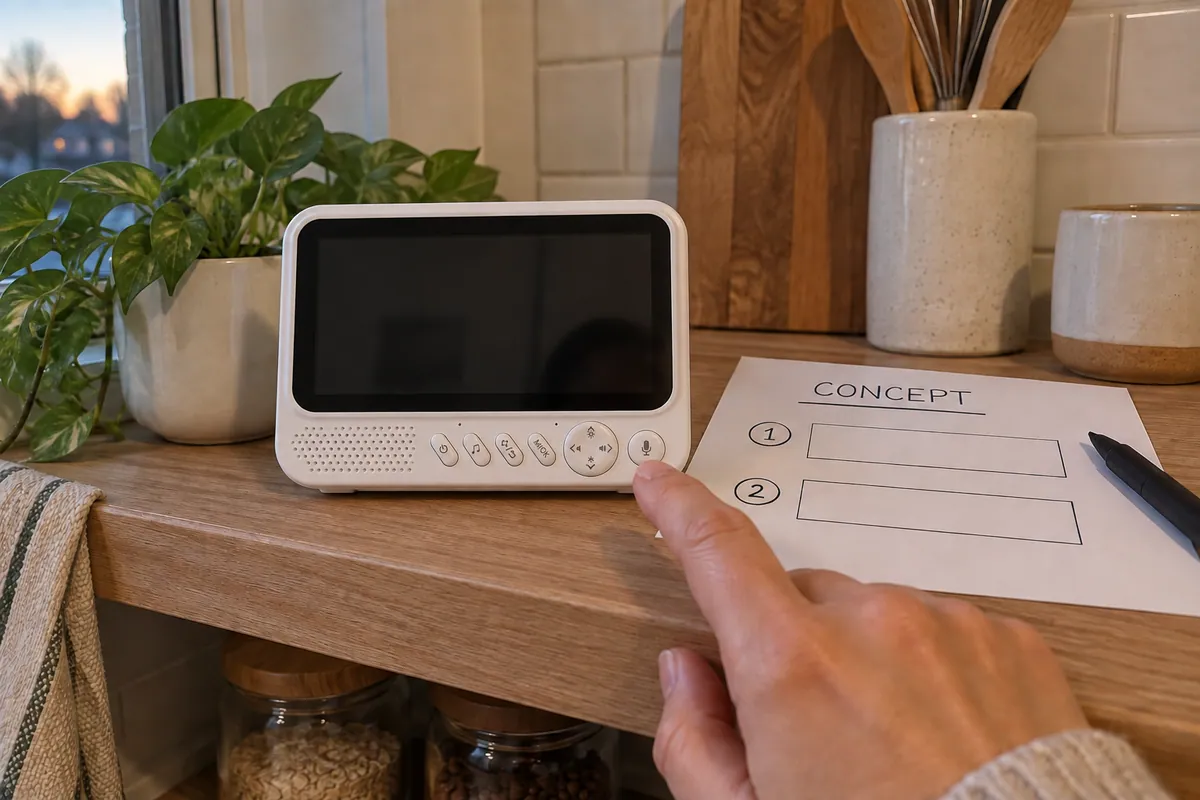
A lullaby function can sound like a harmless checklist item. In a baby monitor, it sits beside live monitoring audio, talk-back, connection alerts, and low-battery notifications. If their priorities are not defined, a buyer can approve a pleasant playback demo and later discover that the product behaves ambiguously when the parent needs to hear something else.
The sourcing question is not whether a product has lullabies. It is which sound source has priority in each user situation, how that choice is communicated, and which choices the brand wants to make configurable.
Why do sound sources need an explicit order?
Different sounds carry different purposes. Playback is chosen entertainment or soothing context; monitoring audio is a live observation path; talk-back is a deliberate conversation action; an alert is a request for attention. Treating them as one undifferentiated “audio feature” hides the moments when they overlap.

We recommend a written priority matrix before a sample review. It should describe behavior, not presume a technical implementation. For example, the brand may ask whether starting talk-back pauses playback, whether a connection-loss signal remains noticeable, and what a user sees or hears when a control changes the active source. The answer may vary with the offered platform, so it must be confirmed against the configuration rather than copied from a generic brochure.
What should a priority matrix include?
| Situation | Audio sources present | Brand decision to define | Sample observation |
|---|---|---|---|
| playback starts during routine viewing | playback and monitoring | which source is foreground? | audible result and visible state |
| parent starts talk-back | talk-back, playback, monitoring | does playback pause, lower, or continue? | start and exit sequence |
| product raises a status alert | alert and active audio | how is attention requested? | acknowledgement path |
| user changes a setting | any active source | what remains active afterward? | state clarity |
The table does not declare one answer universally better. A compact entry product may deliberately choose fewer settings; a premium concept may need more explanation and support ownership. What matters is that the sales promise, user guide, and sample behavior describe the same decision.
How should a brand review the overlap without inventing a test result?
Start with a simple sequence that a reviewer can repeat. Set the selected playback option, establish the intended monitoring state, trigger the chosen talk-back action, then leave it and observe the resulting state. Repeat for the selected alert condition only where the configured sample can genuinely demonstrate it. Record the control path, visible cues, software build, and unresolved questions. Do not assign a “best” volume level or claim that an alert is always heard; those conclusions depend on the product, environment, user settings, and acceptance criteria.
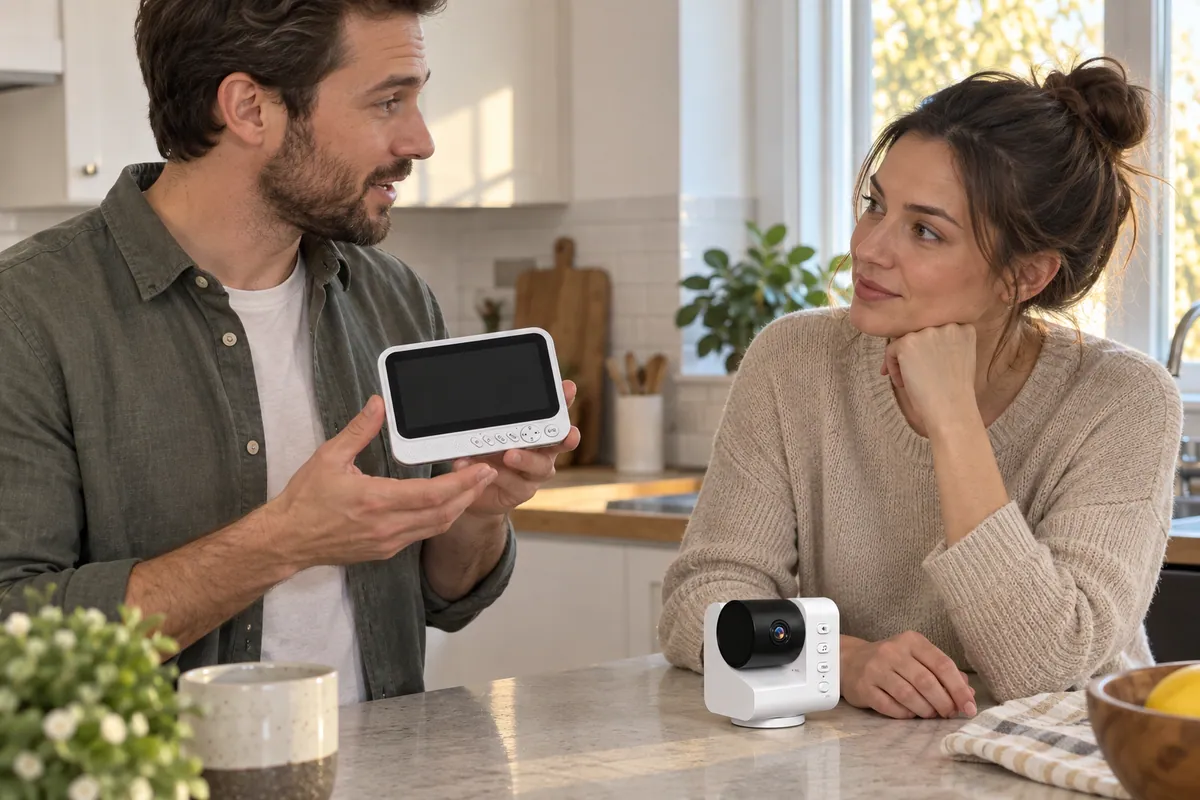
This focus differs from a review of acoustic noise, feedback, or two-way talk timing. Those are valid but separate technical questions. Here the buyer is defining policy: which signal takes precedence and who owns the user expectation when sources collide.
Where does ANHONG fit into this decision?
ANHONG’s product-definition, firmware and App/UI services connect the intended sound priority with the control that explains it. A brand can bring the matrix into a product-development discussion, identify fixed and configurable choices, then review agreed flows on the offered sample. This combination is useful when changing a sound rule also requires a different button state or message. It is not evidence that every model supports every audio state. Confirm the selected model, interface and configuration before defining the requirement as deliverable.
How should this choice reach packaging and support?
Treat each approved priority as a small cross-functional decision. Product copy should state the function without implying a safety outcome. The quick-start guide should show the controls a user will actually encounter. The support team should know which settings are configurable and which are fixed in the approved version. If a retailer asks for a shorter feature line, it is better to omit an unverified behavior than to compress several sound sources into a misleading promise. This handoff is especially useful when the same platform is localized for several channels: translated labels must still describe the same priority decision.
For a private-label product, the matrix can also prevent a common handoff gap. Marketing may describe “comfort sounds,” while support receives questions about whether talk-back interrupted monitoring. Put the selected behavior, labels, and known limitations in the same approval record. That is more useful than a long list of melody names.
What new tool can keep the discussion practical?
Use an Audio-Priority Decision Card for each SKU. One side states the intended user promise in plain language. The other names the active sources, priority order, user controls, visible state, sample version, and owner for unresolved behavior. It is deliberately small enough to travel from product briefing to sample review and support preparation.
What should buyers retain after approval?
Retain the selected matrix, the sample/build identifier, the recorded action sequences, copy approved for packaging or instructions, and a list of configurations that differ. If playback behavior changes in a later firmware or product revision, the card tells the team exactly which expectation needs re-review.
Frequently asked questions: how should audio priority be defined?
Should playback volume and monitoring volume share one control?
Treat that as a separate control decision. Name which endpoint and sound path each adjustment affects, then check that a reviewer can change the intended level without accidentally changing another. Do not infer independent volume controls from the presence of multiple audio functions.
What if the sample cannot demonstrate a requested alert overlap?
Mark that matrix cell unobserved. Ask for an agreed demonstration route or a later configured sample; do not simulate a sound externally and record it as the product's own priority behavior.
What if playback can be started from two interfaces?
If both routes are supported, include a start on one endpoint and a stop on the other. Record which interface reports the current state. Sound priority and shared-state confirmation are different requirements, so an audible result alone does not close both.
Should every melody be repeated in the overlap review?
First establish whether options use the same documented control behavior. If their routes differ, preserve that distinction in coverage. A small sample of tracks should not be presented as proof that every option has identical behavior.
To connect an audio feature brief with the actual product flow, contact ANHONG.