Baby Monitor OEM and ODM Services
ANHONG supports multiple development depths, from existing product platforms and private label programs to OEM configuration work and ODM product development. The correct path depends on target market, differentiation goals, engineering scope, quantity, timing and compliance requirements.
A deeper development route is not automatically better. The right mode depends on differentiation goals, ownership, budget, timing, quantity and technical feasibility.
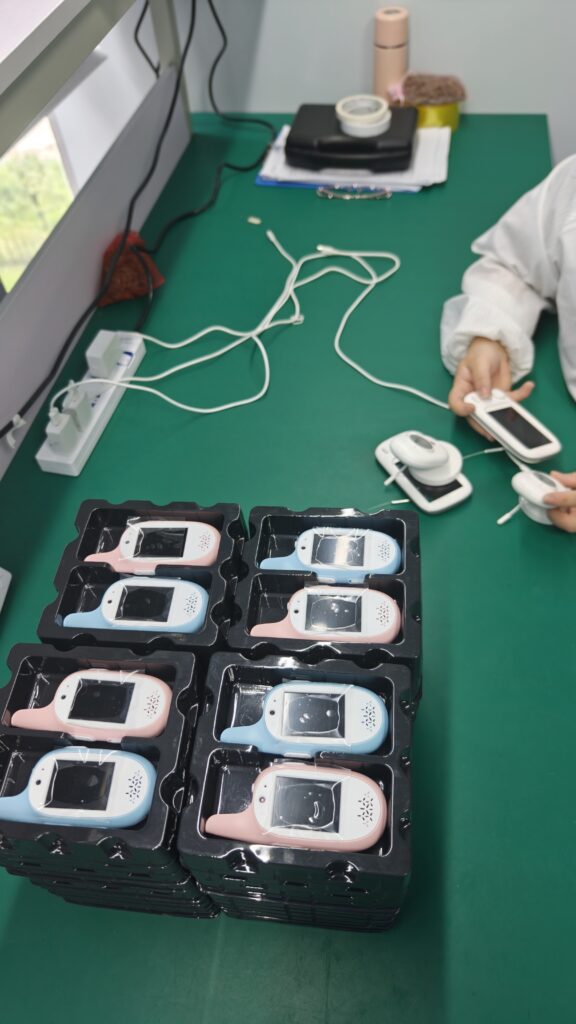
Product Platforms and Project Evidence
Start from a real product direction, then define the required OEM or ODM scope around the target market.
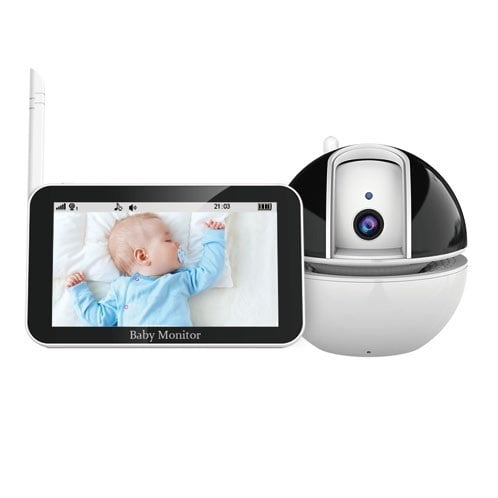
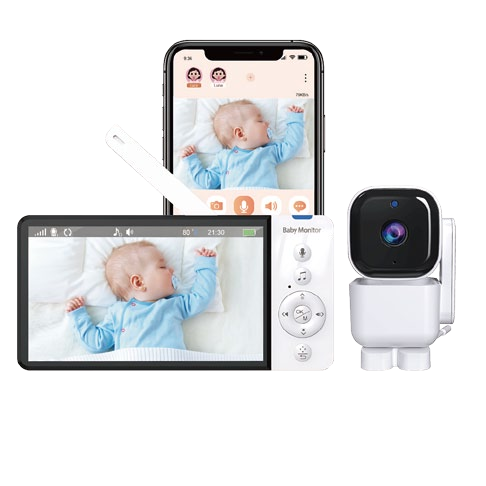
White Label, OEM or ODM?
Use the comparison to set a realistic project route before discussing individual features.
White Label
Start from an existing platform with agreed branding and packaging localization.
OEM
Adapt a suitable platform through selected appearance, interface, firmware or feature work.
ODM
Coordinate product definition, ID, structure, hardware, firmware, App/UI and validation as a deeper project.
| Decision point | White Label | OEM | ODM |
|---|---|---|---|
| Starting point | Existing product platform | Existing platform with selected changes | Defined product opportunity and development brief |
| Typical scope | Brand, box, manual, labels | Selected ID, UI, firmware, packaging or function work | Product definition, engineering and system coordination |
| Schedule and MOQ | Increase with customization depth, validation needs, materials, tooling, compliance and order structure. Confirm per project. | ||
Scope the Work Across Product Layers
Every option remains subject to platform compatibility, ownership, feasibility and validation.
| Product layer | White Label | OEM | ODM |
|---|---|---|---|
| Brand & packaging | Core scope | Core scope | Core scope |
| ID & color | Limited platform options | Selected changes | Project-defined |
| Mechanical structure | Not typical | Selected changes | Project-defined |
| Hardware & firmware | Configuration only | Selected work | Coordinated development |
| App & UI | Brand/localization where applicable | Selected scope | Project-defined system |
| Testing & compliance | Existing model review | Updated scope review | Project validation plan |
From Requirements to Repeat Production
Decision gates protect product definition, sample alignment, compliance scope and mass-production consistency.
Requirement alignment
Target user, market, channel, quantity, functions and differentiation.
Platform and feasibility review
Select the route, identify risks and clarify ownership.
Design and engineering
Coordinate applicable ID, structure, hardware, firmware, App/UI and packaging.
Samples and validation
Review appearance, function, reliability, packaging and compliance requirements.
Pilot and mass production
Approve configuration, quality criteria, materials and production readiness.
B2B after-sales collaboration
Support issue analysis, replenishment and agreed product iteration.
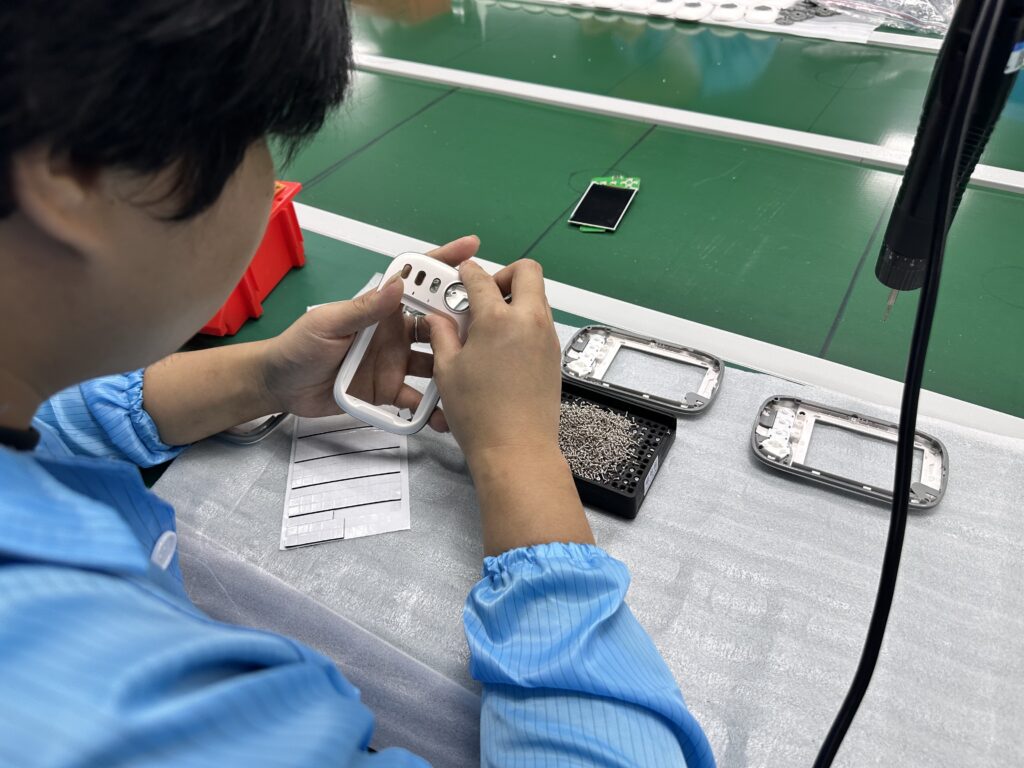
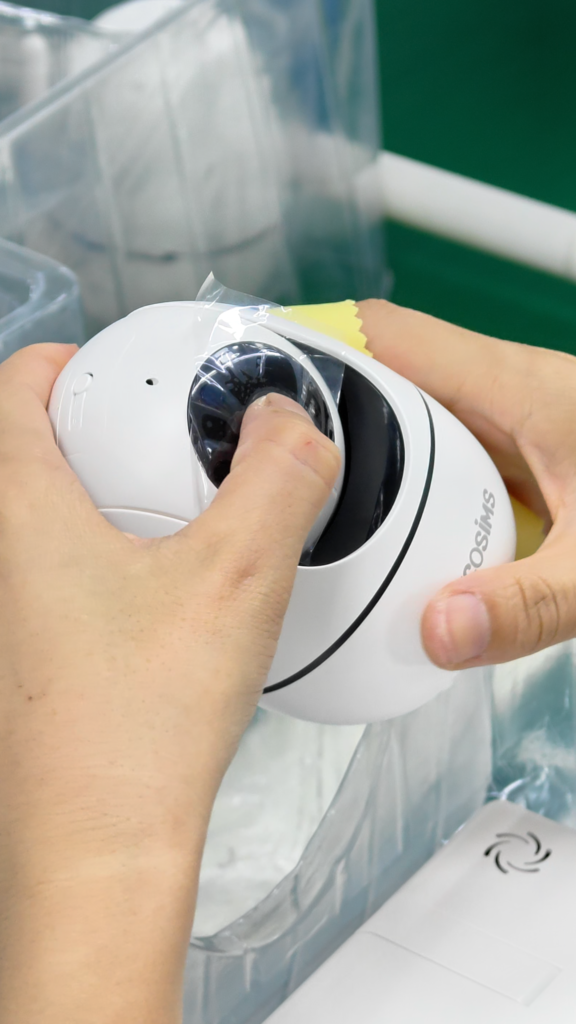
Product Work Across Physical and Digital Layers
Use real engineering, prototype, laboratory and test imagery when available.
Industrial design
Product appearance and channel-positioning direction.
Mechanical engineering
Structure, assembly, materials and manufacturing feasibility.
Hardware engineering
Platform architecture and applicable component decisions.
Firmware & App/UI
Device behavior, interfaces, localization and connected experience scope.
Validate the Right Questions at Each Stage
Evaluation sample
Assess an existing platform before customization.
Appearance or packaging sample
Review approved brand, color, surface and retail presentation.
Engineering prototype
Validate applicable structural, hardware, firmware or App changes.
Pre-production sample
Freeze configuration and quality expectations before mass production.
Confirm Risk Before Production
Factory-system and product documentation are handled separately; product certificates vary by model and market.
Specification gate
Approved functions, materials, interfaces and configuration.
Sample gate
Appearance, function, reliability and packaging review.
Compliance gate
Model and target-market document mapping.
Production gate
Materials, process, inspection and approved-sample alignment.
MOQ Follows the Project Structure
Platform choice, custom materials, packaging, component commitments, tooling and validation can all affect MOQ. Typical first-order planning often falls around 500–3,000 units, but the actual requirement must be quoted by project.
Development Depth Changes the Timeline
Ready-product and private-label projects can move faster than projects requiring engineering, App, tooling, certification or new packaging validation. No fixed schedule should be promised before scope approval.
Questions Before Starting
Start with the lowest development depth that can achieve meaningful differentiation and market fit. ANHONG can assess the brief before recommending White Label, OEM or ODM.
These areas can be assessed, but depth depends on the platform, ownership, feasibility, schedule and commercial scope.
ANHONG focuses on serious B2B programs, quality consistency and repeat supply. Sample and MOQ terms are evaluated according to the project rather than used as a low-price promotion.
Factory systems and product documents are different. Product support must be confirmed for the exact model, configuration and target market.
Share the target market, channel, expected quantity, launch timing, must-have functions, desired differentiation, packaging needs and compliance requirements.
Start Your OEM/ODM Project
A structured brief helps product, engineering, quality and commercial teams assess the same project.
Submitted details are securely recorded and sent to the ANHONG project team.