How Should Buyers Check Whether a Test Fixture Can Distinguish Known Outcomes?
Check whether a baby monitor test fixture distinguishes agreed normal, non-acceptable and ambiguous outcomes before relying on its result in production.
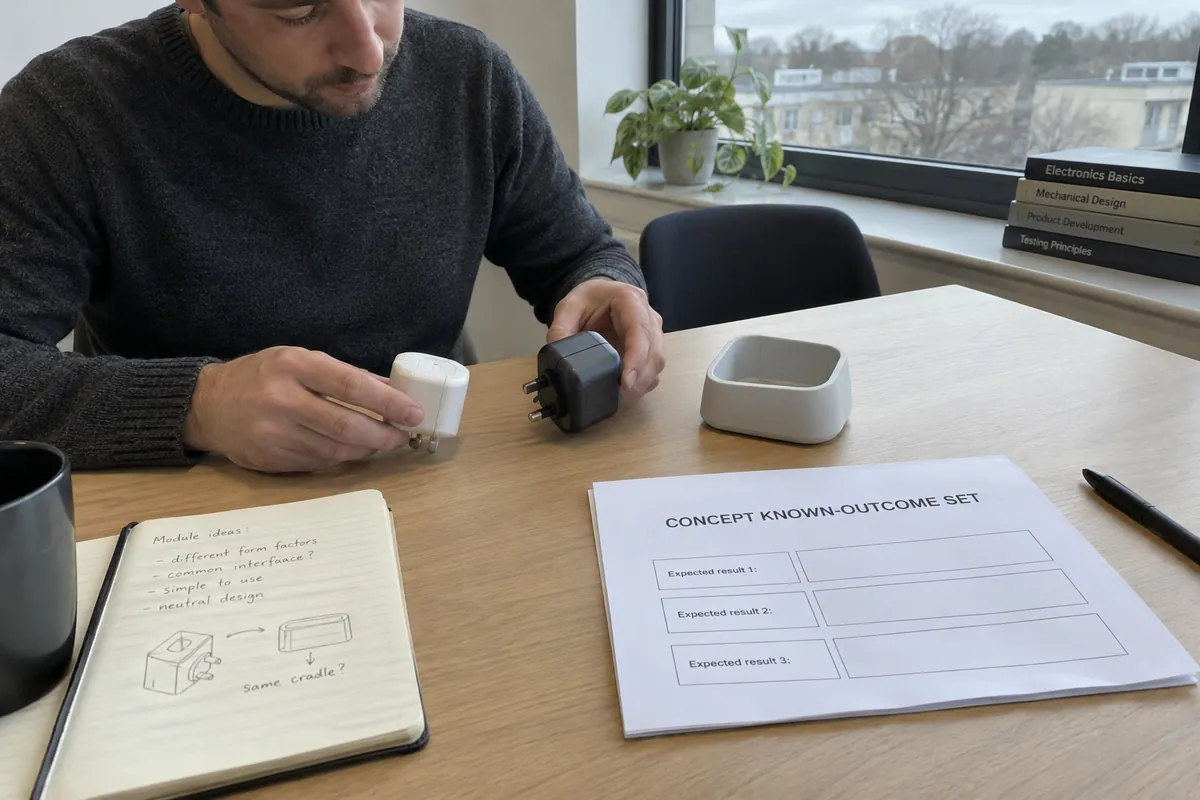
A fixture that lights a green indicator every time may be fast, tidy, and useless. Before relying on it for a baby monitor check, a buyer should ask a narrower question: can this fixture distinguish the known conditions that matter to the agreed decision? That is different from asking whether the product has a test plan or whether the PCB included access during design. It is a check of the fixture’s discrimination ability.
This is a proposed review method. It does not claim an ANHONG fixture, test limit, failure library, or production process. Test conditions must be agreed for the selected configuration and should not expose confidential fixture or product details.
What Is a Known Outcome Set?
Define a small Known-Outcome Set before judging the fixture. Include an agreed acceptable state and one or more controlled non-acceptable states that the fixture should differentiate, where it is safe and authorized to create them. The set must be relevant to the intended check. A fixture designed to confirm a power-up condition should not be represented as proving camera imaging, wireless performance, or every customer feature.
| Intended fixture decision | Known outcome to prepare | Expected fixture result | Retained evidence |
|---|---|---|---|
| Recognize normal configured unit | Approved reference state | Defined accept result | Unit/configuration and result |
| Recognize agreed abnormal state | Authorized controlled condition | Defined reject or escalation result | Condition and observed result |
| Recognize ambiguous state | Borderline or incomplete setup if applicable | Hold, error, or defined handling | Rule and reviewer decision |
The useful point is not to create dramatic failures. It is to demonstrate that the fixture’s result changes when the relevant known condition changes.
Why Is a Passing Unit Not Enough?
If only a normal unit is used, the team learns that the fixture can produce a pass in one state. It does not learn whether an incorrect connection, wrong configuration, missing expected response, or other agreed condition would be distinguished. A buyer should not infer defect coverage from a fixture photograph or a single successful test run.
The review should remain within the authorized test scope. Avoid creating damage, bypassing protections, or sharing implementation details merely to make a fixture fail. The technical owner can prepare safe controlled states and explain what the result represents.

How Should the Comparison Be Recorded?
Use a Fixture Discrimination Card. Record the fixture identity or revision, product configuration, each known outcome, setup owner, expected result, actual result, interpretation rule, reviewer, and follow-up. If the fixture produces the same response to distinct prepared states, log it as an unresolved limitation rather than treating the normal pass as acceptance.

This card differs from a general quality record. It tests whether the measurement or decision tool can distinguish the defined outcomes before the team uses its output to accept units or investigate failures.
What Should Happen When the Fixture Cannot Distinguish a State?
First identify whether the issue lies in the fixture’s setup, the acceptance rule, the preparation of the known state, the product configuration, or the scope itself. Then agree a corrective route: adjust the fixture under controlled change, refine the test condition, add another defined check, or document the limitation and avoid using the fixture for that decision. Do not silently broaden the meaning of a green result.
Any fixture change should carry a revision and a decision about whether the Known-Outcome Set must be rechecked. Otherwise a later team may compare results from tools that look similar but follow different rules.
How Can ANHONG Support a Bounded Review?
ANHONG’s confirmed services include product definition, hardware, firmware, samples, quality testing, mass production, and B2B after-sales coordination. A buyer can provide the selected configuration, intended fixture decision, known outcomes it needs distinguished, acceptance record format, and confidentiality limits. We can discuss the relevant project scope and evidence interface. We do not claim that every product has a fixture, that all defects are detectable, or that a fixture outcome proves overall product quality.
Which Evidence Should Remain?
Retain the Fixture Discrimination Card, fixture revision, configured unit identity, permitted setup description, expected and observed results, limitation, correction decision, and retest record. Connect it to the product configuration and approved test purpose, not a generic model-family label.
How Should a Buyer Observe Repeatability?
Where the agreed method permits it, repeat the same known-outcome comparison more than once and record whether the fixture gives the same decision under the stated setup. Do not invent a required run count. The aim is to expose an obviously unstable or operator-dependent result before it becomes a production acceptance rule. If different operators or stations are relevant, record that context rather than assuming a result travels unchanged.
Repeatability is still narrower than overall test coverage. It answers whether the reviewed fixture decision behaves consistently for the particular known states, not whether every production risk has been eliminated.
Which Questions Should Buyers Ask About Fixtures?
Does a fixture need to detect every possible defect?
No. State the decision it is intended to support and test its ability to distinguish the agreed known outcomes for that decision.
Can a normal sample serve as the only reference?
It supports an accept-state observation but not proof that the fixture recognizes relevant non-acceptable or ambiguous states.
Should a fixture revision be recorded?
Yes. The revision helps the buyer decide whether a previous discrimination result still applies after a tool or rule changes.
What should a buyer send first?
Provide the selected configuration, purpose of the check, authorized known outcomes, expected decision rules, evidence format, and unresolved questions.
For a fixture-review discussion tied to your quality plan, contact ANHONG and connect it to the agreed quality-control and testing scope.