How Should Brands Define Replacement-Camera Pairing and Compatibility?
Use a replacement compatibility record to identify the baby monitor system, review supported pairing, and avoid assumptions based on appearance.
A replacement camera is not simply another camera in the same product category. Before a brand offers a service replacement, it needs to know whether the proposed unit is supported for the customer’s existing parent unit and configuration. Similar appearance is not a compatibility statement.
What identity should a replacement request establish?
Start with the sold system: parent-unit model, camera model, bundle or configuration, and any identifiable hardware or software version information. Then identify the requested replacement camera and the intended pairing route. The point is to define the system before deciding what can be offered.
ANHONG’s product-definition, hardware, firmware, and B2B after-sales coordination services are relevant here. They can help a brand specify the fields that must be recognized in a service request and direct an uncertain match to a project review. They do not mean every camera revision is interchangeable or that a replacement part is available.
How should a brand classify the pairing outcome?
Use three states: supported for the identified configuration; requires review; or not established. “Supported” should be based on the configuration information the brand and supplier have agreed is sufficient. “Requires review” is useful when a parent unit, camera revision, version, or service history is unclear. It is better than giving a customer a confident answer based on a product photograph.
What is the Replacement Compatibility Record?
| Field | Record |
|---|---|
| Customer system identity | Parent unit model, camera model, bundle |
| Existing configuration clues | Version, label, order or service reference if available |
| Proposed service camera | Exact identity presented for review |
| Intended pairing route | Supplier-confirmed supported route, if applicable |
| Outcome | Supported / requires review / not established |
| Owner and next action | Brand service team / supplier project review |
This is a service-definition tool, not a customer diagnostic form. It differs from a field-complaint report: the question is whether a service item belongs with an existing system, not why a product behavior occurred.
Why should pairing instructions be configuration-specific?
Pairing may depend on the configuration and the supported procedure. Brands should provide an instruction only when it applies to the identified system, and label any unresolved status honestly. A generic “pair any camera” instruction can turn a service request into a new complaint.
For ANHONG projects, B2B after-sales coordination can help establish the information path between a brand and the relevant product team. Product samples and product-definition records can also support clearer discussion of the configuration a brand has sold. The buyer remains responsible for its own customer communication and service policy.
What should be retained after the service decision?
Keep the system identity, replacement identity, decision status, decision date, and the communication given to the customer. This creates a usable record if the same SKU has later revisions or several market bundles. It also helps a brand separate a compatibility question from a product complaint or a commercial return decision.
Which fields distinguish the sold system from a replacement request?
The service record needs two identities, not one. The first describes the customer’s normal working system: parent unit, camera, bundle, intended market, and any configuration identifier available to the brand. The second describes the item proposed as a replacement. A serial or order reference may help locate the first identity, but it should not be presented as proof of compatibility by itself.
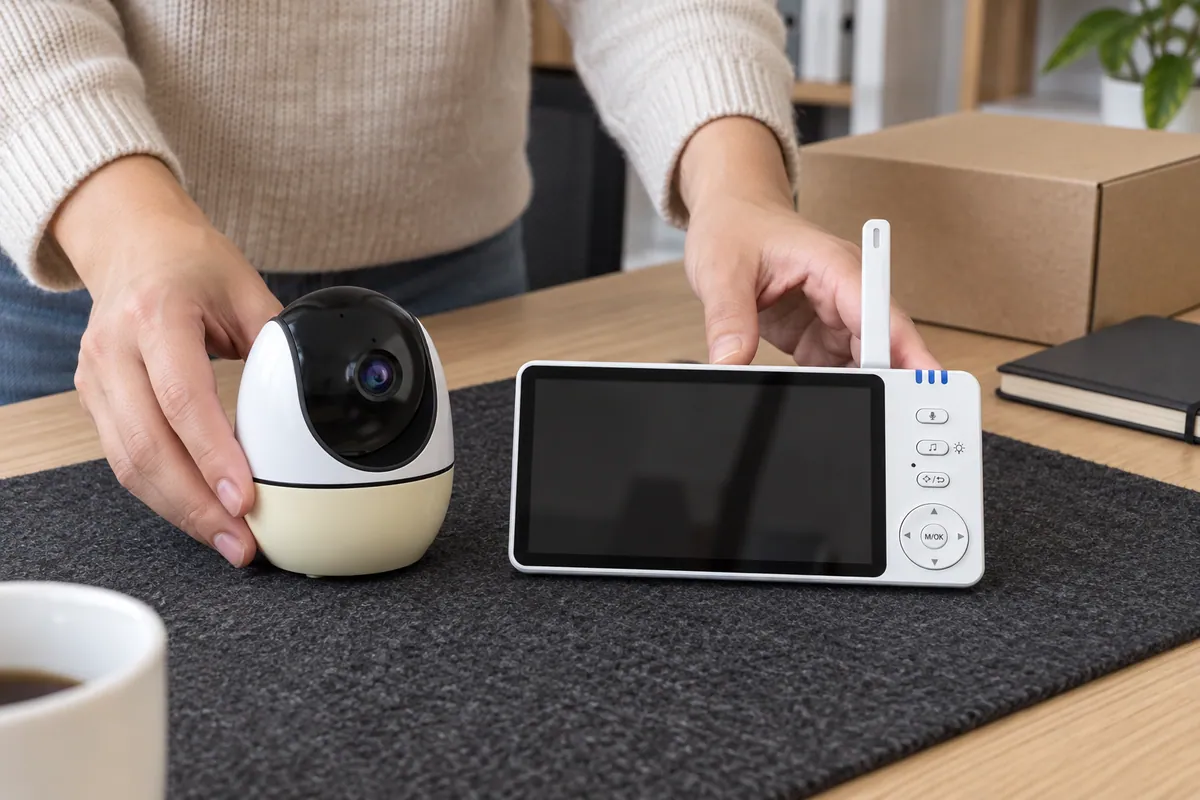
This distinction matters because a customer may describe the needed item as “the same camera” while the service team is considering a later revision or another bundle. The record should state whether the replacement is intended to restore the existing system, add a camera where the configuration supports that use, or replace a camera associated with a complaint. Those are different service questions.
How should a service team make the decision?
First, identify the existing system from the available records and the customer-supplied product information. Second, identify the proposed service camera. Third, check whether the brand has a supplier-confirmed pairing path for that specific combination. If the combination is not established, route it for review rather than asking the customer to try a generic procedure.
Where a configuration has a confirmed supported pairing procedure, the brand can give a controlled sequence: use the identified parent unit and replacement camera; start from the documented state; follow the configuration-specific steps; and record the result. That is a verification of an already supported route, not proof that every unsuccessful attempt is a compatibility failure. A depleted power source, an interrupted step, a damaged unit, or incomplete identity information can also prevent a result from being interpreted cleanly.
Why should a failed attempt not become a compatibility conclusion?
A failed pairing attempt is an observation. It may indicate that the procedure, product state, service item, or system identity needs review. It does not by itself show that the camera is incompatible, defective, or unsupported. Record the attempt separately: what system was identified, what step was attempted, what happened, and whether the result needs a field-complaint investigation. Keep the service-item decision separate from the evidence needed to investigate a product behavior.
Frequently asked questions: how should replacement pairing be handled?
Should a customer open the housing to find a revision number?
Do not make disassembly part of routine identity collection. Begin with accessible labels, approved menus and the brand's order records; refer missing information to the authorized support route instead.
What if a replacement procedure could affect another paired camera?
Ask the supplier what the supported procedure changes before giving instructions. Keep the identity of retained cameras in the service record, and check the agreed final system state rather than only the new camera's appearance on screen.
Can a refurbished service camera use the same record?
Yes, if refurbishment is an approved service route, but add its origin and configuration history. Do not let the record imply that prior ownership, condition or relevant configuration differences have already been cleared.
Should the record retain every photograph supplied by the customer?
Define the minimum product-identification evidence needed and follow the brand's data-handling rules. Product labels and approved configuration records are the objective; unrelated family images are not useful evidence of compatibility.
To define clearer replacement-camera information for your baby monitor program, contact ANHONG or review product development support.


