How Should Buyers Review Movement-Related Sound in a PTZ Baby Monitor?
Review movement-related PTZ baby monitor sound by stationary, moving and stopped states across local and remote listening paths without guessing cause.
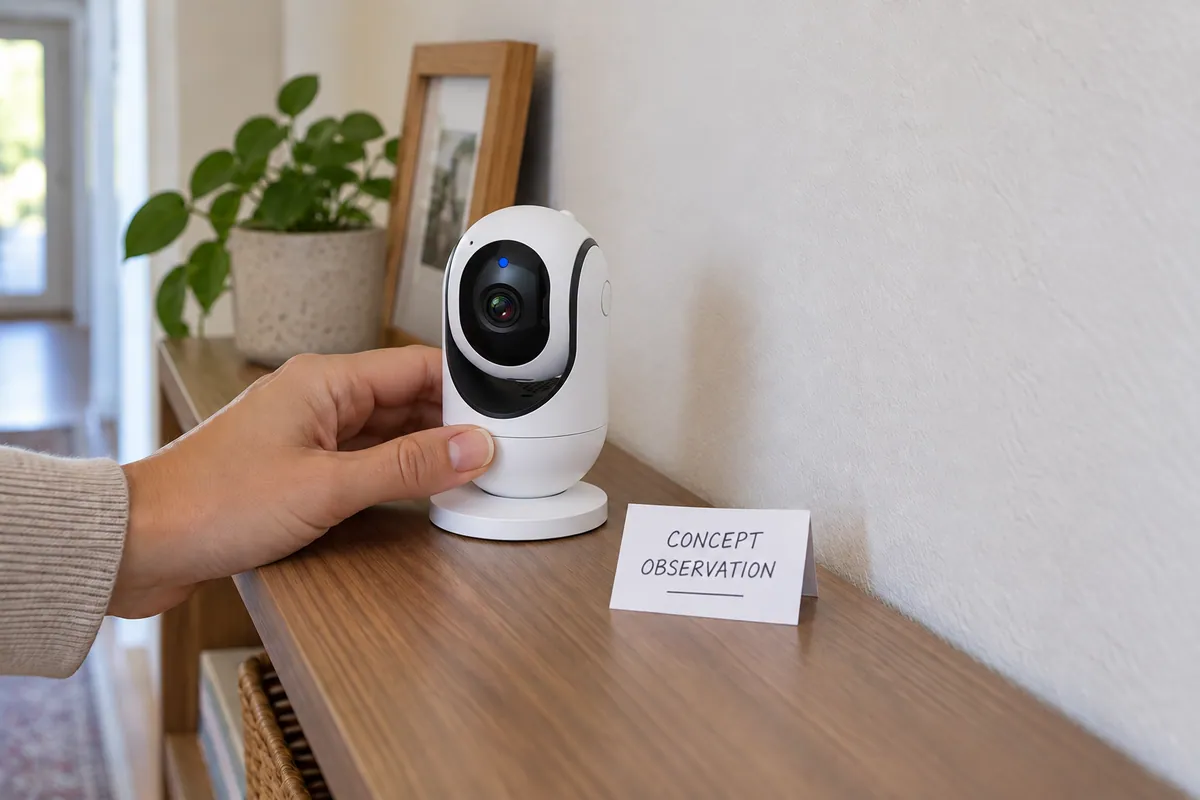
If a reviewer hears a sound while a PTZ camera starts, travels or stops, record its timing and listening path before naming its cause. The observation might come from the room, a parent unit, an app or several routes. The useful question is not “is it quiet?” in isolation. It is what was heard, in which path, during which movement state, under which sample conditions.
Why should the review separate states and paths?
Sound that appears during motion may have a different significance from sound that remains after motion stops. A room observer may notice a mechanical sound that the remote listener does not; a remote listener may hear an electronic artifact unrelated to what is audible beside the camera. Time correlation alone does not establish a root cause. It only identifies where further product review may be needed.
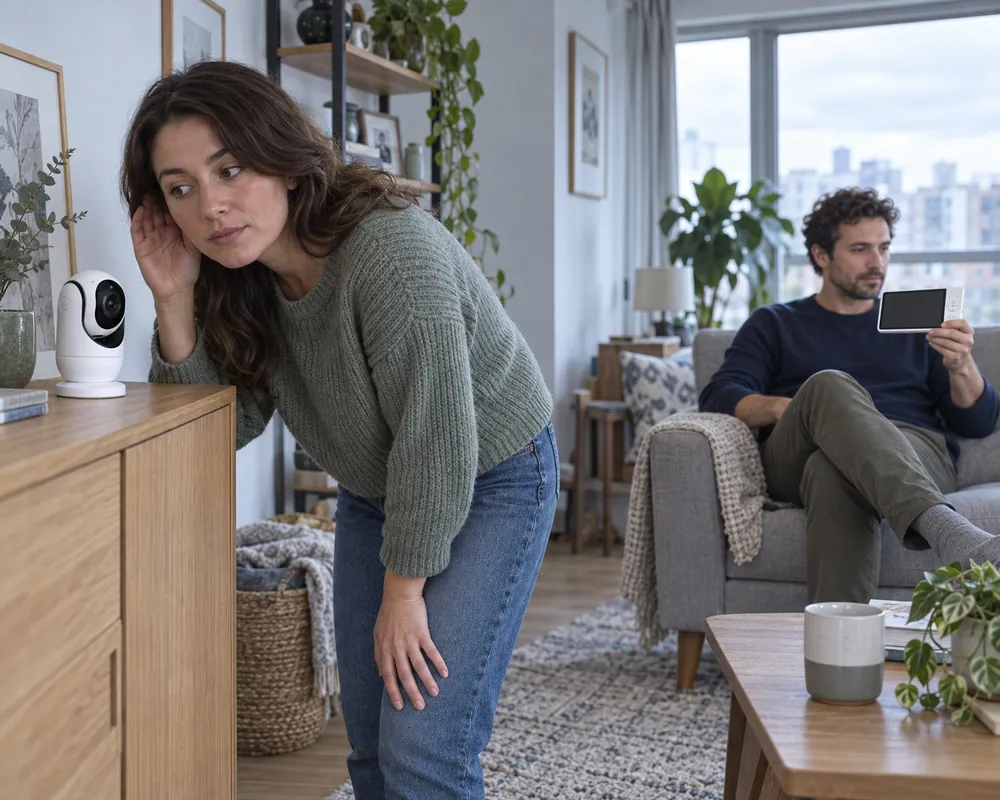
Use a Movement-Sound Observation Record with three rows—stationary, moving, and stopped—and separate columns for local room observation and each intended listening path. Record the movement command, camera position, ambient conditions, volume settings, product and software configuration, and reviewer notes. Do not invent a decibel limit, assume a cause, or label a sample result as production-wide evidence.
| State | Local observation | Parent-unit/app observation | Question for the project |
|---|---|---|---|
| stationary | record only what is present | record only active path | what is the baseline? |
| moving | record onset and action | record what listener receives | does it affect the stated task? |
| stopped | record persistence or absence | record recovery | what needs investigation? |
How should an observation become a decision?
First agree the intended listening task. Is the review about an audible movement interruption, a user-interface expectation, or a mechanical design concern? Then reproduce the same command more than once and compare the chosen paths. If the observation matters, ask the project team what evidence or design review is appropriate. Avoid a demand for “silent PTZ,” which is vague and can turn a scoped discussion into an untestable promise.
This article does not repeat general background-noise, feedback, or PTZ position-repeatability reviews. It concerns the relationship between a defined movement action and what a user can hear before, during, and after that action.
How does ANHONG enter the sample conversation?
ANHONG's structural-design, hardware and firmware services provide relevant interfaces for investigating a movement-linked observation without deciding its cause in advance. A buyer can submit the movement and listening scenarios for a sample and quality review, then ask which discipline needs to examine the finding. This connection matters because the next useful question may concern a physical assembly, a command sequence or the received audio path. It is not a claim that a particular camera meets an acoustic level. Record model, build, environment and acceptance conditions.
How should reviewers avoid a misleading demonstration?
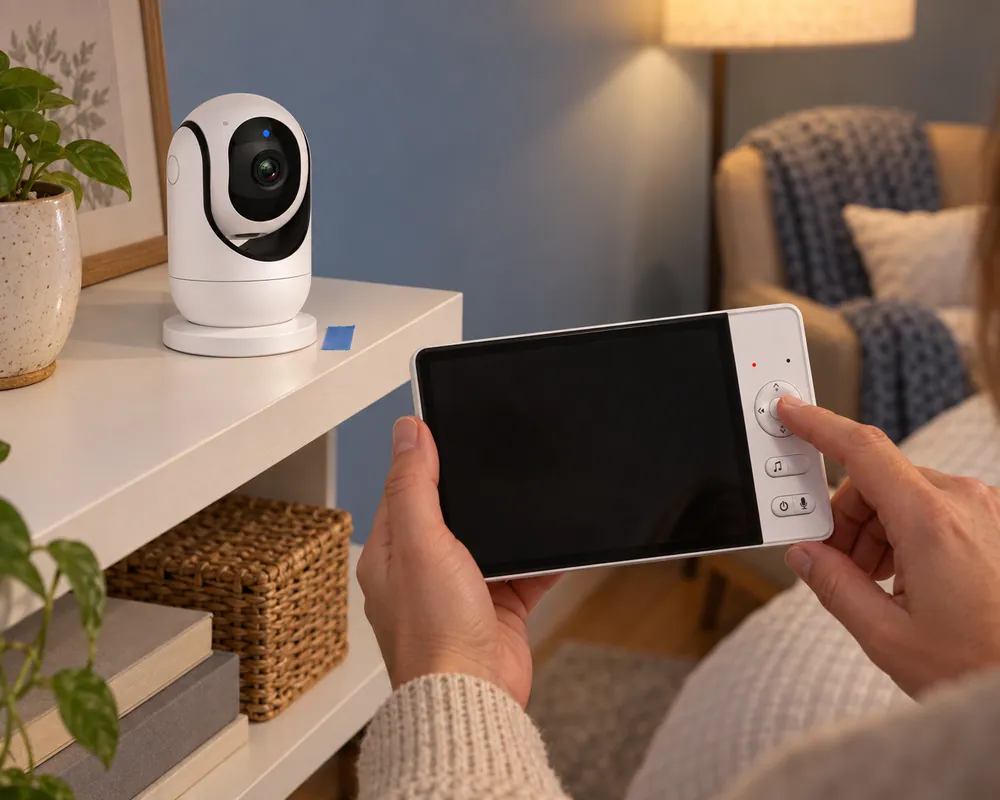
Use the same command route and starting position each time. Note whether the listener is beside the camera, using the parent unit, or using an app, because a microphone path can change what is heard. Keep unrelated sources such as television sound or conversation out of the basic comparison where practical, but record them when the intended household task includes them. A reviewer should be able to say exactly what happened without translating a vague note such as “motor noisy” into an unsupported engineering conclusion.
Who should receive the finding?
Send the record to the owner of the stated requirement: product definition for an expectation question, engineering for a requested investigation, documentation for an instruction issue, or support for a recurring customer description. That routing is a useful outcome even when the review does not identify a root cause. It avoids treating a listening observation as a final diagnosis.
What should an acceptance discussion avoid?
Avoid a single subjective adjective as the acceptance rule. “Quiet,” “smooth,” and “premium” can be useful design aspirations, but they do not tell a reviewer what action, path, or condition to reproduce. If the buyer has a concern, state the scenario and consequence: whether an intended listener can still perform a named monitoring task while a defined movement occurs. The project can then decide what evidence is needed without converting a design preference into a guaranteed acoustic result.
When comparison samples exist, label each configuration and repeat the same sequence. Do not compare a moving camera in one room with a stationary camera in another and call the difference a product conclusion. A disciplined note is more valuable than a dramatic demonstration because it can be revisited after a component or firmware change.
Where a buyer needs a change discussion, send the observation with the exact movement command, listening path, starting camera position, and sample identity. That lets the recipient decide whether the next step is a product-definition clarification, engineering investigation, or another sample observation. It avoids turning a subjective listening note into an undocumented requirement.
When recordings are authorized, label their capture route rather than simply naming them after the camera. A phone beside the sample documents that phone's local recording; a capture from the receiving endpoint documents a different path. Neither should be renamed as the other, and neither by itself measures the camera's acoustic output under a defined laboratory method.
What should be kept after review?
Keep the observation record, sample identity, movement sequence, active audio route, conditions, recordings only where authorized, and decision owner. When a later motor, housing, firmware, or audio-path change is proposed, this record identifies the relationship that needs to be revisited.
Frequently asked questions: how should PTZ movement sound be reviewed?
Should manual movement and an automatic movement option be grouped?
Only after confirming the offered configuration supports both and identifying the action each route requests. Keep them separate initially so a finding during one sequence does not become an unsupported conclusion about every movement mode.
Can recordings from different phones be ranked by loudness?
Do not treat them as comparable measurements without a controlled recording method. Use them to locate the reported moment and route; commission an appropriate measurement if a numerical acoustic conclusion is required.
What if a replacement bracket changes the sample arrangement?
Record the new support and repeat the agreed observation separately. Do not combine results under the old setup description or assume that a changed observation proves a bracket fault. The changed arrangement is an investigation input.
Must the first observation include a family or a nursery recording?
No. Begin with an authorized non-private setup that can reproduce the reported action. Request household material only if the responsible team identifies a specific need and agrees an appropriate collection route.
For a PTZ sample brief tied to real use scenarios, contact ANHONG.