How Should Buyers Evaluate Talk-Back Turn-Taking in a Baby Monitor Sample?
Use a structured talk-back turn-taking record to evaluate a confirmed baby monitor configuration without assuming a conversation mode or audio result.
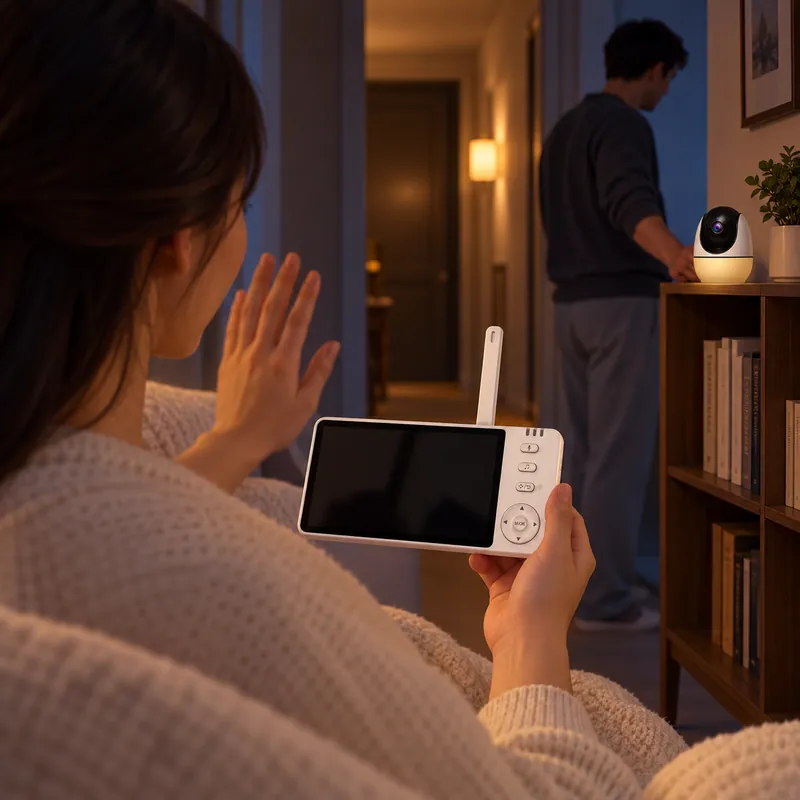
“Two-way talk” is not yet an acceptance requirement. A buyer needs to know what the person holding the parent unit should do, what the person near the camera should hear, how a reply is invited, and what happens when the sequence is interrupted. That is turn-taking: an agreed, observable exchange rather than a feature label.
Only evaluate this topic when the supplier confirms that the selected configuration supports the relevant talk-back function. Do not assume full-duplex conversation, echo cancellation, a particular button behavior, or any timing result from the phrase “two-way audio.” The sample and its instructions define the starting point.
What Is the Difference Between Talk-Back and Audio Quality?
Audio quality asks whether wanted sound can be heard and understood under defined conditions. Turn-taking asks whether two people can use the product’s documented interaction to exchange a short message without uncertainty about whose turn it is or what action returns the system to listening.
Those questions overlap in a real product but they should not share one vague verdict. A sample may have an acceptable microphone and speaker yet leave a first-time user unclear about how to initiate or end a talk-back action. Conversely, a smooth control sequence does not prove that audio feedback, noise, range, or latency meets a separate requirement. Keep those observations in their own records.
Which Exchange Should a Buyer Write Down Before Testing?
Define one short, ordinary use case. For example: an adult at the parent unit initiates the documented talk-back action; another adult beside the camera receives the message; the first adult follows the documented action that returns the product to its next state; the second adult replies if the configuration supports that path. The words themselves are not the test. The clear sequence of actions and states is.
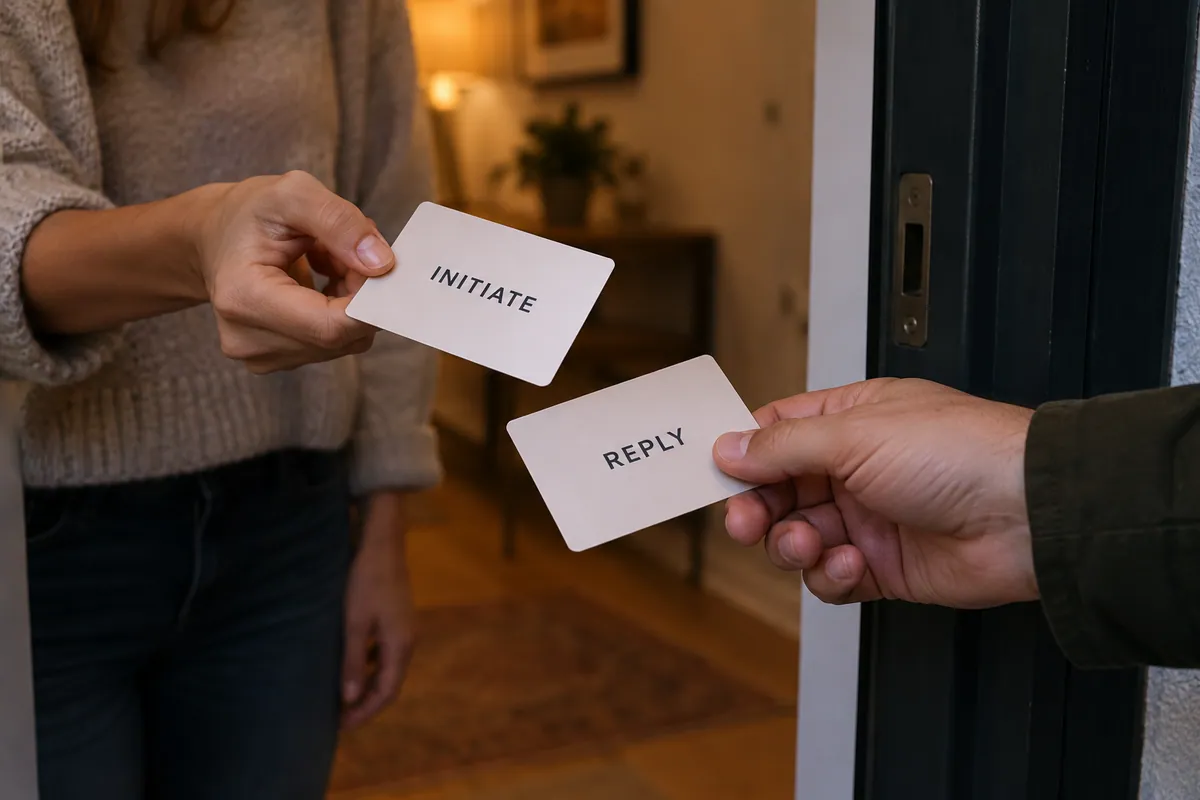
The proposed Talk-Back Interaction Record below turns that sequence into supplier-ready evidence.
| Step | What the reviewer does | What to record | Why it matters |
|---|---|---|---|
| Initiate | follow the supplied instruction | control or documented route used | confirms the agreed entry point |
| Deliver | speak one short agreed phrase | receiving path and audible observation | identifies the evaluated configuration |
| Return | follow the documented end or return action | state observed afterward | reveals whether the next action is clear |
| Reply | use the confirmed reply method, if available | whether the expected response is received | keeps unsupported assumptions out |
| Interrupt | stop or change one agreed condition | recovery action and instruction reference | captures what needs clarification |
The record is a proposed sample-review tool, not proof that a configuration can sustain every conversation or operate in every acoustic environment.
How Should a Team Avoid a Demonstration That Hides the Important Question?
Ask the demonstrator to start from the agreed initial state. A pre-opened audio path, an unexplained control sequence, or a person who knows an undocumented gesture can make a product look simpler than it will be for a new user. Record whether the required operation is explained by the available manual, on-screen wording where present, or packaging guidance.
Then repeat the same brief sequence with the candidate configuration identified. If firmware, hardware, interface language, or audio settings change, label the new result as a new sample condition. A buyer does not need to demand a universal talk-back behavior; they need to know what the approved configuration actually asks a user to do.
Which Problems Need Their Own Acceptance Method?
Do not use a turn-taking record to certify acoustic behavior. Audio feedback and unwanted screeching require placement, volume, orientation, and system-path observations. The existing content on feedback already treats that subject as a separate system question. Likewise, camera video quality, recording behavior, and parent-unit screen readability each need their own task.
Turn-taking also should not be used to infer privacy, wireless range, or a specific delay. If a brand has a measurable requirement, it should define a suitable method, limit, and viewing or listening path before asking a supplier to accept it.
How Can ANHONG Make the Interaction a Useful Product Input?
ANHONG offers product definition, hardware, firmware, App/UI, samples, quality testing, packaging localization, and B2B after-sales coordination. For an approved talk-back-capable platform, that range can help a brand place its question in the right workstream: the requested behavior, the control wording, the sample configuration, or the first-use material.
That does not mean every ANHONG baby monitor has talk-back, the same interaction model, or a particular audio-processing function. The brand should ask ANHONG to confirm the proposed model and documented operation first. A clear interaction record then prevents a general request such as “make two-way audio easier” from becoming a costly, untestable instruction.
For an OEM or ODM project, begin with the baby monitor product development scope and use quality-control and testing to discuss how configuration-specific observations might be recorded. Where first-use wording changes by market, packaging localization should be scoped to the selected configuration rather than presumed.
What Else Should Buyers Ask About Talk-Back Turn-Taking?
What if the target-market language makes the documented instruction longer?
Review the same exchange using the proposed customer-facing wording once that wording is available. Record where the instruction becomes unclear or too long for the intended material, then decide whether the issue belongs to localization, interface text, or the interaction sequence itself.
What if two adult reviewers use different scripts?
Freeze one core exchange for comparison and record any additional script separately. A team can explore alternate phrases later, but it should not treat different initiation, reply, and return steps as evidence from the same run.
Should the pairing or connection path be confirmed before this review?
Yes. Identify the documented starting condition and any required setup path before writing the exchange. If the configuration cannot reach that starting condition in the sample review, record the gap rather than assuming how the product should connect.
How should a brand record an unclear reply path?
State the exact completed step, the expected next action, the observed product state, and the instruction consulted. That record gives the project team a usable question without assigning an unverified cause to the hardware or software.
What Should a Brand Send Before Asking ANHONG to Review Talk-Back?
Send the proposed model, target-market language, exact exchange to be supported, approved configuration, and the question each step must answer. Contact ANHONG to discuss whether the selected platform supports the requested operation and how a sample, documentation, or OEM/ODM scope can be defined. A sequence that can be repeated is more valuable than a feature label that everyone interprets differently.


