How Should Brands Connect Baby Monitor Serial Numbers to Hardware and Firmware Records?
Connect a baby monitor serial number with batch, hardware and firmware records so a brand can ask targeted configuration questions after approval.
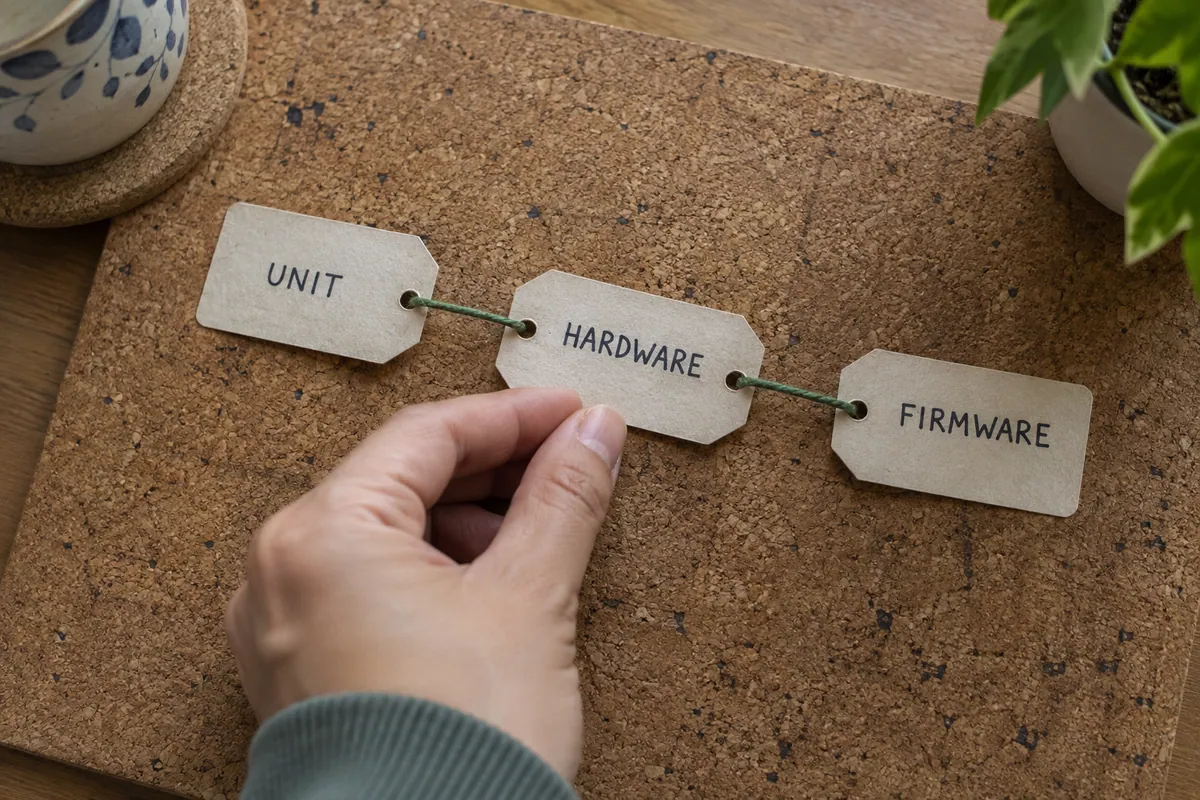
When a brand asks for traceability, it often receives a long list of records and no answer to the practical question: can this individual unit be connected to the hardware, firmware, and production context that matter to an investigation? A serial number is useful only when the project defines which relationships it must unlock.
What relationship should a serial number support?
Start with the decisions the record may need to support: sample approval, configuration confirmation, a field inquiry, controlled firmware change, or a production-quality review. Then distinguish unit identity, batch identity, component revision, and firmware artifact. They are connected but not interchangeable. A batch can contain many units; a firmware version can apply to several batches; a serial label alone does not prove every component detail unless the project’s record system establishes that link.

| Record level | Proposed identifier | Relationship to preserve | Buyer question |
|---|---|---|---|
| unit | serial number | shipped/product identity | which exact item is discussed? |
| batch | lot or production reference | common production context | which group requires review? |
| hardware | approved revision reference | configuration boundary | which build was authorized? |
| firmware | version/artifact reference | programmed behavior boundary | what software is on the unit? |
This Unit-to-Version Traceability Map is a proposed evidence-planning tool. It does not claim a specific factory database, immutable record, recall capability, or programming process.
Why should hardware and firmware be separated?
A device can carry a familiar product name while its hardware revision, accessories, or firmware build differ from an earlier sample. Mixing those identities produces weak investigations: a team may conclude that “the model was tested” without knowing which configuration was examined. Keeping separate fields lets a buyer ask a precise question and gives the responsible team a defined record to retrieve.
This is narrower than a general factory-quality-record request. It does not prescribe incoming inspection, fixtures, or a firmware-programming method. It focuses on the link a buyer needs when a single device must be related back to an approved configuration and software record.
How should the map be used during sampling and production?
For the selected project, agree the serial format or label reference, the hardware revision naming convention, the firmware identifier, and the point at which each is recorded. During sample approval, record the exact sample identity and build. During production review, ask what record relates the shipped unit or batch to the approved configuration. If a change is proposed, record whether it alters hardware, firmware, accessories, packaging, or only documentation; each can affect which evidence needs revisiting.

Do not request another customer’s confidential files. Ask for the evidence and access level appropriate to the buyer’s own order and contract.
How can ANHONG support the record conversation?
ANHONG can connect product definition, hardware/firmware discussions, and sample scope to the requested unit, batch, hardware, and firmware references for the buyer’s own configuration. That scope is not proof that every proposed record exists in a particular format or that a given unit can be traced across every lifecycle event. Agree the required records before the order and verify them against the offered process.
How should access to records be defined?
Traceability is also an access question. A buyer may need a shipment-level confirmation, a selected sample’s version identity, or a targeted investigation response; none requires unrestricted access to other customers’ data or internal systems. Define who can request what, in what format, at which point in the order, and how confidentiality is handled. This makes the requirement realistic for both parties and prevents a useful record request from becoming an unbounded demand.
How can the map improve a field inquiry?
When a service question arrives, begin with the unit identity if available, then retrieve the related hardware and firmware boundary agreed for that order. Compare the reported configuration with the record before forming a product conclusion. If identity is missing, record that limitation instead of guessing from a photo or sales name. This sequence does not resolve every case, but it preserves the evidence chain needed for a fair next decision.
It also makes the supplier conversation more efficient: the buyer can request a defined relationship rather than asking for a vague archive search.
How should a buyer prepare the first request?
Start with the order configuration, intended identity level, reason for the request, and evidence needed to make the next decision. State whether the question concerns a sample, a shipment unit, a batch, a firmware transition, or a quality inquiry. Then ask the responsible party to confirm what record can be provided and what is outside the agreed scope. This prevents a traceability conversation from becoming a demand for unrelated internal data.
For an OEM project, include the approved naming convention in the release package and sample sign-off. When the same sales name later covers a changed configuration, the release record can point back to the relevant hardware and firmware boundary. That is a practical discipline, not a promise of lifecycle tracking beyond the agreed process.
What should be retained after approval?
Keep the agreed map, naming rules, approved sample identifiers, revision decisions, requested records, confidentiality boundary, and responsible contacts. This turns later questions into a targeted lookup rather than a broad request for “all QA documents.”
Frequently asked questions: how should traceability be scoped?
Is a serial number enough on its own?
No. It needs defined links to the configuration and firmware information relevant to the question.
Can one firmware version cover several hardware revisions?
Possibly, but record the compatibility decision rather than inferring it from the label.
Should all records be supplied with every shipment?
Set the access and evidence requirement in the purchase agreement; avoid collecting unnecessary confidential material.
What belongs in a change record?
The affected identity level, reason, approved scope, evidence to recheck, owner, and effective configuration boundary.
To define a traceability request for your own configured product, contact ANHONG.