How Can Buyers Evaluate Baby Monitor Return Costs Before Placing an Order?
Build a clear baby monitor return cost model. Separate refunds, replacements, handling and recoveries, then connect complaints to sample acceptance checks.
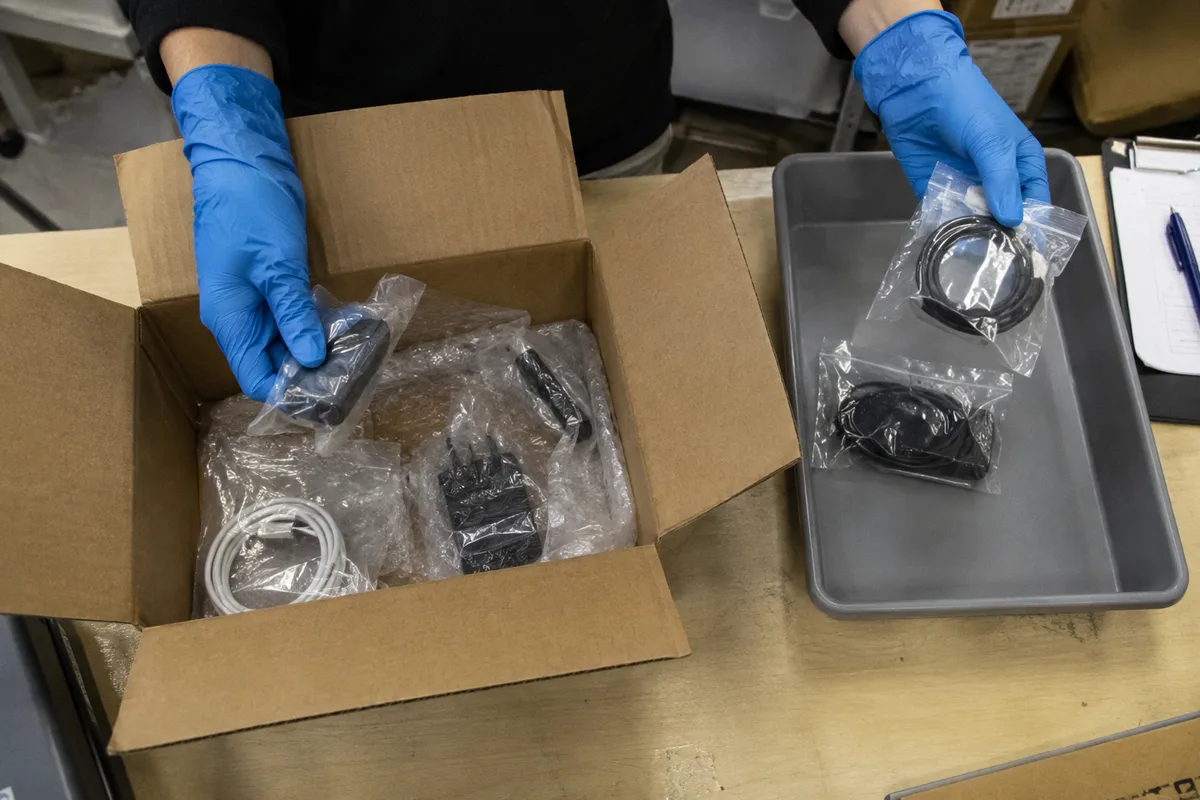
A baby monitor return cost model should connect a returned unit to the work and money that follow it. Freight is only one possible line. There may also be support time, inspection, replacement, nonrecoverable fees and a difference between what was refunded and what can be recovered from the returned item.
I would keep the first model deliberately simple. A spreadsheet with clearly defined cases is more useful than a confident “industry return rate” with no comparable channel, sales period or denominator.
This article provides an original planning method and a clearly hypothetical calculation. It does not report ANHONG customer data, a market-average return rate or a guaranteed saving.
Where Should a Baby Monitor Return Cost Model Start?
Choose a sales cohort: for example, units sold through a defined channel during a defined period, observed for an agreed return window. State whether the denominator is shipped units, delivered units or sold units. Do not change that definition when comparing suppliers.
Keep unique returned units separate from support tickets and repeat contacts. One buyer can open several tickets about the same unit. A replacement can also be returned; decide whether that becomes a separate unit event and retain the link to the original case.
Use reason codes that are useful for action: setup difficulty, connection complaint, battery-runtime complaint, image complaint, physical damage, missing accessory, changed preference and unresolved cause. The customer’s reason and the inspection finding should be different fields. “Picture freezes” is a symptom, not yet a confirmed radio defect.

Which Costs Should Be Counted Without Double Counting?
Start with the perspective of the brand or seller and choose a baseline: the same sale completed without a return. Count the incremental loss relative to that baseline, using one currency and a consistent treatment of tax.
For a refunded case, the cost bridge may include the refund, extra freight, handling, support and nonrecoverable transaction costs, less recoveries. The original cost of the unit is already in the no-return sale baseline; do not add it again merely because the unit came back. Conversely, a replacement case can add a replacement unit’s cost without also containing a full refund. Model those outcomes separately.
Recovery should mean something specific: net resale proceeds, a supplier credit actually expected to be realized, or recovered parts value after the associated work. Do not subtract both a full resale recovery and the full original unit value for the same item.
Keep the cash model separate from broader business effects such as ratings, lost future sales or stockouts. Those effects may matter, but including invented monetary estimates would make the total less trustworthy.
How Does a Transparent Hypothetical Calculation Work?
Suppose a refunded order involves an $80 refund, $7 return freight, $4 inspection and handling, and $3 support cost. Suppose the net recovery from the returned unit is $24. These are arbitrary planning inputs, not product prices, ANHONG costs or market benchmarks.
Under the stated no-return baseline, the incremental loss is:
$80 + $7 + $4 + $3 − $24 = $70 per refunded case.
If a hypothetical cohort contains 1,000 sold units and 20 such cases, the observed case share is 2%, and the allocated incremental loss is $1.40 per sold unit. The arithmetic is $70 × 20 ÷ 1,000. It says nothing about a real channel’s expected return share.
For planning before launch, enter low, central and high assumptions for each case type. Label them as assumptions. After launch, replace them with comparable observed data while retaining the original forecast for review.
How Can a Buyer Link Costs to Sample Acceptance?
Map each important complaint category to a concrete review task. Connection complaints point to a documented route and coexistence test. Runtime complaints point to a mode-specific battery record. Missing-accessory complaints point to pack-out verification. Setup complaints point to a first-use trial with the intended instructions.

The link is a decision hypothesis, not proof of savings. If better instructions are proposed, define how you will evaluate setup outcomes. If a hardware change is proposed, retain the version and repeat the relevant acceptance checks. Avoid crediting every later improvement to one intervention when the channel or sales mix also changed.
What Fields Should the Buyer Worksheet Include?
| Field | Definition to agree | Why it matters |
|---|---|---|
| Cohort | Channel, dates, denominator and observation window | Makes comparisons meaningful |
| Event identity | Unit ID, case ID and replacement linkage | Prevents duplicate counting |
| Reason | Reported symptom and verified finding separately | Avoids premature root-cause claims |
| Resolution | Refund, replacement, repair or support-only | Selects the correct cost model |
| Incremental costs | Freight, work, unit/replacement and fees as applicable | Preserves the chosen baseline |
| Recovery | Net resale, realized credit or other recovery | Avoids overstated losses or credits |
| Evidence | Invoices, support time and inspection record | Makes the model auditable |
| Action | Proposed change, owner and verification plan | Connects cost to a purchasing decision |
This worksheet is not an accounting standard. Have your finance team align it with the way your business recognizes costs and recoveries before using it for supplier comparisons.
What Else Do Buyers Ask About Return Costs?
Can another seller’s return percentage be used as our forecast?
Only as a clearly labeled scenario if you cannot establish comparability. Channel, observation window, product configuration and reason definitions can differ.
Should all returns be charged to product quality?
Keep reason and responsibility separate until the case has been reviewed. Logistics, expectations, instructions and product faults require different actions.
Is a supplier credit the same as cash recovered?
Record its conditions, timing and expected realization. A disputed or unusable credit should not silently reduce a confirmed cash loss.
Can a lower purchase price still be the better choice?
Yes, if the complete comparable evaluation supports it. This model does not predetermine a winner; it makes the assumptions and downstream costs visible.
What Should You Discuss with ANHONG Before an Order?
Share the target channel, main complaint concerns, sample acceptance priorities and proposed after-sales responsibilities. Use anonymized case definitions if you have historical records; customer-identifying details are unnecessary for the initial discussion.
ANHONG can discuss product requirements, quality testing and B2B after-sales coordination. A useful baby monitor return cost model helps turn those discussions into specific responsibilities and checks rather than unsupported promises about future returns.
Include the agreed case-handling and escalation process in your B2B after-sales discussion.


