How Should Brands Recheck Package Protection After a Baby Monitor Retail Box Redesign?
Use a practical protection-path checklist to review baby monitor pack-out changes after a retail box redesign, without confusing design with proof.
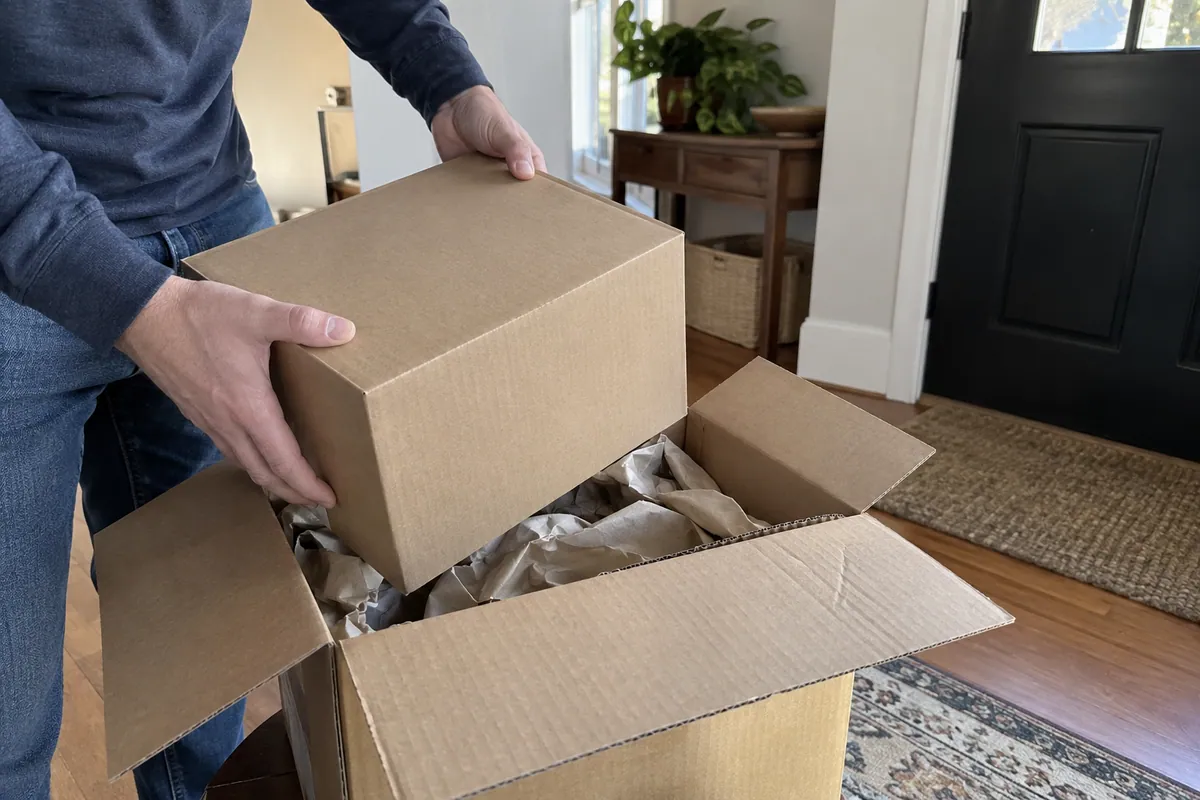
A retail-box redesign is easy to treat as a graphics project. For a baby monitor kit, it is also a protection change. A smaller box, a different opening method, a new insert, or a revised accessory layout can change how the parent unit, camera, adapters, and cables contact each other during handling. The practical question is not whether the new box looks stronger. It is whether the protection path is still understandable and reviewable.
What changes when the retail box changes?
Protection is a chain. The product sits in an inner arrangement; that arrangement sits in the retail box; the retail box may then sit in an outer shipping arrangement. A redesign can alter spaces, contact points, restraint, orientation, or how accessories move. None of those effects should be assumed from artwork or a render.
We recommend that brands begin with the approved pack-out reference. Identify each item, its intended position, the material separating it from other items, and the surrounding support. Then compare the new design one relationship at a time. This is more useful than asking whether the box “feels premium,” because it turns an aesthetic update into decisions that packaging, product, and purchasing teams can review together.
ANHONG supports packaging localization, samples, manufacturing, and quality testing for B2B baby monitor projects. When a buyer is changing a retail box, those capabilities can connect brand artwork and product configuration with a sample pack-out discussion. That does not mean a redesign has passed a transport test; the applicable review method and acceptance conditions must be agreed for the project.
Which protection relationships should a brand map?
Map the path between every item and the next protective layer. A camera may be separated from a parent unit by an insert; a power adapter may need its own restrained position; cables may need to avoid contact with a display or lens area. Record orientation as well as location. A box can contain every correct item and still create a new contact risk if an item shifts toward a sensitive surface.
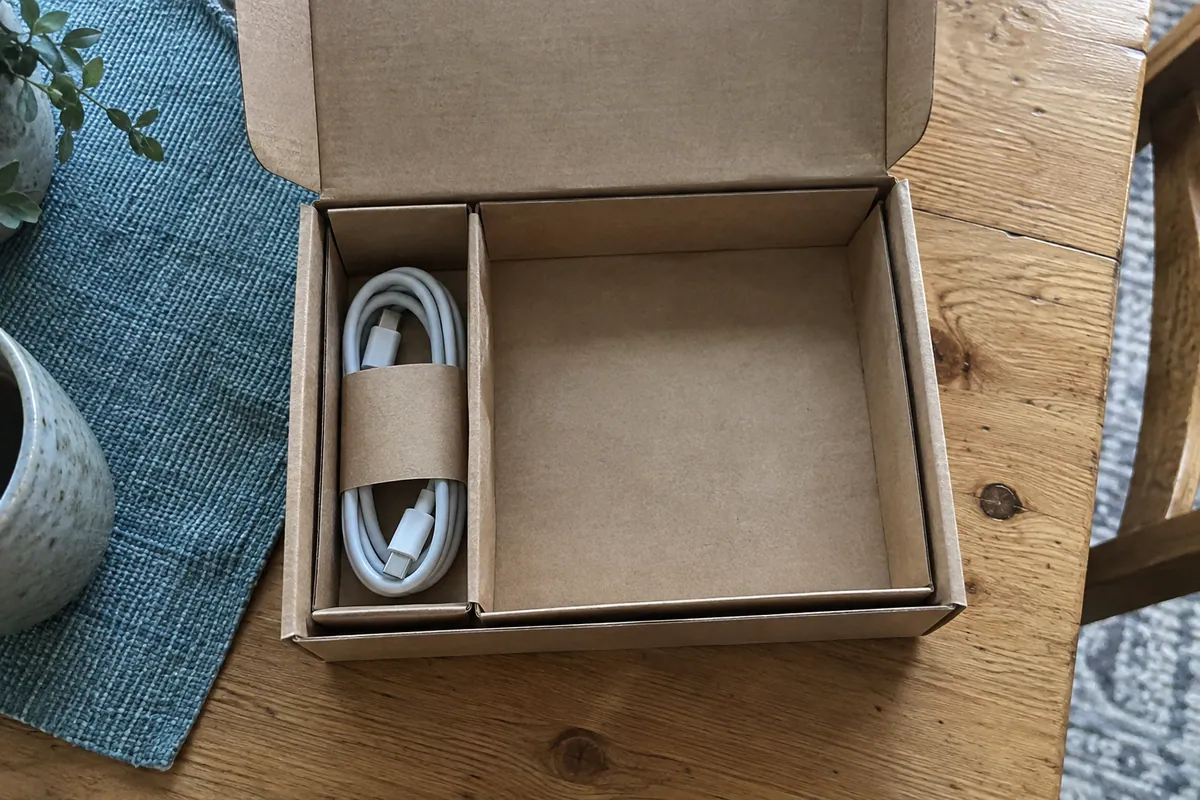
How can the Protection-Path Redesign Checklist help?
| Item or area | Previous arrangement | Proposed arrangement | What must be rechecked? | Decision |
|---|---|---|---|---|
| Parent unit | Display and controls protected from contact? | |||
| Camera unit | Lens, stand, and housing restrained? | |||
| Power accessories | Separated from product surfaces? | |||
| Cables and small parts | Position and containment remain clear? | |||
| Retail box / outer arrangement | Orientation and surrounding support defined? |
This checklist is an editorial planning tool. It does not substitute for a buyer’s product-specific packaging specification or any required test plan.
How should a redesigned pack-out be reviewed?
First review a physical or representative pack-out rather than only a flat artwork file. Open it as a customer would, remove items, and check whether the intended item positions remain clear. Then compare the proposed arrangement to the earlier approved reference using the checklist. If the change affects protection assumptions, agree what sample evidence, handling observations, or further evaluation is appropriate before commercial use.
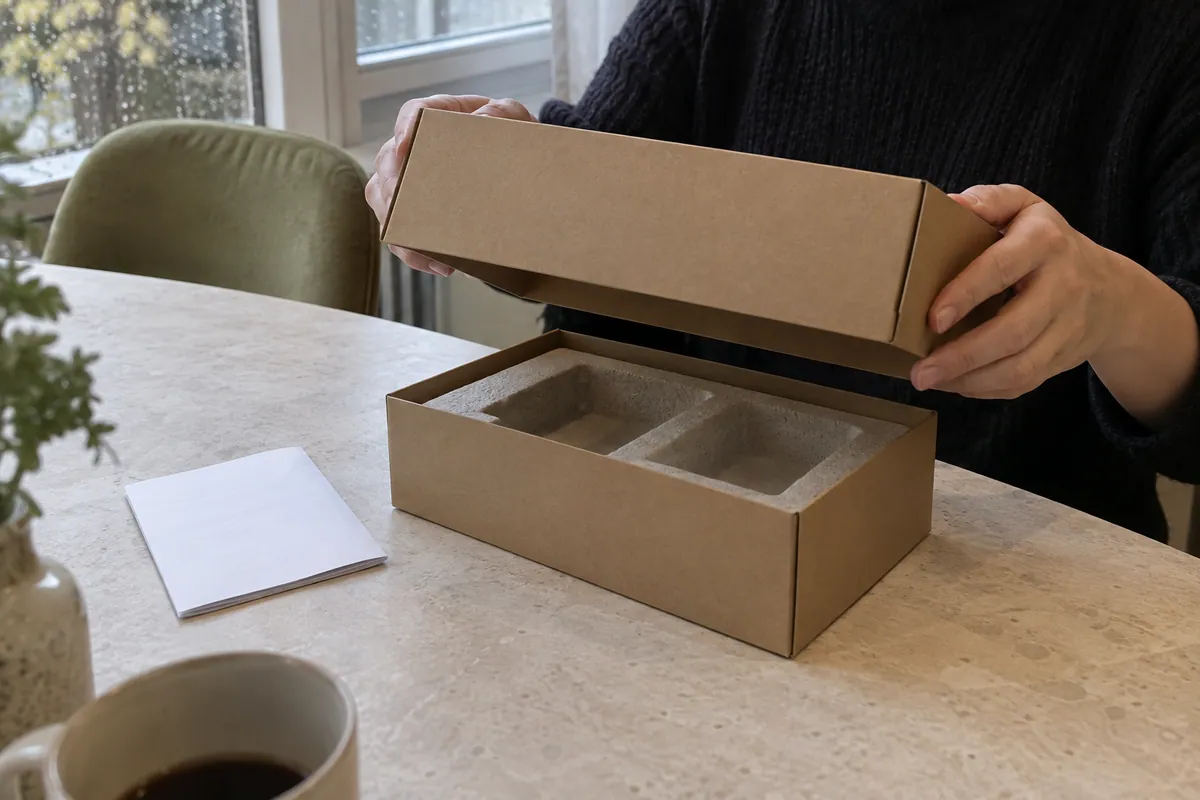
The review should make uncertainty visible. For example, if the new box reduces internal space, write down which separation or restraint needs confirmation. This gives the brand a meaningful question for its supplier instead of a vague request to “make it safer.”
An approved appearance is not transport-validation evidence. ISTA's retesting guidance addresses product, package and process changes, including interior packaging and materials. Its test-procedure overview also distinguishes screening from transport-environment simulation. Select the evaluation for the actual distribution conditions and objective; do not treat the appearance review as evidence that either test has been completed.
Why is this different from localization or kit control?
Packaging localization asks whether instructions, language, labeling, and buyer-facing information align. Kit control asks whether the correct configured items are included. This article addresses a narrower physical question: after the box changes, does the path that protects each product and accessory still make sense? The three reviews can occur together, but they should not replace one another.
ANHONG can help buyers bring product configuration, localized packaging inputs, samples, and manufacturing considerations into the same discussion. For brands with several retail channels or bundles, this can make it easier to keep the protection review tied to the exact configuration rather than to a generic box design. Include that configuration when discussing the project's quality and testing scope.
What should be retained after approval?
Retain the old and proposed pack-out reference, the revision identifier, the checklist, photos or other agreed evidence, and the buyer’s decision. On a later redesign, these records show what changed in the protection path instead of leaving the next team to reconstruct the previous decision.
Frequently asked questions: how should protection be rechecked?
Does a new printed sleeve require a full packaging review?
Its scope depends on whether it changes the protective arrangement. Record the proposed change and review the physical relationships it actually affects.
What if the same retail box travels through different channels?
Record the different outer shipping arrangements and handling routes. A retail box used inside a larger shipment should not be assumed to represent the same packaged product when sent individually; ask the packaging reviewer which configurations need separate evidence.
Can a heavier accessory be substituted without changing the box drawing?
Treat it as a product-configuration change for review. Ask whether the existing compartment, restraint and neighboring surfaces still represent the proposed kit. An unchanged drawing alone does not answer those questions.
Should an opened review sample be sent onward as an untouched test sample?
Keep its inspection history visible and let the testing provider define the required specimens. A sample opened for discussion should not silently be represented as having an untouched packaging history.
If you are redesigning a baby monitor retail box and want to turn the pack-out into a clear review conversation, contact ANHONG.


