How Should Brands Allocate Recording Features Across Entry and Premium Baby Monitor Models?
Allocate baby monitor recording features by product-line job, channel promise and support responsibility instead of treating them as a premium checkbox.

Recording is often treated as a simple premium checkbox: entry models do not record, premium models do. That shortcut can create a confused range. The right allocation depends on the customer task, channel promise, storage and support responsibilities, and the practical difference a buyer wants customers to understand at the shelf.
What should a feature allocation decide?
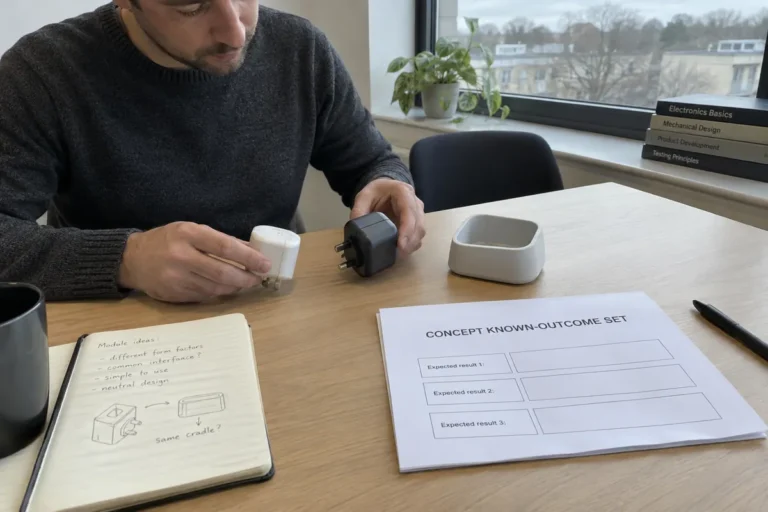
Start with the product-line job, not a list of recording modes. An entry product may need a clear, low-complexity live-view proposition. A premium product may justify a more involved recording workflow only when the brand also defines how it is described, configured, supported, and reviewed. Neither position is automatically superior.

| Line role | Buyer task | Recording decision | Support question |
|---|---|---|---|
| entry | straightforward live observation | include, exclude, or limit only by approved brief | how will the boundary be explained? |
| step-up | distinguish a channel offer | select the specific user value | what setup and recovery are required? |
| premium | support a defined review or continuity task | select configuration-specific capability | who owns storage and data questions? |
The Feature-Allocation Matrix does not specify event triggers, retention, playback, deletion, or storage performance. Those are separate requirements that need their own evidence when a project selects them.
Why should brands avoid feature ladders made from assumptions?
A higher retail position does not prove that more recording is useful. It can add interface decisions, support contacts, documentation, and market-specific questions. Conversely, excluding it from an entry model is only helpful when the alternative value proposition stays clear. The brand should articulate the customer decision each feature level supports: live reassurance, review of an agreed event, multi-view continuity, or another defined task. If nobody can state the task, the line item may be differentiation without a usable promise.
How should the range review work?
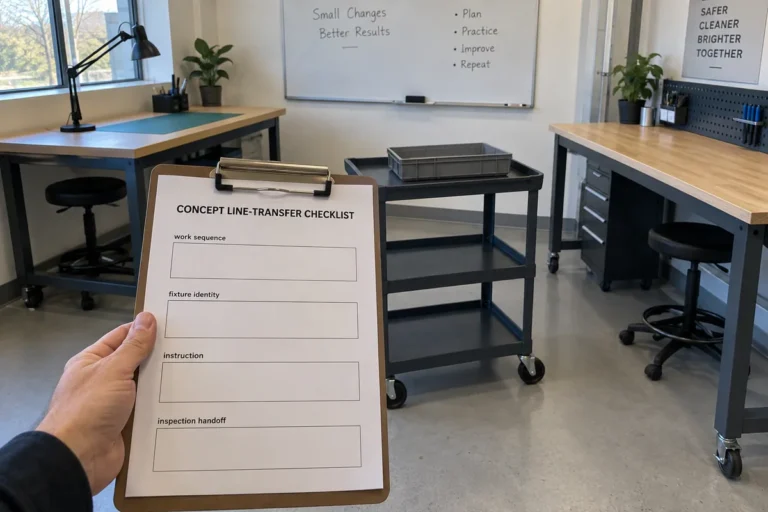
Put the candidate SKUs side by side in a matrix. For each, record target channel, intended buyer, primary live-view task, selected recording-related promise, required UI wording, storage/service owner, and support burden. Then check that a product removed from the matrix has not quietly appeared in packaging, app copy, or a retailer comparison sheet. This is portfolio work; it is not a test of whether a recording function starts or stops correctly.
Where does ANHONG connect to the decision?
ANHONG's product-definition and App/UI services let a brand discuss both the range distinction and the interface needed to explain it. Through a customization review, the brand can compare proposed configurations and identify which promises require additional development or service arrangements. That joined discussion is useful when the same physical product is being considered for different channel roles. It does not establish that a recording feature, storage method or entitlement is available across all models. Confirm each proposed SKU and target market separately.
How should channel differences be handled?
Do not assume that one retailer’s comparison language fits every channel. A marketplace listing may need a concise feature boundary; a specialist distributor may need a more detailed configuration sheet; a brand’s own store may need support and service references. The product-line matrix should identify the approved promise for each SKU, then let the commercial team adapt presentation without adding capability. If a channel requests a feature that belongs only to another model, treat that as a portfolio decision, not a copywriting change.

What makes the allocation durable through revisions?
Link each selected promise to an approved configuration and version boundary. When hardware, firmware, service terms, or packaging change, ask whether the original line role still holds. This modest change-control step prevents an entry product from inheriting premium language merely because a comparison table was copied forward.
How should buyers compare commercial cost with product clarity?
Ask the commercial team to list the additional work a feature creates: training, translated help copy, returns handling, account support, storage questions, or retailer education. That list is not an argument against a premium function. It reveals the operating commitment that must accompany it. Compare that commitment with the buyer task named for the SKU. A feature that creates a clear, supportable reason to choose the product may be worth the investment; a feature with no owner often becomes an ambiguous bullet point.
Review the matrix at sample approval, before packaging release, and whenever channel requirements change. These checkpoints ensure the production configuration, sales language, and after-sales plan still describe one product-line decision.
One final check is to compare the matrix with the quotation and approved product list. If a selected recording-related promise creates a different accessory, service, or documentation requirement, list that dependency beside the SKU. This does not decide storage implementation; it ensures that a commercial distinction has an owner before the line reaches a retailer.
For example, a retailer may request a recording-related bundle while the base SKU remains unchanged. Record whether the distinction is inside the product, in an included accessory, or in a separately supplied entitlement. These are different commercial promises even if the outer product looks identical. This is an illustrative allocation question, not an existing ANHONG offer.
What should the sales team be able to say?
The sales explanation should be narrower than “premium has everything.” It should identify the intended user benefit and the boundary: for example, the SKU is designed around a specified live-view task, while another SKU is being evaluated for a defined recording-related workflow. Avoid presenting a feature as continuous surveillance, a safety guarantee, or an unspecified cloud entitlement.
Frequently asked questions: how should recording be allocated?
What if a temporary trial is part of the premium offer?
Compare the product at purchase and after the trial ends. If the reason to choose the premium SKU disappears without an additional purchase, that dependency belongs in the allocation decision and customer explanation, not only in service terms.
Should an optional accessory count as an included recording feature?
Separate supported, included and separately required items in the range matrix. A compatible option is not part of every retail box. Only use the stronger included claim when the approved offer actually contains everything it names.
How should an old retailer comparison table be handled after a range change?
Identify the affected SKU rows and the channel owner. Preserve the version boundary so stock already sold is not silently described using the new offer. Updating the new brief does not prove every external comparison has been corrected.
Can a feature be removed without replacing the premium distinction?
Reopen the line-role decision. The range may still make sense through another verified benefit, but the sales team needs that new reason explicitly. Renaming the model does not resolve a missing reason to choose it.
To turn a product-line decision into an OEM/ODM brief, contact ANHONG.