How Should Buyers Evaluate Parent-Unit Screen Readability Under Household Lighting?
Learn how B2B buyers can compare baby monitor parent-unit screen readability under household lighting with task-based sample observations today.
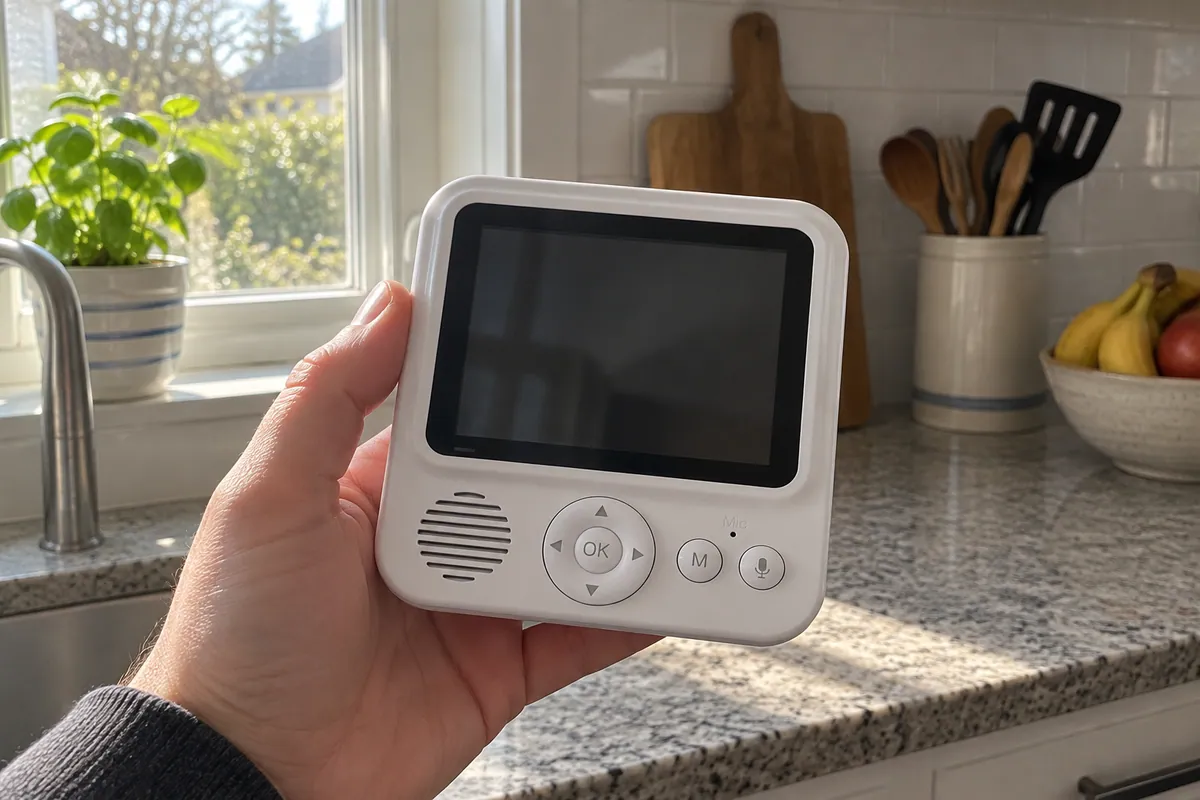
A parent-unit screen should be reviewed as a decision surface, not as a camera specification. A camera can capture a useful scene while the receiving display remains awkward to read at a kitchen counter, near a window, or during a brief night check. The practical answer is to test the agreed parent-unit sample in representative household lighting, with a short list of tasks and a record of the viewing conditions. Do not infer readability from pixel count, camera night vision, or a single showroom demonstration.
What Does Screen Readability Actually Mean for a Buyer?
Readability is whether a reviewer can complete the information task the product promises in the conditions the brand intends to support. That may mean recognizing the active view, locating a status indicator, finding a control, or deciding whether a closer look is needed. It is not a claim that a screen will be equally comfortable for every user, at every angle, or in every home.
Keep the receiving display separate from camera imaging. Camera low-light performance concerns what reaches the system; parent-unit readability concerns what the person can interpret on the display. A large on-screen image is not automatically legible if reflections, an awkward viewing angle, or unclear information hierarchy get in the way. OSHA notes that reflected glare on a display can make images harder to see; this is a general display-observation principle, not a baby-monitor standard or a prescribed household test method.
Which Tasks Should Define the Review Before the Lights Change?
Start with tasks, not with an unqualified request for a “bright screen.” Ask the brand team to name the information that matters at first use and during a quick check. A small, stable task set is easier to compare across samples than a collection of impressions.
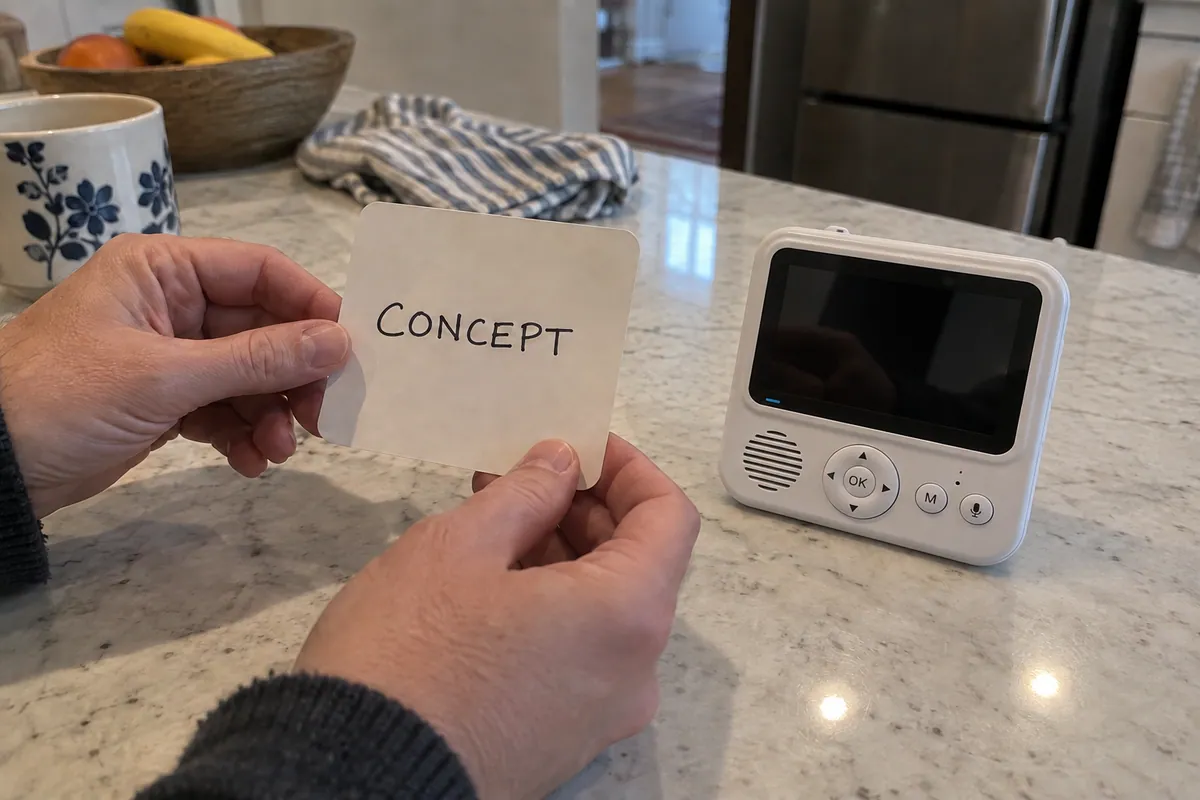
The following proposed worksheet makes the discussion concrete. It is a procurement tool, not a display certification standard.
| Proposed task | Viewing condition to record | Useful observation | Decision note |
|---|---|---|---|
| Identify the live view | daylight, indoor light, or both | Can the reviewer identify the intended scene without changing position? | state the sample and settings |
| Find an agreed status item, if present | angle, distance, reflections | Is the item located without trial-and-error? | name the exact item, if present |
| Use a frequent control | one-handed or placed on a surface | Is the control discoverable from the agreed screen state? | record the route used |
| Compare two candidate samples | same task, light, and viewing distance | What differs in the completed task, not just the first impression? | retain photos only when permitted |
Avoid turning the worksheet into a performance promise. “Readable at a window” has little value unless the screen orientation, task, ambient condition, and sample identity travel with the result.
How Can a Lighting Plan Stay Comparable Across Samples?
Use a modest set of scenes that reflect the intended buyer journey: an ordinary illuminated room, a side-lit daytime position, and a dimmer check if that is part of the product brief. Keep the camera scene, parent-unit settings, viewing distance, and evaluator task consistent when comparing samples. If a configuration change is allowed, label it rather than silently treating a tuned demonstration as the out-of-box product.
There is no need to create a laboratory claim when the purpose is a purchasing decision. A photograph of the setup, a short observation note, and the sample or firmware identity can be more useful than an untraceable “looks good” comment. If the brand needs an instrumented display requirement, it should define the method and acceptance threshold separately with suitable expertise.
Which Factors Should Not Be Folded into One Screen Verdict?
Separate these questions in the review record:
- Camera view content: whether the source scene contains the detail the task needs.
- Display readability: whether the parent-unit screen lets the reviewer use that information in the specified condition.
- Control design: whether the path to a setting is understandable; this is not the same as screen contrast.
- Battery or charging behavior: whether the unit remains available for the stated task; this needs its own configuration-specific review.
This separation helps a buyer give a supplier a useful correction request. “Improve the screen” is vague. “Make the active-view indicator easier to locate in the agreed side-lit task” identifies a user-facing outcome without pretending to prescribe an unverified engineering solution.
How Can ANHONG Turn a Readability Brief into a Product Discussion?
ANHONG works with B2B brands on product definition, hardware, firmware, App/UI, samples, and quality testing. For a project where parent-unit readability is a buying requirement, that scope gives a brand a place to bring the task list, candidate packaging language, and sample observations together rather than treating the display as an isolated late-stage issue.
The right scope still depends on the selected platform and configuration. ANHONG should first confirm which parent-unit functions and adjustments are available on the proposed product. From there, a brand can use the worksheet to distinguish a request about information hierarchy, a control flow, a viewing condition, or a supplied sample configuration. That distinction is useful for standard sourcing, Private Label, OEM, or ODM work because it makes the requested change reviewable.
For a broader brief, see ANHONG’s baby monitor product development scope and pair display observations with the quality-control and testing discussion. Neither page substitutes for a model-specific sample review.
What Else Should Buyers Ask During a Screen Readability Review?
How should two reviewers handle different results?
Keep both observations. First check whether they used the same task, sample, viewing position, and lighting condition. If they did, record the different outcomes and ask whether the task wording, information hierarchy, or buyer acceptance boundary needs to be made more specific before the next review.
Can a phone photo of the screen replace the reviewer’s observation?
No. A photo can preserve the room setup or a point for later discussion, but the acceptance record should state what the reviewer could identify and do in the documented condition. Label any image as supporting context rather than as the decision by itself.
What if automatic brightness cannot be disabled for the selected sample?
Record the observed setting behavior, whether a relevant adjustment was available, and the task outcome under the agreed conditions. The brand can then decide whether that behavior fits the product brief or needs follow-up; it should not be silently treated as a fixed manual setting.
Should protective film be present during the review?
Record its presence or removal as part of the sample condition. A comparison is only useful when the team knows whether the same physical presentation was used for each candidate sample.
What Should a Brand Send Before Asking for a Readability Review?
Send the target market, intended parent-unit tasks, representative lighting situations, and the exact questions that must be answered in a sample review. If packaging or first-use guidance affects the task, include that material too. Contact ANHONG to discuss a configuration-specific sample brief and how its product definition, sample, and testing services may fit the project.


