How Should Buyers Evaluate Parent-Unit Charging During Active Use?
Evaluate parent-unit charging during active baby monitor use with a documented configuration, approved equipment, and a practical sample record.
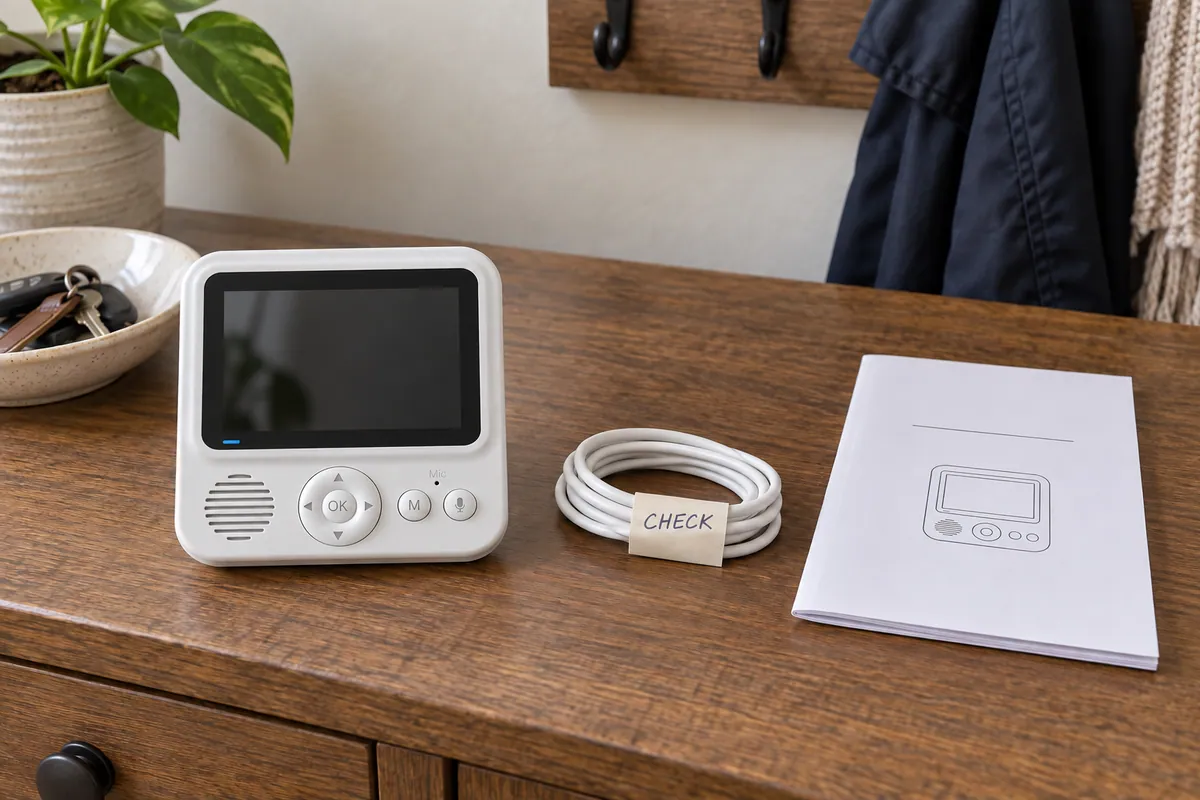
Charging behavior deserves its own sample review when the parent unit is expected to remain in use while connected to power. The goal is not to prove battery safety, charging speed, runtime, or lifetime. It is narrower: for a supplier-confirmed configuration and the supplied, documented charging method, does the parent unit preserve the agreed active tasks when power is connected and when it is removed?
Begin only after confirming that the product documentation permits the intended charging arrangement. Use only the supplied or documented compatible power equipment. Do not substitute chargers, alter cables, open the unit, test damaged equipment, or construct a stressful experiment. If the manual says a task is unavailable during charging, record that as a product requirement rather than treating this article as permission to override it.
Which Conditions Must Be Confirmed Before the Review Starts?
First identify the exact parent unit, hardware and firmware identity where available, charging accessory, power source permitted by the documentation, current charge state, and active task to be observed. “Connected to a charger” is not enough for an approval record. A dock, cable, adapter, display icon, or operating mode may differ by configuration.
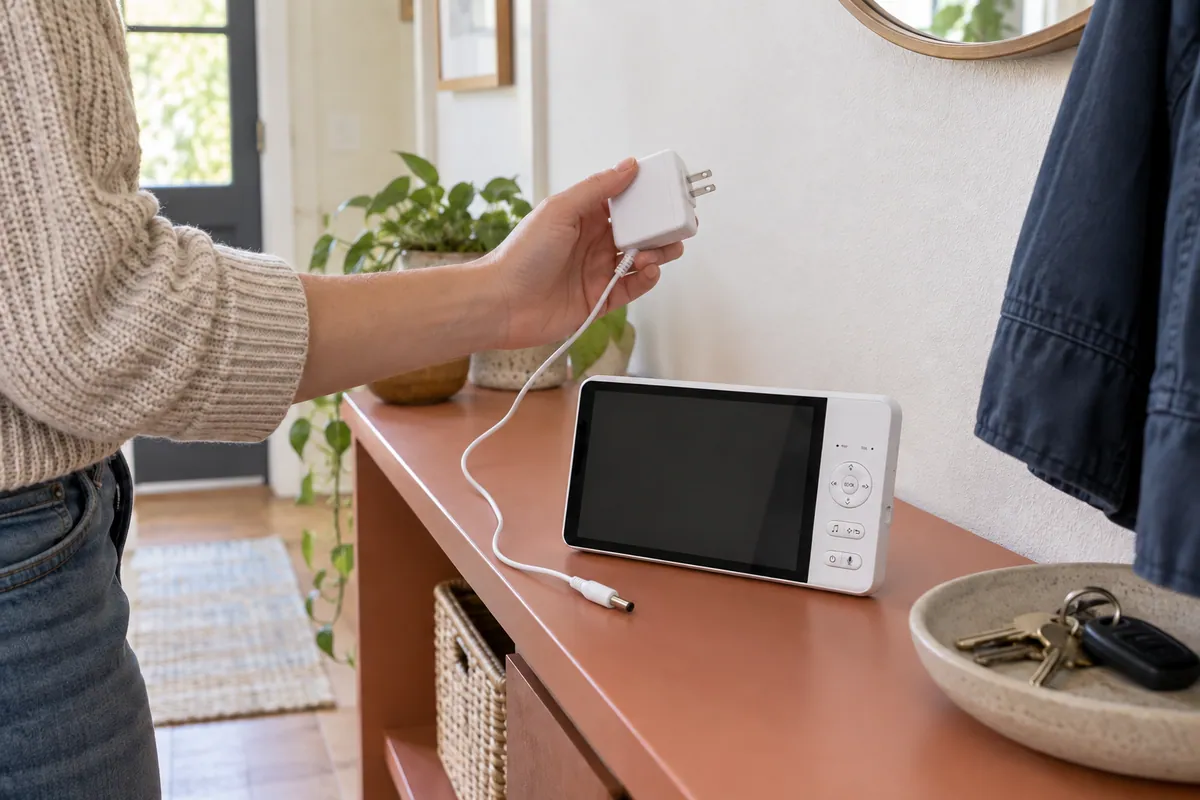
Then agree what the buyer needs to remain usable. Possible tasks might include viewing the selected camera path, receiving the configuration’s documented audio or alert behavior, navigating a frequent control, or understanding a charging indication. Do not list a task merely because another model has it. The supplier should confirm the selected configuration’s functions first.
How Should Buyers Observe Active Use Without Turning It into a Battery Test?
Use a short, repeatable sequence tied to the intended task. Observe the parent unit in its documented operating state, connect the approved charging equipment as instructed, confirm whether the task remains available or changes state, then remove power in the documented manner and record what happens next. Repeat only as appropriate for the supplied instructions and project brief.
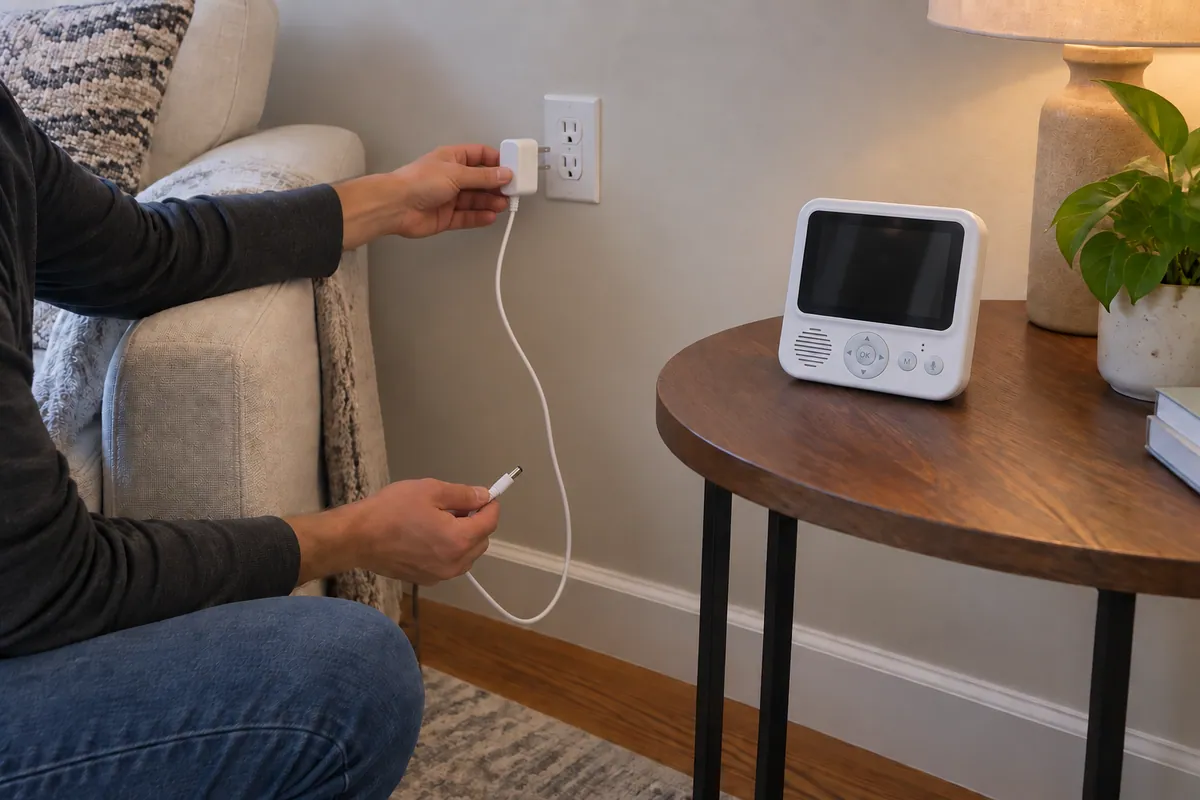
The proposed Active-Use Charging Observation Record gives the buyer a way to report the result without inventing a performance claim.
| Observation point | Record before connection | Record while connected | Record after documented removal |
|---|---|---|---|
| Configuration identity | model/sample, available version detail | same configuration confirmed | same configuration confirmed |
| Approved equipment | documentation reference and supplied item | connection method used | removal method used |
| Selected active task | starting state and expected task | task available, changed, or not evaluated | resulting state and next action |
| User indication | documented indication, if present | observed indication, if present | observed indication, if present |
| Follow-up | open question | retest or document request | acceptance decision owner |
This worksheet does not establish charge rate, thermal behavior, battery health, electrical safety, or endurance. Those are different questions that require their own evidence, procedures, and in some cases specialist assessment.
Why Should Connection and Removal Be Treated as Separate Moments?
A buyer who only checks that the parent unit is “still on” can miss the actual customer task. Connection may change a visible state, enable or disable a documented mode, or require a user action. Removal may return the unit to a different state. Those observations are useful only when they are linked to the sample identity and the instructions the customer would receive.
The review should also distinguish expected behavior from an unexpected observation. If a documented feature is unavailable while connected, record the documentation reference. If the result conflicts with the agreed configuration, stop short of diagnosing the cause. Ask the supplier to confirm the sample, instructions, and next review step instead of assigning an engineering explanation from one observation.
How Does This Differ from a Battery Runtime Article?
Runtime is a duration question: how long a defined configuration operates under a stated method. Active-use charging is a continuity question: what happens to an agreed task while approved power is connected or removed. Keeping them separate prevents an impressive runtime figure, or a full-charge icon, from being used as evidence that an active task behaves as expected.
The distinction also protects scope. This article does not recommend a universal charging routine or make a battery safety statement. The correct procedure remains the manufacturer’s documentation for the selected product and market. A buyer can add an active-use observation to its sample brief without turning it into a claim about all models.
How Can ANHONG Connect This Observation to a B2B Project?
ANHONG provides product definition, hardware, firmware, samples, mass production, quality testing, packaging localization, compliance support, and B2B after-sales coordination. In a project where charging during active use matters, that scope can help the buyer identify the right inputs: the proposed platform, supplied accessory, permitted operating method, customer-facing language, and evidence expected from the sample.
The important limitation is configuration. ANHONG should confirm whether the selected parent unit supports the requested active use and how its documentation describes charging. The service list is not a promise that every model performs the same task while connected to power. Once confirmed, a clear observation record can help separate a packaging question from a firmware question, a sample issue, or a post-sale coordination need.
Use the sample, MOQ, and lead-time page to frame the sample stage, and consult ANHONG’s quality-control and testing scope when deciding what evidence should travel with an approved configuration.
What Else Should Buyers Ask About Charging During Active Use?
How should the team record the state selected after power is removed?
Record the observed state, the next user action required by the documentation, and whether the agreed task can continue. Do not label an observed state as “standby” unless that term appears in the selected product documentation.
How can a team assess an audio-related task when the screen is not illuminated?
Define the audible or control-related part of the documented task before the run. If the task requires visual confirmation that is unavailable in the observed state, record that the task could not be assessed under that condition rather than inferring its outcome.
What if the current charge state is unknown at the start?
Record it as unknown. The team can pause for the documentation or supplier clarification needed by the brief, or proceed only with a review question that does not depend on a stated charge level. It should not estimate a state from an icon or elapsed time.
How should regional power-accessory differences be handled?
Name the target market, the supplied or documented charging arrangement, and the specific sample combination under review. Keep results tied to that arrangement until the relevant configuration and documentation are reviewed.
What Should a Buyer Send ANHONG Before a Charging-Use Review?
Send the proposed model, target market, supplied charging arrangement, documentation reference, active task to observe, and the decision that depends on it. Contact ANHONG to confirm the configuration and discuss a sample brief. That preparation gives the conversation a clear boundary: it asks how a documented product behaves during a defined task, not for an unsupported promise about every battery or charger.


