How Should Buyers Review the Durability of Product Markings and Labels?
Review baby monitor markings by purpose, location, handling and configuration-specific evidence, without inventing test limits or market approvals.
Buyers should review product-marking durability by defining what the mark must communicate, where it appears, the handling it will encounter, and the evidence needed for the selected configuration. A label or printed mark is not merely decoration. It can carry product identity, user-facing control information, a market-specific statement, or a support reference. Each purpose changes what “still readable” should mean.
This article offers a Marking Evidence Card for baby-monitor brands. It does not assign a universal rub count, chemical exposure, label construction, or compliance status. Any test method and acceptance basis must be agreed for the actual material, marking process, model, configuration, and target market.
What Should Be Identified Before a Durability Request?
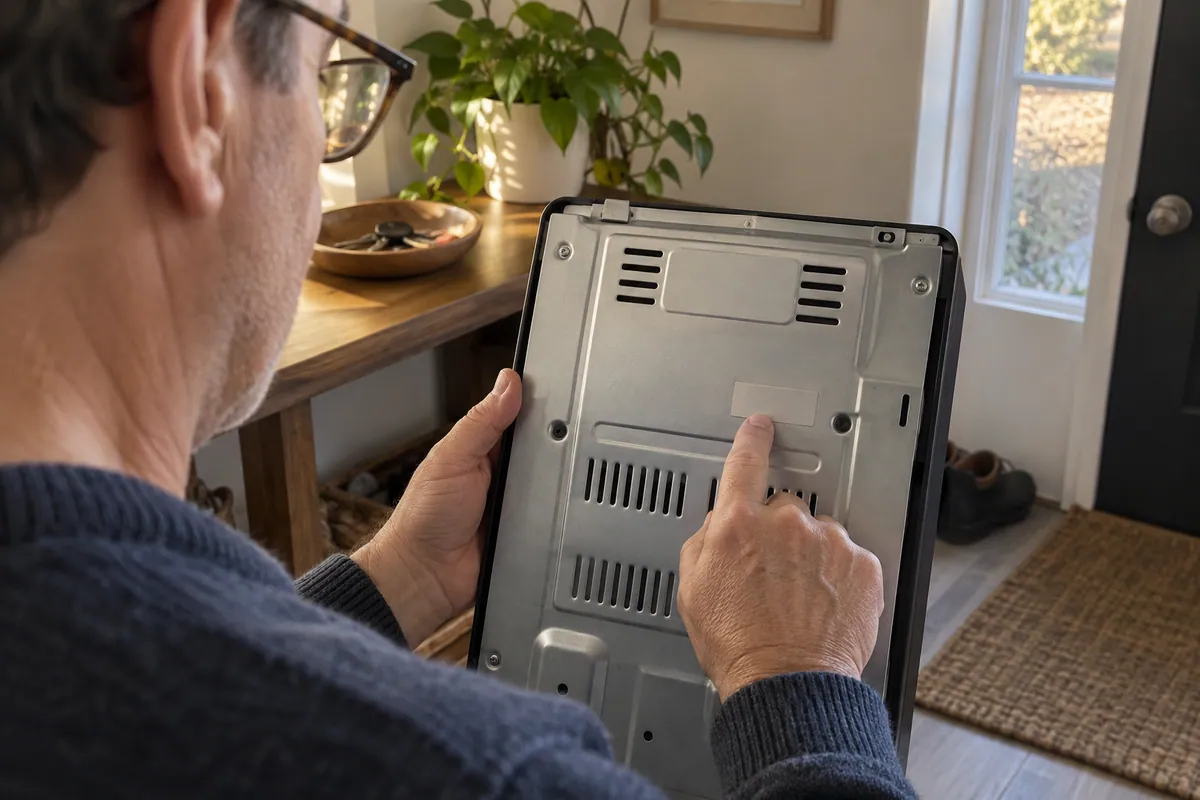
Start by naming the marking and its job. “Back label” is too broad. Record whether it identifies the product, helps a user operate a control, supports pack-out handling, or carries a required market item. Then record where the mark sits: a frequently touched face, a cable-adjacent recess, an underside that is seen only during setup, or packaging rather than the product itself.

This avoids two common errors. First, a team may spend effort on a decorative mark while an identification label has no defined reading condition. Second, a team may treat every printed item as subject to the same handling even though its exposure differs. The buyer's requirement should identify the anticipated interaction rather than assume an unnamed “standard use.”
| Field | What to record | Why it matters |
|---|---|---|
| Mark identity | Artwork or content revision and intended role | Links the review to the correct text and configuration |
| Location | Product area or pack component | Defines the likely user and handling context |
| Readability task | What a user, service team or channel partner needs to identify | Prevents appearance-only judgement |
| Exposure input | Proposed handling, care instruction or package contact | Sets the evidence question without inventing a test |
| Decision evidence | Sample, report, visual reference or approved instruction | Makes release status traceable |
The card should retain the human-readable content and the applicable approval record. A photograph can show where a marking sits, but it may not prove adhesion, abrasion resistance, contrast under all conditions, or legal adequacy.
Why Is a Marking Review Different From Cosmetic Approval?
An appearance-acceptance review deals with what a buyer considers acceptable in a customer-facing visual review. Marking durability is narrower and more functional. It asks whether the specified mark remains usable for its named task after the handling that the project has actually defined.
A small scuff can be visually unimportant on one decorative area yet critical if it obscures product identity or a control label. Conversely, a pristine-looking label may still be wrong if it contains an obsolete configuration or market statement. Keep content correctness, placement, attachment, and continuing readability as separate review fields. A single “label approved” status hides these distinctions.
How Should Buyers Describe Use Without Inventing a Test?
Describe the observable scenario: normal holding near a control, occasional identification during setup, contact with an intended accessory, or the documented care method. Do not turn a scenario into a test protocol unless the project has an agreed method and qualified evidence. A request can say, “Review whether this control legend remains readable after the documented handling condition,” without claiming an unperformed endurance result.
If the target market requires a particular marking or test basis, the brand should supply the applicable requirement and the exact product configuration for review. Product documents can vary by model, configuration, and market. A company-level system document or a generic label mockup is not proof that the selected mark satisfies a market obligation.
ANHONG supports product definition, ID and structural design, samples, quality testing, packaging localization, and compliance support. That lets a buyer bring artwork revision, physical location, target market, and requested evidence into one discussion. It does not establish that every marking is approved for every destination. Use quality-control and testing to frame the evidence request, then confirm the model-specific scope.
What Evidence Should Travel With a Marking Change?
When artwork, substrate, marking process, housing finish, location, or care instruction changes, record the before-and-after identity and ask whether the earlier evidence still applies. A change in wording can affect content approval without changing physical retention. A change in surface texture can affect the physical review without changing the wording. Linking both under one revision label makes later questions harder to resolve.
Keep a concise change record: affected product configuration, old and new marking identity, reason, decision owner, evidence requested, and release status. If an approved sample is used as a visual reference, identify its date and scope. Do not let a retail render silently replace an approved physical or controlled record.
How Can the Marking Evidence Card Help a Buyer at Release?
At release, review the card with the product and packaging records. Confirm that the intended mark is on the named configuration, that its wording and placement are approved for the stated scope, and that any required evidence is present or explicitly open. The outcome can be approved, pending, restricted to a stated scope, or returned for clarification. It need not become a sweeping claim that a label “will never wear.”
For a private-label or OEM project, share the target market, artwork revision, marking role, likely handling, and desired evidence through baby monitor customization. For sample review or a controlled release discussion, contact ANHONG with the actual configuration. That gives the team a better input than a generic request for “durable printing.”
What Do Buyers Ask About Product Markings?
Can a clear photograph replace a durability review?
No. It can establish visible content and placement at one moment, but it does not establish continued readability, attachment, or the applicable market basis.
Should a barcode be covered by this same record?
Link it, but keep barcode scannability and applicable verification evidence distinct. A barcode review addresses the scan and verification question; a human-readable label review alone is not enough.
Does an unchanged label text mean no new review is needed?
Not necessarily. A change in substrate, printing process, position, housing surface, or intended care can alter the evidence question even when the text is unchanged.
Who resolves an unclear market-marking requirement?
The brand should identify the qualified owner and relevant market requirement. ANHONG can support the configuration and document discussion; no generic company statement should substitute for product- and market-specific confirmation.