How Can Buyers Test Baby Monitor Interference in a Busy 2.4 GHz Environment?
Plan a repeatable baby monitor interference test. Record wireless activity, video freezes, audio interruptions and recovery before accepting samples.
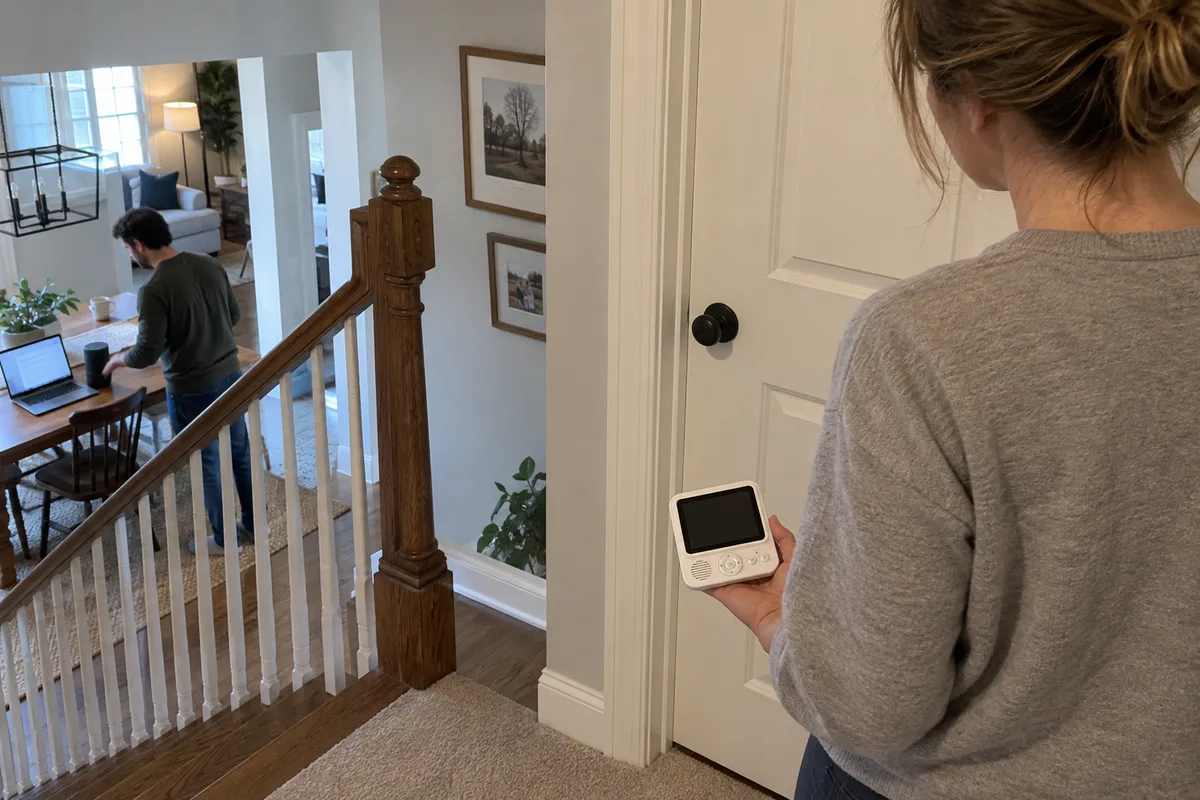
A baby monitor interference test should tell a buyer what happens to viewing, audio and recovery when the surrounding wireless environment changes. A router sitting next to a sample is a scene, not yet a test: you also need to know whether it is carrying traffic, where the devices are placed and what counts as an interruption.
I would start with a simple purchasing question: can another team reproduce the demonstration after the supplier has left? If the answer is no, the result is difficult to put into an acceptance specification.
This guide proposes a comparative sample-review method. It does not report measured ANHONG performance or prescribe a regulatory radio test.
What Should a Baby Monitor Interference Test Keep Constant?
Identify the camera, parent unit, firmware and operating mode. Mark their positions and orientations. Record power conditions, video settings and the observation period. If an app is included, identify its version, phone and connection path separately.
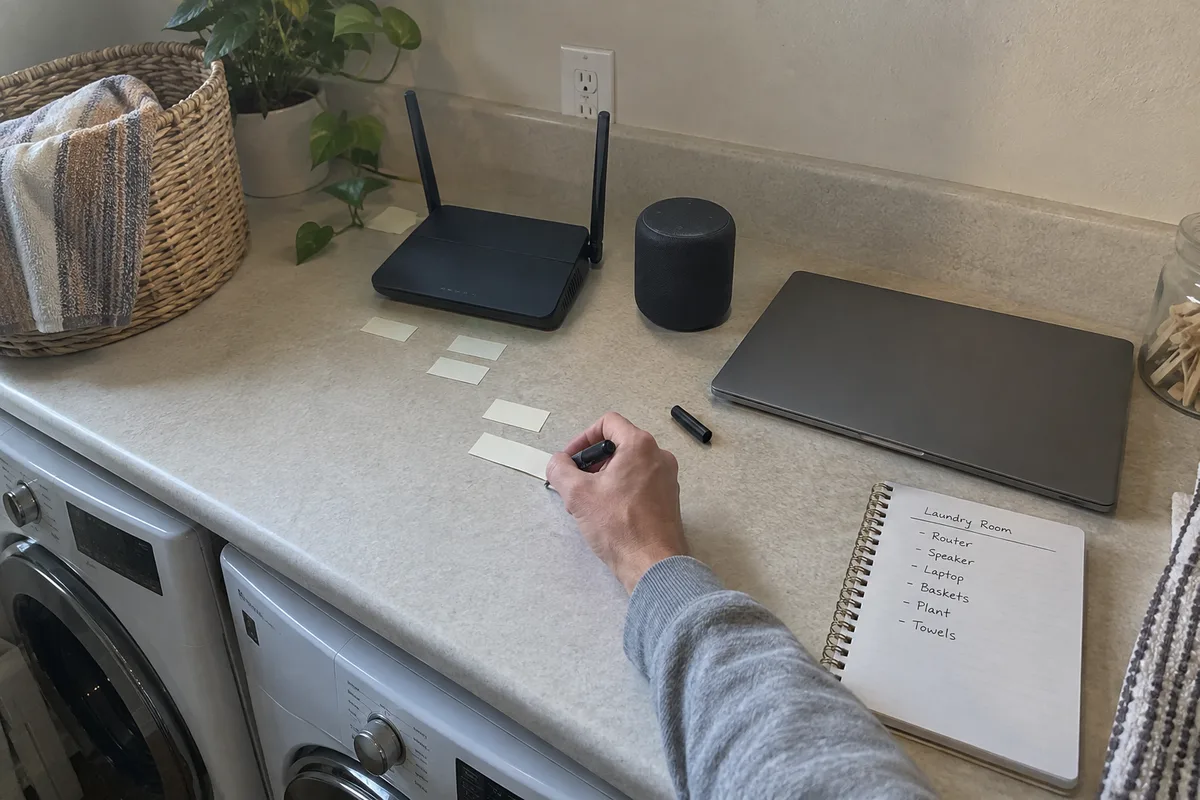
Then define the surrounding equipment. A useful household scenario might include a Wi-Fi router handling a sustained local transfer, a laptop and Bluetooth audio playback. Record the Wi-Fi band and channel, the traffic-generating task and the positions of both ends of that traffic. Merely counting nearby devices does not describe their activity.
Bluetooth uses frequency hopping as part of its interference-management approach, as described in the Bluetooth Core architecture. That does not establish how a particular baby monitor’s proprietary radio behaves. Ask the monitor supplier which mechanism its offered configuration actually uses.
How Should You Separate the Baseline from the Stress Condition?
Begin with the agreed layout and with your controllable traffic sources inactive. Call this a baseline, not an interference-free room: neighboring networks may still be present. Observe the monitor long enough to cover the viewing and audio tasks in the brief, and retain a continuous record where practical.
Enable one traffic source without moving the monitor. Repeat the same task. Next, test the agreed combination of household activity. Keep router distance and video mode unchanged so that the comparison has one documented explanation.
Finally, stop the added traffic and observe the return to baseline. If the picture recovers only after restarting the product, that is a different outcome from automatic recovery. Record the action required; do not quietly reboot between clips and call both runs uninterrupted.
My preference is to repeat the sequence on more than one sample and on separate runs. Choose the sample count and duration with the supplier before testing, based on the purchasing risk, rather than inventing a universal pass threshold.
What Can a Buyer Observe Without Radio-Diagnostic Tools?
Give the camera a repeatable moving subject: for example, move a striped card along a marked route. A stationary picture makes a freeze harder to notice. Use a repeatable sound sequence for the audio check and keep its source level and distance fixed. This is a functional comparison, not an acoustic calibration.
Separate visible freeze duration, audible interruption, link-loss indication and time to usable recovery. A displayed signal icon can be recorded, but it should not replace the functional observations. Do not label screen freezes as measured packet loss unless packet-level instrumentation actually supports that claim.
Ask for engineering logs when a problem repeats. Record the symptom and timing first, then let the supplier correlate that record with its radio diagnostics. A symptom alone does not identify its cause.
Why Should Router Separation Be a Separate Experiment?
If a supplier recommends moving the router, preserve the original result. Mark a second router position, measure the changed separation and repeat the same workload. This gives you a placement comparison rather than an undocumented improvement.
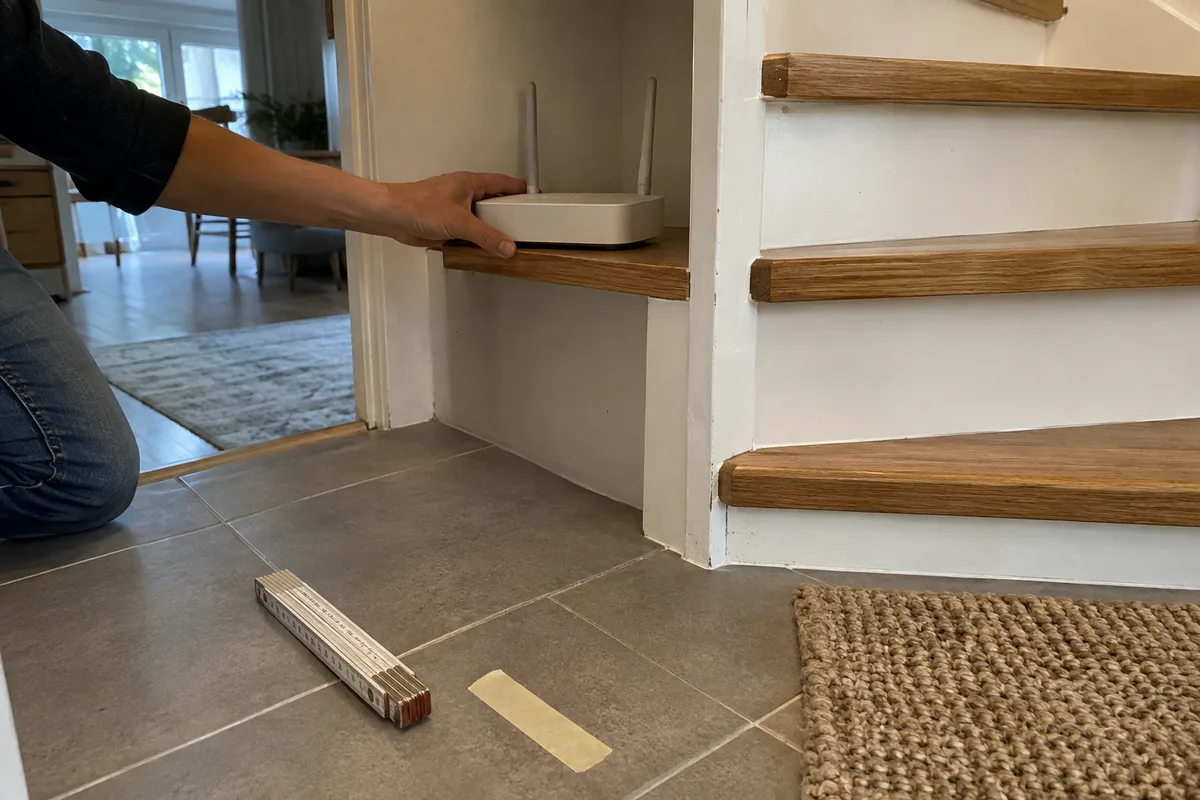
A better result at the second position is useful, but it changes the installation condition. Decide whether that condition is realistic for the homes your product is intended to serve. If the customer instructions need a placement recommendation, review it against the actual product evidence.
What Should the Acceptance Record Include?
Use this worksheet as a proposed procurement tool. Agree thresholds before reviewing results.
| Record | What to capture | Decision it supports |
|---|---|---|
| Configuration | Sample IDs, firmware, viewing mode, power | Were equivalent samples compared? |
| Layout | Device positions, orientation, measured separation | Can the setup be reproduced? |
| Traffic | Source, band/channel, workload and timing | What changed from baseline? |
| Observation | Duration, moving target and sound sequence | Was the same task observed? |
| Video | Freeze definition, event count and duration | Was viewing acceptable? |
| Audio | Interruption definition and affected intervals | Was listening acceptable? |
| Recovery | Recovery time, manual actions, warning behavior | Is the failure handling acceptable? |
| Evidence | Original clips, timestamps, logs and exceptions | Can another reviewer check the result? |
Keep functional acceptance separate from regulatory compliance. Passing this household exercise does not replace the applicable radio tests or authorization records.
What Else Do Buyers Ask About Interference Testing?
Does a connected router create a sufficient stress test?
Not by itself. Document an active, repeatable workload and its band, channel and placement. An idle router and a sustained transfer are different conditions.
Should Wi-Fi and Bluetooth be tested together immediately?
Test them separately first, then together. That makes a failed combination easier to investigate without treating either technology as the proven cause.
Can buyers compare two products in the same room at once?
Prefer separate baseline runs unless simultaneous operation is the intended scenario. Additional active samples change the environment being evaluated.
What if a sample disconnects only once?
Retain the event and repeat the same conditions. Report its occurrence and the number of runs; neither discard it automatically nor generalize one event into a fleet-wide defect rate.
What Should You Send ANHONG Before a Coexistence Review?
Send the target installation, viewing mode, expected wireless equipment and the interruptions your channel considers unacceptable. Include your proposed observation period and recovery criteria.
ANHONG can discuss sample requirements and quality testing for a sourcing or OEM/ODM project. Start a product discussion with ANHONG with that brief. A useful baby monitor interference test ends with a reproducible record, not just a reassuring demonstration.
For the wider acceptance process, review ANHONG’s quality-control and testing scope.


