How Should Buyers Investigate Reflections Near a Baby Monitor’s Infrared Window?
Investigate a baby monitor infrared-window reflection by isolating one scene condition at a time without turning an observation into a diagnosis.
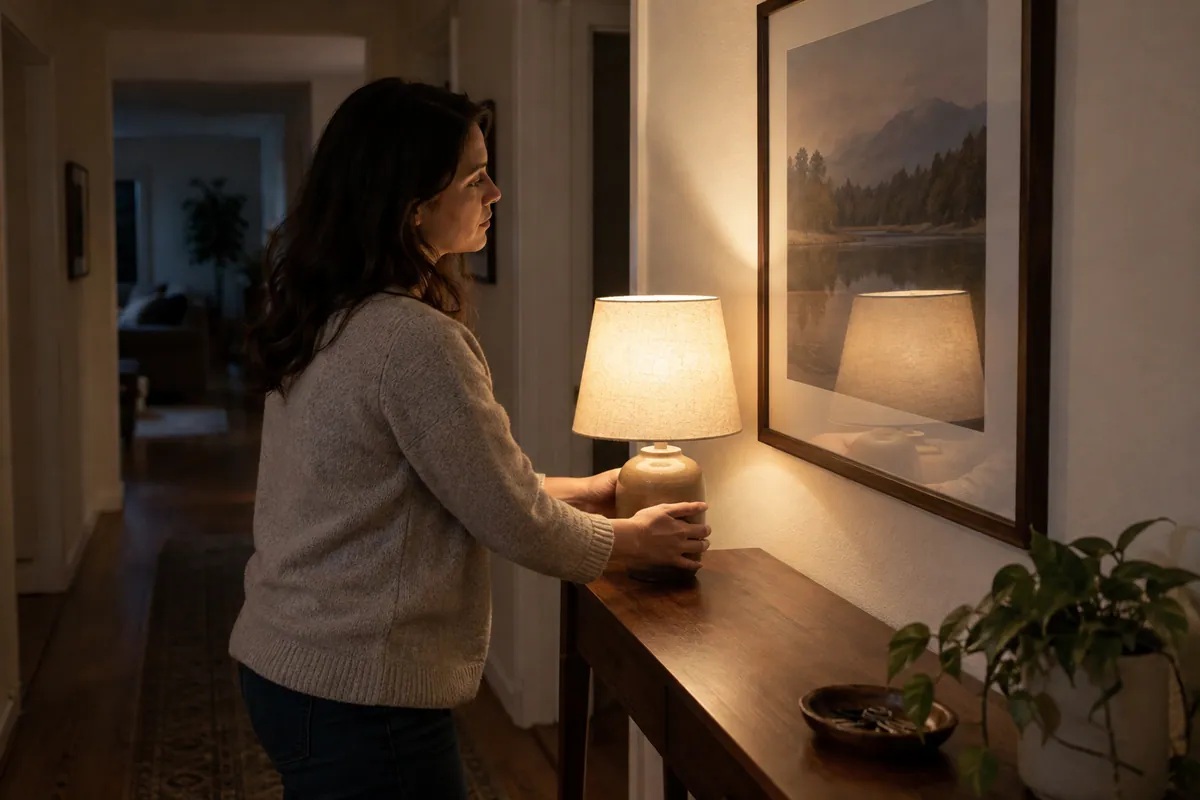
An unexpected bright patch near an infrared window is a scene-and-hardware observation, not a diagnosis. Reflections can involve nearby surfaces, protective materials, window geometry, camera placement, and active illumination. A buyer should isolate the relationship before asking for a change.
What should be recorded first?
Record the exact sample, firmware, operating mode, camera position, nearby surface, distance, and whether any protective film or accessory is present. Capture the observation only where permitted, then repeat it after changing one condition at a time. Do not infer that a bright area proves an optical defect or that one room represents every installation.
How can an isolation record work?
Compare the agreed scene with the relevant surface at its normal position, then alter only that surface position or condition. Keep the target and camera position stable. Record whether the observed bright region changes, whether the required target remains interpretable, and what remains uncertain. This proposed Reflection Isolation Record is not a night-vision acceptance test.
Which boundary protects the buyer from overclaiming?
Do not call the result “infrared safety,” “range,” or a universal low-light quality result. The review is about a local optical relationship near the offered camera. If the brand needs a defined optical, compliance, or safety claim, request evidence applicable to the exact model and market from the responsible technical parties.
ANHONG can discuss product definition, camera hardware, and sample-review scope. A buyer can bring a documented scene and ask which configuration details should be checked. That scope does not establish a root cause or promise that every housing/surface combination will produce the same result.
Why should near-infrared conditions be identified separately?
In a night-oriented observation, the camera may be working with illumination and optical components that are different from its normal visible-light scene. Edmund Optics explains that camera systems may use removable IR-cut filters when near-infrared imaging is required; that general optical context is useful for asking which operating mode and assembly were observed. It does not identify the design of a particular baby monitor or prove why a bright patch appeared. The buyer should record the actual mode and request configuration information only from the responsible technical party.
How should the isolation sequence be planned?
Begin with the ordinary intended scene. Note the window, bezel, adjacent wall, glossy object, protective film, or nearby fabric that is present; do not add surfaces merely to create a dramatic result. Then select one variable to change. For example, move the nearby reflective object while leaving camera position and target unchanged, or keep the scene fixed while comparing the documented operating mode. Return to the baseline after each run. A sequence that changes camera angle, target distance, and room surface at the same time cannot tell the team which relationship mattered.
| Step | Keep fixed | Change once | Record |
|---|---|---|---|
| baseline | sample, target, position, view path | nothing | observed local bright area |
| surface check | sample and target | named nearby surface condition | change or no change |
| placement check | target and surface | permitted camera position | framing and observation |
| mode check | scene and hardware | documented operating mode only | visible difference and uncertainty |
The purpose is not to chase an ideal-looking frame. It is to create a record a second reviewer can repeat and an engineering team can understand. If an observation disappears after a placement change but the required scene is no longer visible, record both outcomes. A visual improvement that defeats the product’s framing task is not a complete resolution.
What should the brand ask before requesting a product change?
Ask whether the condition occurs in the approved configuration, whether it affects the named user task, whether the scene was representative, and whether the supplier has enough evidence to examine the relevant assembly or settings. Then agree the next step: a different documented sample, a configuration review, a revised placement instruction, or a further test plan. Do not demand a material, lens, or illumination change from an unverified screenshot.
How should this reach documentation and support?
If the result identifies a permitted placement limitation, the buyer can decide whether instructions need clearer conditions. If it identifies a sample question, keep it in the technical review rather than turning it into public copy. For a localized product, ensure packaging and user materials do not promise night-view behavior beyond the accepted configuration. The record should include the decision owner and whether the issue remains open after the sample discussion.
What makes the record useful at a later review?
Keep the baseline scene description, photographs or clips only where authorized, sample and software identity, target location, each single-variable change, and the reviewer’s unresolved questions. Identify whether the view was on a parent unit or app. A later reviewer can then repeat the same order rather than rebuilding the scene from memory. This does not guarantee a fix, but it converts a vague visual complaint into a bounded technical and commercial discussion.
Frequently asked questions: how should reflections be handled?
Should the buyer remove a film or cover?
Only if it is part of the agreed sample condition and the action follows supplier instructions; record the condition either way.
Does moving the camera prove a fix?
No. It can isolate a relationship, but may also change the intended framing task.
What evidence should be retained?
Scene description, configuration, changes made one at a time, observation, and open questions.
Is this the same as night vision?
No. It is a narrow local-reflection investigation; broader low-light review needs separate tasks.
For a sample investigation tied to your actual installation brief, contact ANHONG.