How Should Buyers Test Baby Monitor Range Through Walls and Between Floors?
Plan a baby monitor indoor range test through walls and between floors. Record routes, obstacles, viewing quality and recovery for sample acceptance.
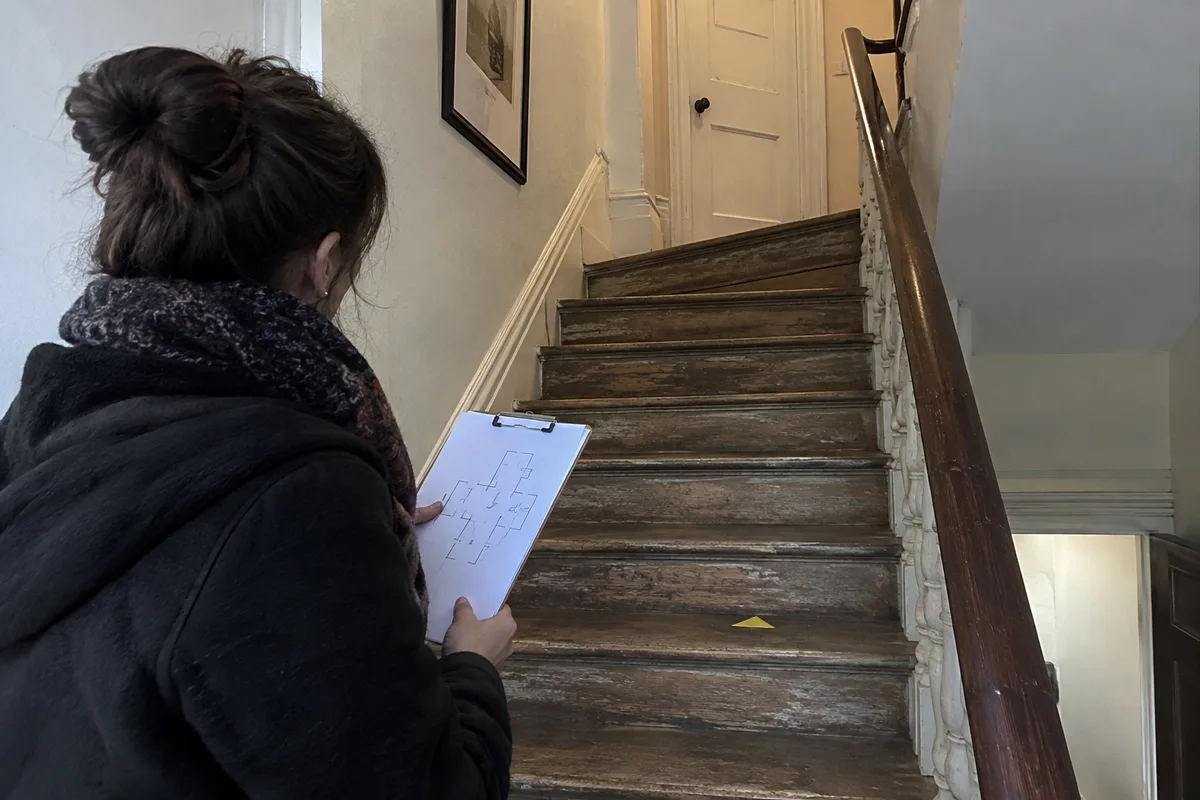
A baby monitor indoor range test should describe a route and the quality of the connection along it. The distance from one room to another is only part of the result. A buyer also needs to know what sits between the camera and receiver, how each device is positioned and whether viewing and audio remain usable.
I would rather review a modest, well-documented route than a much larger distance with no floor plan. The first can become a sample acceptance task. The second is difficult to reproduce.
This is a proposed buyer protocol, not a claim that a particular model covers a specified house size or number of floors.
How Should You Define a Baby Monitor Indoor Range Test Route?
Choose a representative installation, then mark the camera position before walking with the parent unit. Record its height, orientation and nearby objects. Identify observation points such as the room doorway, end of the corridor, kitchen and upstairs landing.
For each point, record the route distance and, where practical, the approximate direct separation. Do not confuse the distance walked around a staircase with the straight-line separation between radios. Take setup photos and draw a simple floor plan with room labels that do not reveal a private address.
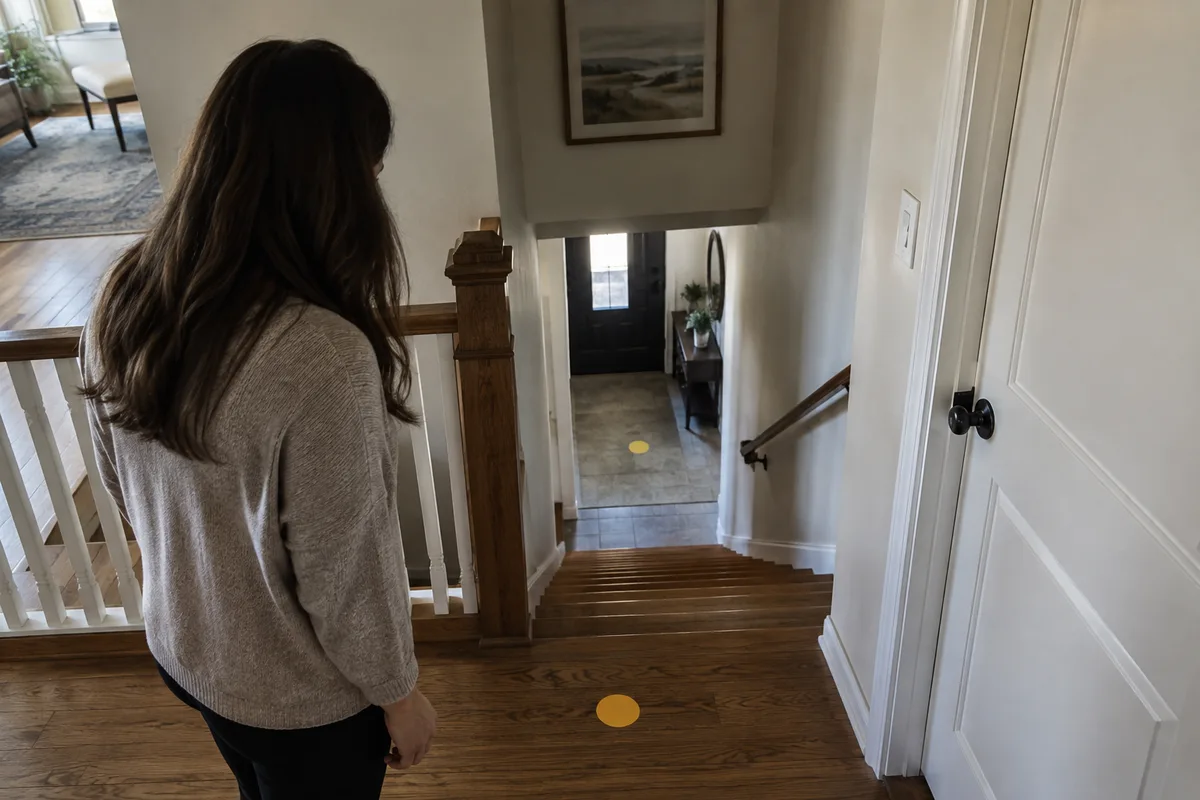
Note walls, floor construction and door states. If a wall’s internal construction is unknown, write “unknown” rather than assigning a material from its appearance. NIST’s construction-material research documents that electromagnetic attenuation depends on material and thickness. Its measurements are not a distance guarantee for a finished baby monitor.
What Should Remain Fixed During the Walk?
Use the same camera, firmware, power arrangement, video mode and target scene. Fix the parent-unit orientation and holding height at each observation point. Keep the operator’s position relative to the receiver consistent, and record any change.
A second person can move a test object in the camera view and play the agreed audio sequence. At each route point, stop and observe for the agreed interval. Record video continuity and audible output separately rather than reducing the whole test to one signal-strength icon.
Keep the baseline household wireless activity documented. If the next run includes a busy router, call it a separate condition. Otherwise, a change in performance has two possible explanations: location and radio environment.
Why Does the Return Journey Matter?
Walk back along the same points after reaching the route’s limit. Record when usable output returns and whether the product needs a manual action. A product that reconnects automatically and one that needs re-pairing should not receive the same recovery note.
Do not keep extending the route until a single attractive maximum appears. Define the customer-relevant points first. A farthest successful snapshot is not the same as continuous usable operation at that location.
Repeat the agreed route in both directions and preserve unsuccessful runs. If a door is opened to recover the link, that is a new condition, not a continuation of the closed-door result.
How Should You Record a Between-Floors Check?
Keep the camera fixed downstairs and choose a safe, stationary observation point on the next landing or in an upstairs room. Record the floor construction if known, the stair opening and the horizontal offset from the camera. “One floor away” is otherwise an incomplete description.
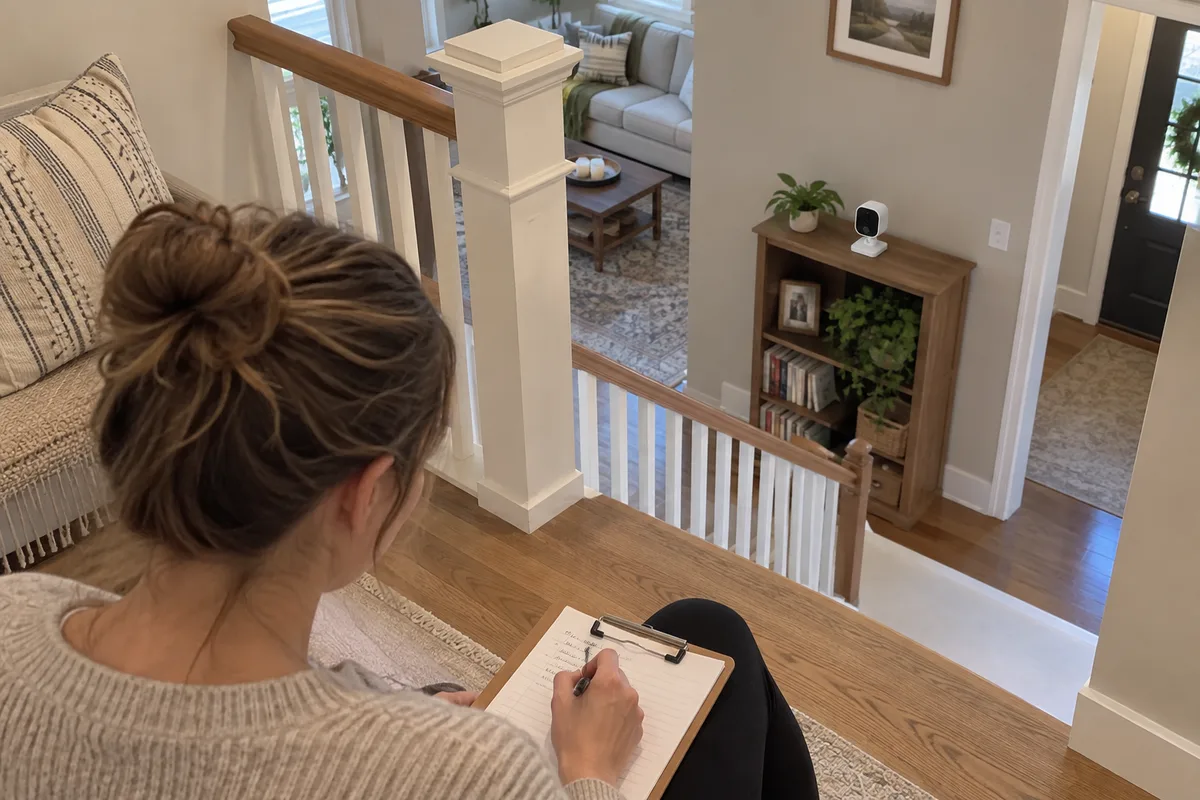
Use a stable surface for the observation and keep the stairway clear. The record should distinguish a brief reading while walking from the agreed stationary test. If the intended product use includes carrying the receiver, add that as a separately described movement task.
For multi-camera configurations, record the selected camera and mode. Do not silently substitute the closer camera when testing a route associated with the more distant one.
What Belongs in the Range Acceptance Worksheet?
The following is an editorial worksheet, not a standardized coverage rating.
| Field | Required entry | Review question |
|---|---|---|
| Sample | Model, serial or sample ID, firmware | Is the configuration traceable? |
| Camera position | Height, orientation, power, photo | Was it unchanged between runs? |
| Route point | Room, floor, route and direct distances | Can the point be found again? |
| Obstacles | Walls, doors, floor and unknowns | Are important conditions recorded? |
| Environment | Wireless activity, occupants, timing | What differed between runs? |
| Functional result | Video continuity, audio, warnings | Did each required function pass? |
| Recovery | Return point, elapsed time, manual action | Was recovery acceptable? |
| Repetition | Sample count, runs and exceptions | Is the conclusion supported by the observations? |
Agree the acceptable behavior for every required point before the test. Store continuous evidence where available, not only the best screenshot. A summary should state which routes passed, which failed and which were not evaluated.
What Else Do Buyers Ask About Indoor Range?
Can open-area range be converted into a wall count?
Do not use a universal conversion in an acceptance brief. Request the actual indoor route and obstacle record for the intended scenario.
Should doors be open or closed?
Use the intended installation condition and record it. If both matter, run both and label their results separately.
Is the farthest successful point the right marketing claim?
It is one observation. Any published performance claim should match its full conditions and supporting evidence, rather than describing every home from one route.
How should an intermittent result be reported?
Record the event, duration and repetition count. A point that alternates between acceptable and unacceptable behavior should not be summarized as an unqualified pass.
What Should You Send ANHONG for an Indoor Range Review?
Share a representative floor plan, required room-to-room paths, intended camera placement and the functions to observe. Mark unknown construction details and define acceptable recovery behavior.
Discuss these requirements with ANHONG when selecting samples or defining an OEM/ODM project. A baby monitor indoor range test becomes useful when the supplier and buyer can walk the same route and understand the same result.
Place the route record within your broader quality-control and testing discussion.


