How Should Brands Define Cleanability Requirements for a Baby Monitor Housing?
Define baby monitor housing cleanability with reachable surfaces, care boundaries and evidence requests—without unsupported solvent or hygiene claims.
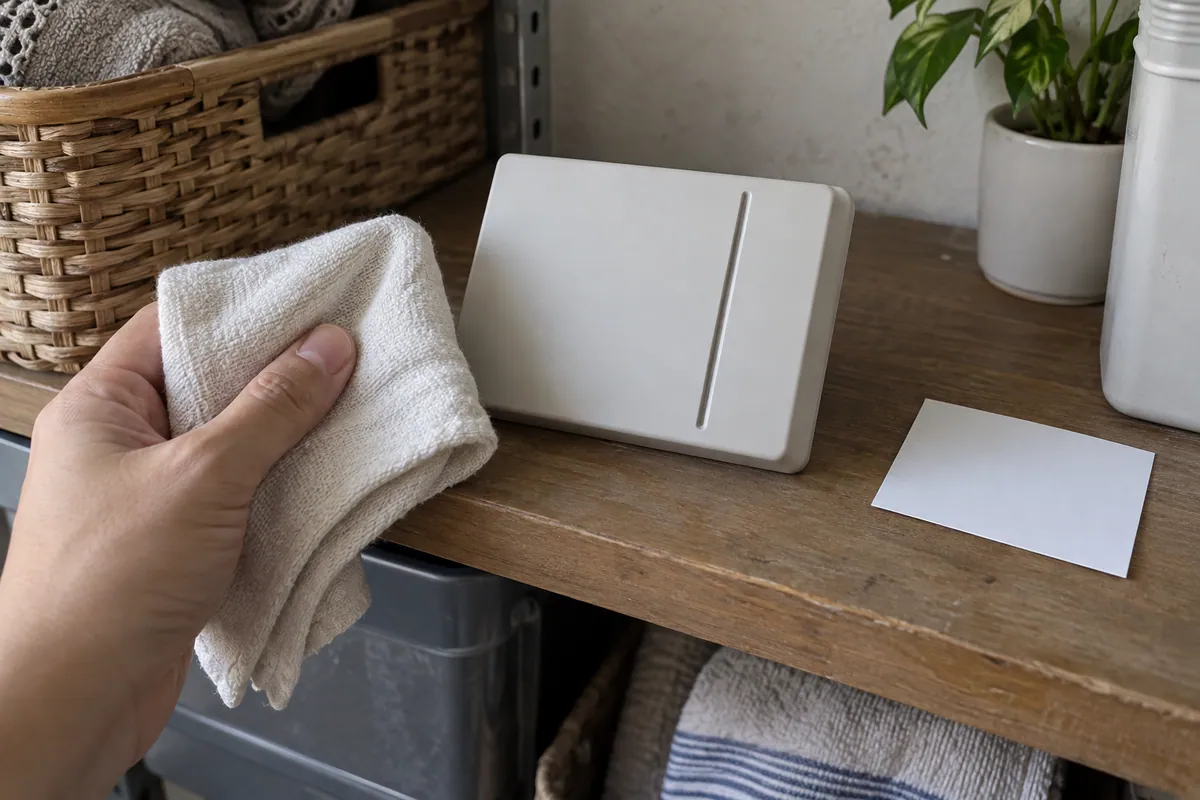
Brands should define cleanability as a product requirement with a named use context, accessible surfaces, allowed care instructions, and evidence to review. “Easy to clean” is not a useful purchasing instruction. It can mean that a caregiver can wipe a front face, that dust does not collect around a control, that a label remains understandable after ordinary care, or that a material is compatible with a proposed cleaning agent. Those are different claims and may need different evidence.
For a baby monitor, the first useful question is not which liquid is strongest. It is what the brand expects a user to clean, why, and under which instructions. This article proposes a Cleanability Requirement Card for that discussion. It does not prescribe a disinfectant, assert antimicrobial performance, or say that any current ANHONG model tolerates a particular substance.
Which Housing Areas Need a Cleanability Decision?
Map the surfaces a user can reasonably touch or see during normal setup, use, charging, repositioning, and storage. A parent-unit front, camera housing, stand contact area, external button surround, speaker opening, cable-adjacent recess, and applied label may each create a different question. Do not assume that an area is cleanable merely because it is visible; nor that a recess is irrelevant because it is small.
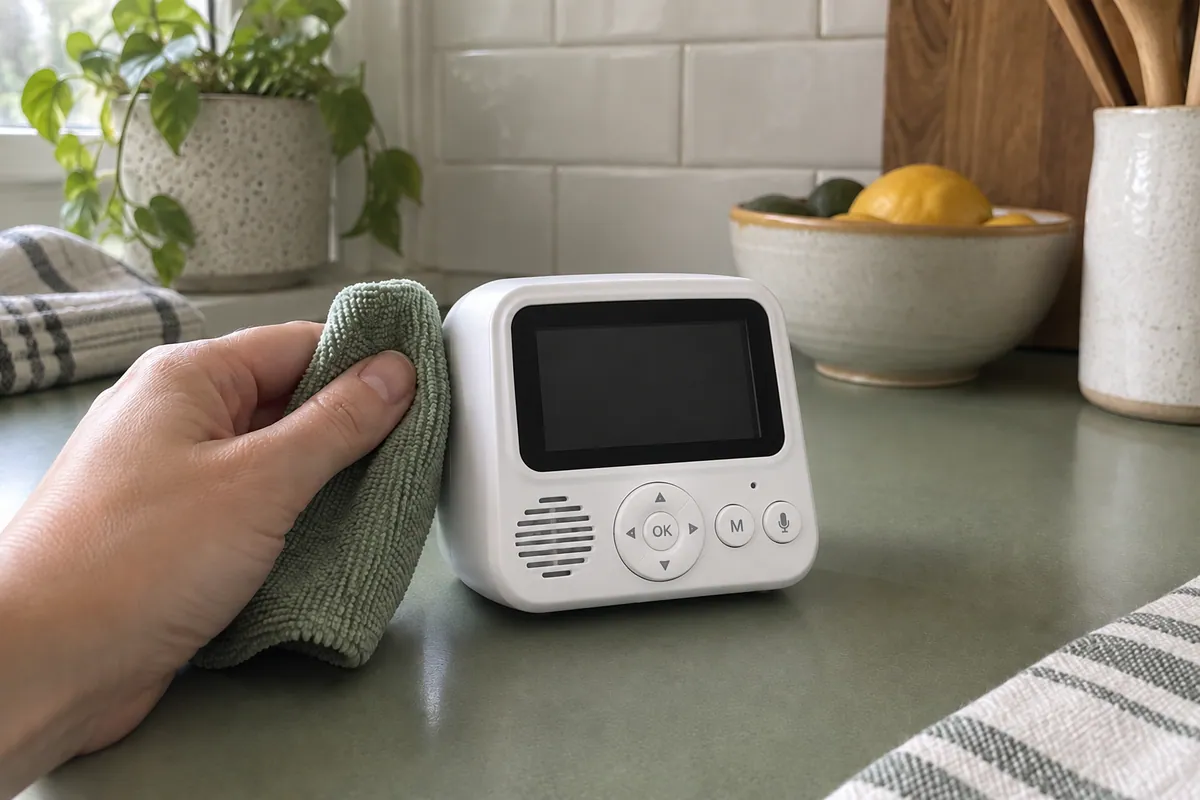
For each area, record its task, whether it is accessible without disassembly, and what must remain true after the proposed care. A requirement may concern visual legibility, normal operation, surface appearance, or avoiding liquid entry. The buyer should state the relevant outcome rather than use the broad word “durable.”
| Area | User interaction | Proposed care question | Evidence still needed |
|---|---|---|---|
| Parent-unit front | Handling and viewing | Can the stated method be applied without obscuring icons or display edges? | Approved instruction and configuration-specific review |
| Camera exterior | Positioning and dust removal | Which exposed contours can be reached without forcing a cover or mount? | Physical sample observation |
| Button or control surround | Repeated touch | Does the care instruction explain how to avoid trapped residue? | Instruction review and material confirmation |
| Labelled rear area | Identification during setup | Must the mark stay readable after the intended care? | Marking and label evidence |
The card is a planning tool, not an inspection record. It deliberately separates what a user can reach from what an engineering team may access during service.
Why Should Care Instructions Be Part of the Requirement?
An unqualified claim invites the wrong action. If the intended instruction is “wipe a named external surface with a soft, damp cloth,” a buyer should not let a retail page imply immersion, spraying into openings, or use of solvents. If a target channel expects a specific cleaning regime, the brand should disclose that input before materials, graphics, and user documentation are frozen.
Write the instruction at the same level of specificity as the evidence. For example, a brand can request that an approved instruction identify the external area, the preparation of the cloth, and actions to avoid. It should not promise chemical compatibility, sanitising effect, or ingress protection unless the selected configuration has supporting evidence. That restraint protects both the end user and the product brief.
How Should Buyers Separate Accessible Care From Service Access?
Routine care is an external-user requirement. Service access concerns an authorised route, tools, warranty policy, and controlled handling. Combining the two can lead a copywriter to imply that a user should open a housing to remove residue or inspect an internal part. Do not do that.
The Cleanability Requirement Card should therefore include an explicit boundary: “external care only,” “authorised service only,” or another approved limitation. Where a recess cannot be meaningfully reached without disassembly, the right buyer decision may be to adjust the geometry, change the instruction, or accept a defined limitation—not to write an improvised user procedure.
ANHONG supports product definition, ID and structural design, samples, mass production, quality testing, and packaging localization. For a brand, that means the care question can be brought into the same project discussion as housing geometry, instructions, and the selected sample. It does not mean ANHONG has approved a cleaning method for every material or configuration. A useful input package names the target market, anticipated use, proposed user wording, material constraints where known, and areas of concern.
What Evidence Should a Brand Request Before Making a Care Claim?
Ask for evidence that matches the exact claim. An accessible sample can show whether a cloth can reach an external contour. A controlled material or marking review may be needed before the brand says an instruction is compatible with a particular method. A product document may need an explicit revision and configuration reference. If the evidence applies only to one finish, label construction, or market package, retain that scope.
Avoid converting a single observation into a lifetime statement. “The team reviewed the stated method on the identified sample” is not the same as “the housing is permanently resistant.” When a project lacks the required evidence, use provisional wording in internal copy and assign an owner to close the gap before public instructions are released.
How Can Cleanability Inputs Improve the Launch Review?
Bring cleanability into the release discussion before packaging artwork and support scripts are final. The output should identify the approved user-care text, product revision, covered external areas, exclusions, evidence owner, and open questions. This is narrower than cosmetic acceptance: a cosmetic review asks what visible appearance is acceptable; this article asks how routine care may be described without creating an unsupported maintenance promise.
The same record helps a brand avoid mismatched channel materials. A marketplace bullet, quick-start leaflet, support answer, and retail carton should not each invent a different care instruction. For an OEM or private-label program, discuss the card alongside baby monitor customization and the actual sample scope. When the project is ready for a configuration-specific review, contact ANHONG with the intended care use and documentation needs.
What Do Brands Ask About Housing Cleanability?
Can a brand call a surface “wipe-clean” before material evidence is available?
Use a provisional internal requirement instead. Public wording should wait until the proposed method, surface, and configuration have been reviewed and the claim scope is clear.
Should every opening receive the same instruction?
No. Group areas only when their geometry and intended care are genuinely the same. An opening near a control or cable route may require a different limitation from a broad exterior face.

Does a smooth-looking housing prove easier cleaning?
No. Appearance alone cannot establish access, material compatibility, or what happens around labels, seams, and openings. Ask for the relevant sample and instruction review.
Who should approve a change to the care wording?
Name a brand owner and connect the wording to the identified product configuration. The supplier can provide technical input, but an unapproved support reply should not silently become the product instruction.