How Should Buyers Plan Baby Monitor Compliance by Model and Target Market?
Organize baby monitor compliance evidence by model, accessories and target market. Check document scope, responsible parties and configuration changes.
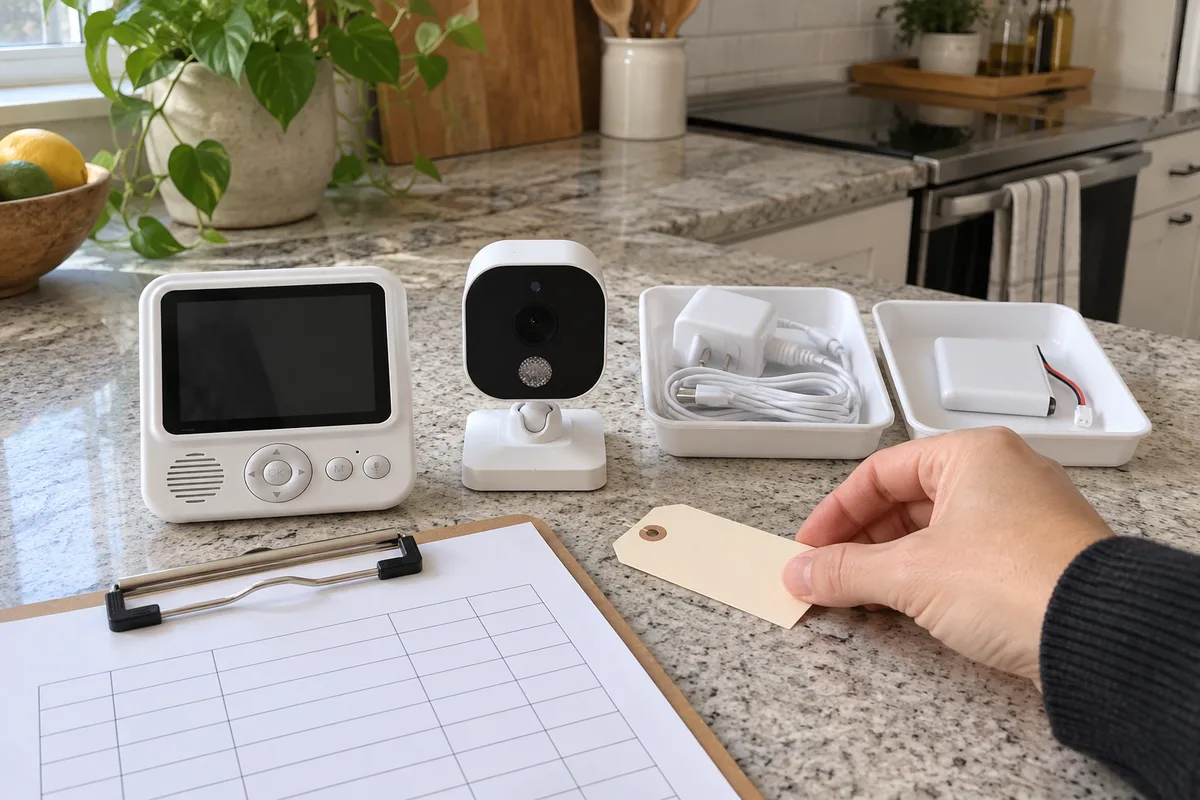
Baby monitor compliance planning should begin with the exact product configuration and destination market. A folder containing familiar logos is not enough to establish that the camera, parent unit, battery, adapter and software in your order are covered.
I would ask the supplier to put the offered sample beside the document list and explain the match. Which model is named? Which hardware version was evaluated? Which accessories are included? That conversation often identifies the questions a purchasing checklist would otherwise miss.
This is a document-planning guide, not a declaration that any model is approved for every market. Official references were checked on 16 September 2026. The final applicable requirements must be established for the actual product and route to market.
What Must Be Frozen Before Baby Monitor Compliance Planning?
Create a configuration sheet covering the camera, receiving device, radio design, antenna, firmware, power adapter, battery, supplied accessories and intended functions. Add the commercial model names and brand under which the product will be sold.
Record the planned markets and responsible manufacturer, importer or other economic operator. “Europe” may be too broad for an operational document request, and the UK and EU should not be combined into one unchecked column.

If the order changes after testing, identify the change and request an assessment of its effect on existing evidence. Do not assume that a similar enclosure or shared product family name settles the question.
How Should Buyers Separate the Main Evidence Categories?
Keep factory-system evidence, product conformity evidence and transport information in separate sections. A management-system record concerns an organization and its scope; it does not replace the model-specific evidence needed for a finished radio product.
Likewise, a test report, declaration, authorization record and safety data sheet serve different purposes. Ask what each document establishes, who issued it and which requirement it addresses. Avoid the catch-all request “send all certificates,” which can conceal these differences.
In the United States, equipment authorization concerns applicable FCC technical requirements for RF devices; the FCC equipment-authorization data page explains the requirement to comply before importation or marketing. Ask the responsible compliance reviewer to identify the appropriate route and records for the offered design.
For the EU, the Radio Equipment Directive addresses safety and health, electromagnetic compatibility and radio-spectrum use, with additional requirements for defined categories. A radio report alone should not be treated as the complete market-access file.
Why Should the Battery and Adapter Have Their Own Entries?
Record the exact supplied adapter and battery identifiers rather than leaving them as generic accessories. Include relevant reports and the connection between those identifiers and the finished-product configuration.
For lithium batteries, review the applicable transport evidence. PHMSA’s test-summary guidance describes the UN 38.3.5 test-summary requirement. A safety data sheet is not that test summary. The actual shipping arrangement still needs the appropriate transport review.
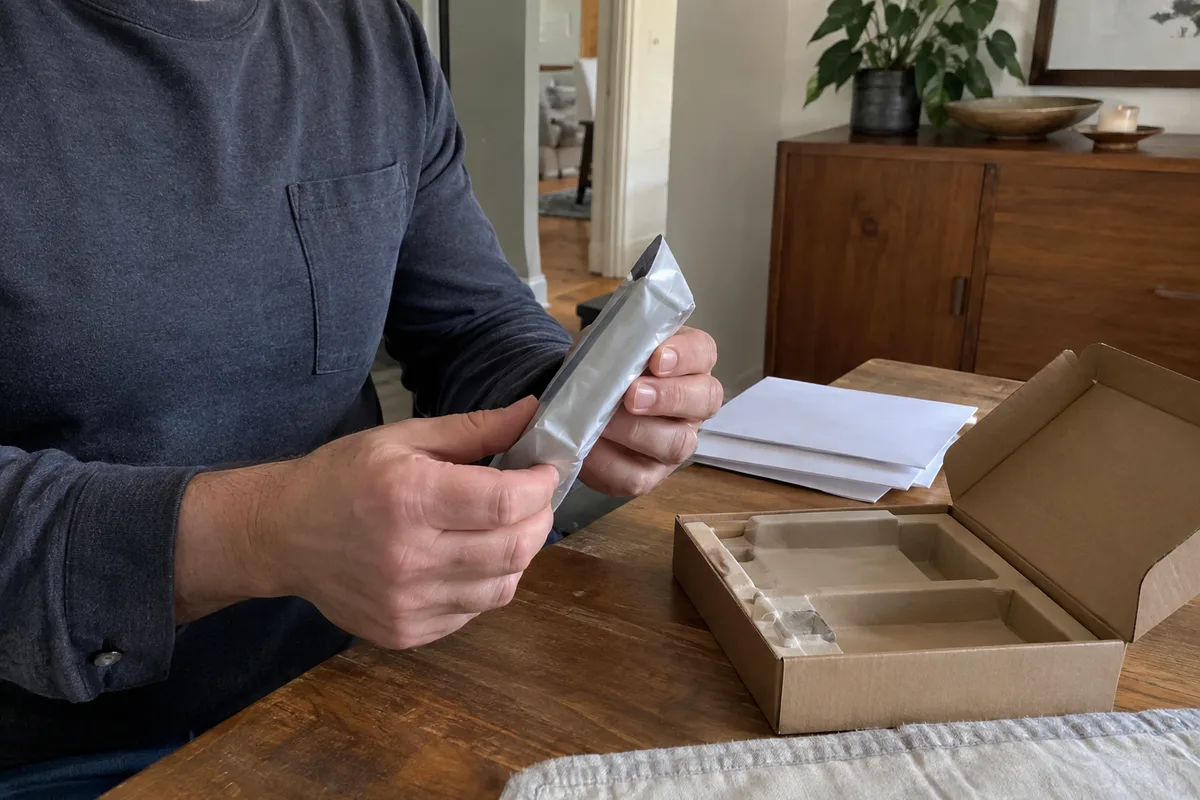
Use photographs of the actual supplied labels in your real project file, together with the underlying documents. Keep readable document originals; a cropped marketing image of a certificate is not a good working record.
Which Scope Assumptions Should Buyers Avoid?
Do not infer a US children’s-product classification solely from the word “baby.” The CPSC explains the factors used to distinguish children’s products from general-use products in its classification guidance. Establish the actual classification and applicable rules before deciding whether a CPC or another document is required.
For connected products supplied in the UK, review the PSTI product-security requirements separately from radio paperwork. For other markets, create a fresh applicability row instead of treating CE or an FCC record as worldwide coverage.
This guide does not provide an exhaustive country checklist. Its purpose is to prevent a purchasing decision from getting ahead of the configuration and applicability assessment.
What Should the Model-and-Market Matrix Look Like?
| Field | Entry to request | Acceptance question |
|---|---|---|
| Commercial identity | Model, brand and product description | Does it match the order? |
| Tested configuration | Hardware, firmware, radio, antenna, accessories | Does the evidence cover this version? |
| Destination | Country/region and intended launch timing | Were current requirements considered? |
| Requirement | Applicable rule and conformity route | Who established applicability? |
| Evidence | Report/declaration/authorization identifier and issuer | Is the complete document available? |
| Responsible party | Named organization and role | Who maintains the file and declarations? |
| Labels/instructions | Approved artwork and language versions | Do they match the documented product? |
| Changes | Proposed substitution and impact review | Is further evaluation needed? |
Add status, reviewer and review date to each row. “Requested,” “received,” “reviewed” and “accepted” should be distinct states. A document received by email has not necessarily been checked.
What Else Do Buyers Ask About Compliance Files?
Can a module’s radio documentation cover the finished product automatically?
Do not assume so. Ask the responsible reviewer to assess the integration conditions, antenna, enclosure, software and any remaining finished-product obligations.
Is a marketplace document request the full legal checklist?
Treat it as an additional channel requirement. Establish the applicable product obligations separately rather than assuming the marketplace asks for everything.
Can a factory certificate replace a product report?
No. Keep the organization/system scope separate from the evidence for a specific product requirement.
What if the supplier offers a different battery or adapter later?
Update the configuration sheet and request a documented impact review before accepting the substitution. Keep the original and revised evidence traceable.
What Should You Send ANHONG for a Document Review?
Send the model or product brief, radio architecture, accessory configuration, brand, target markets and intended launch timing. Include any channel-specific document requests.
ANHONG can discuss compliance support as part of a sourcing or OEM/ODM project. Product-document availability must be confirmed for the specific model, configuration and market. Effective baby monitor compliance planning makes that confirmation a recorded step, not an assumption.
Review ANHONG’s model-specific certification and compliance guidance when preparing that document request.


