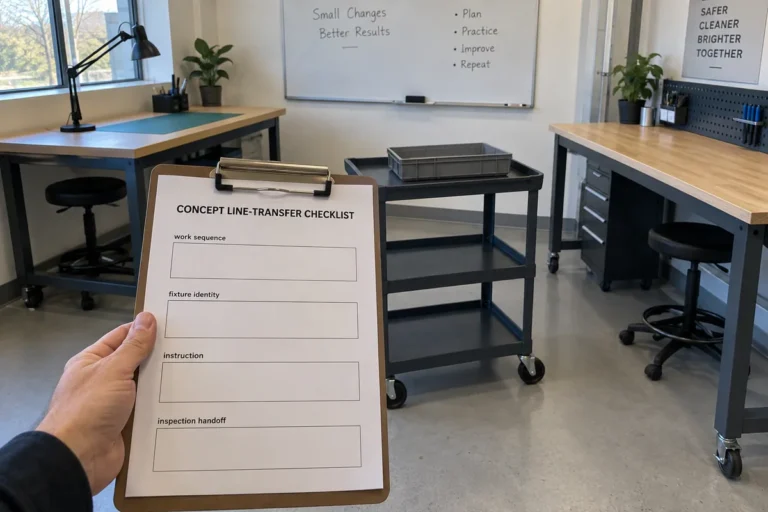
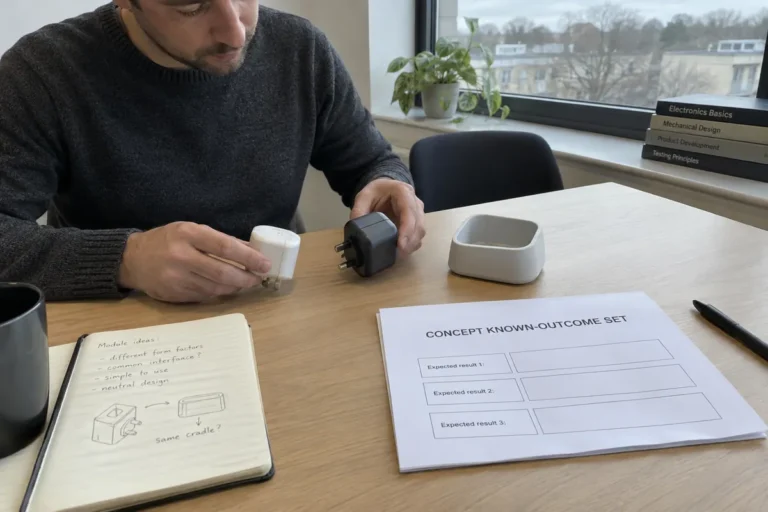
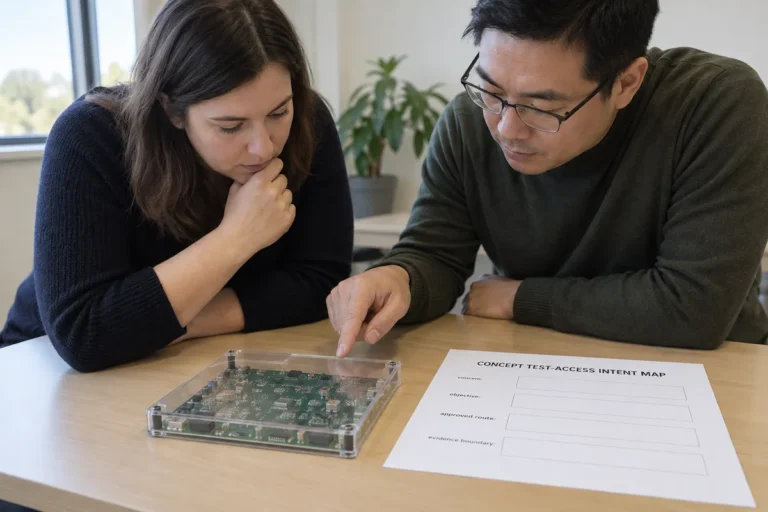
How Should Buyers Evaluate Button Durability Separately from Button Usability?
Separate baby monitor button usability from durability evidence with defined operation conditions, sample history and an agreed physical acceptance basis.
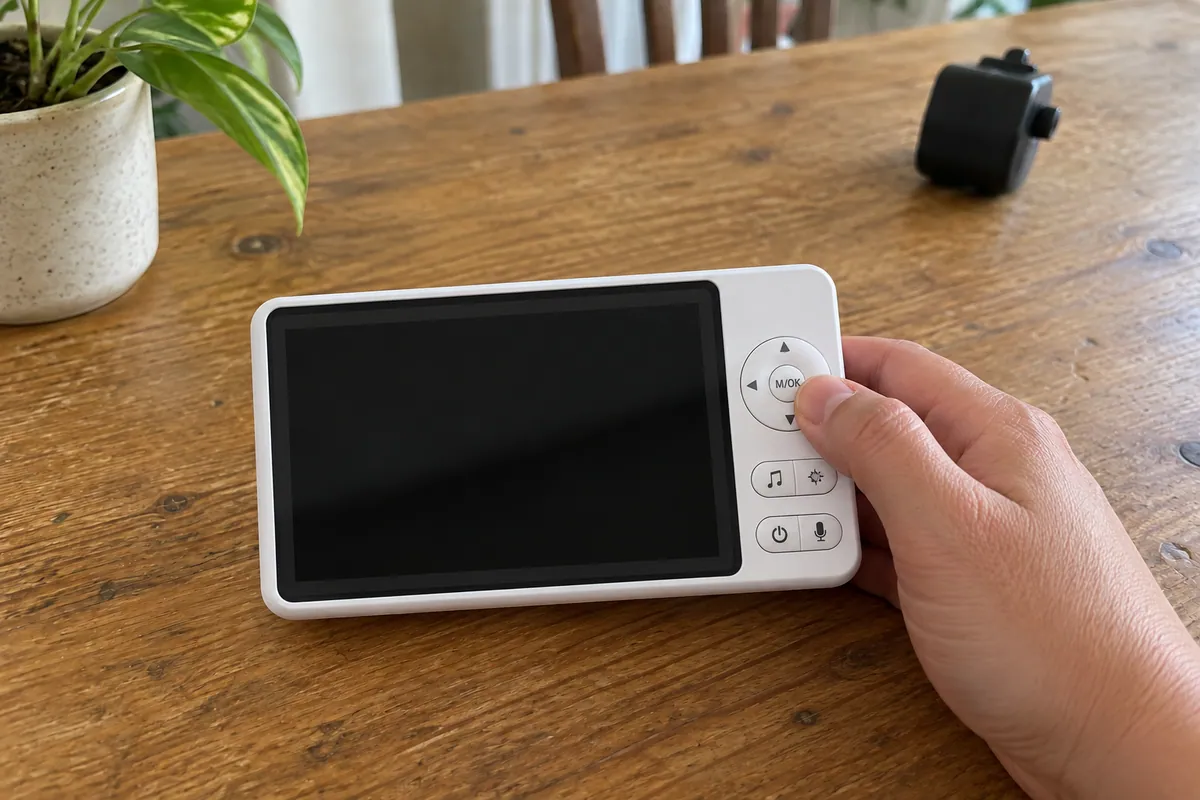
A baby-monitor button can be easy to find on a sample and still become unreliable after repeated use. It can also remain mechanically intact while its label, position, feedback, or operating sequence leaves users unsure what happened. These are different questions. A buyer should review usability as a task and durability as a defined physical-performance investigation, then connect the results only where the evidence supports it.
This matters because a vague request for “durable, easy buttons” gives a supplier no usable decision rule. It can turn a sample demonstration into an unsupported life claim, or turn a mechanical exercise into a claim that the product is intuitive. The better brief says what the user must do and separately states what repeated-use evidence is required.
What Is the Difference Between Usability and Durability?
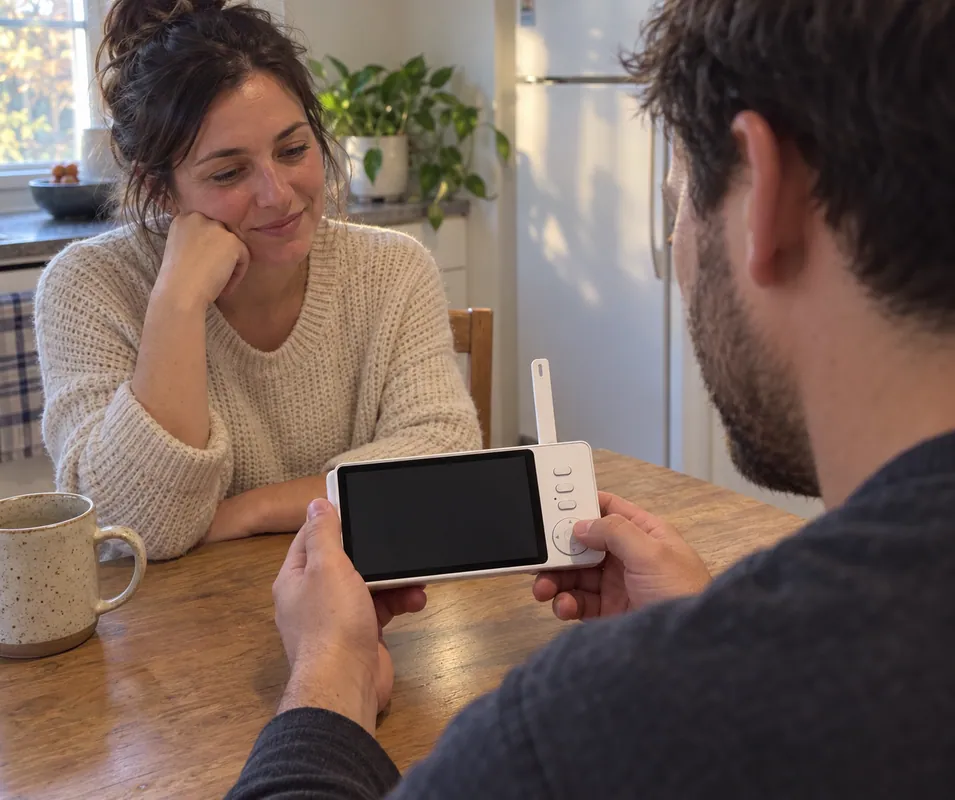
Usability concerns the interaction: can a first-time reviewer locate the volume, mute, camera-select, or power control; understand the feedback; and recover from a mistake? A task observation can show where a reviewer hesitates or confuses two controls. It does not establish how long a switch will operate.
Durability concerns whether the particular button assembly, label, mounting, and surrounding enclosure remain within an agreed physical and functional condition after a defined procedure. It needs an identified sample, method, use state, observations, acceptance rule, and disposition. The method may use repeated operation, but the correct cycle count, force, fixture, and acceptance criteria must come from the agreed design and test scope—not from an assumed industry number.
How Can a Button Review Separation Sheet Help?
| Review lane | Buyer question | Evidence to request | What it cannot establish |
|---|---|---|---|
| Task usability | Can a new reviewer perform the intended action and identify the resulting state? | Task script, sample/build identity, observation notes, unresolved steps | Mechanical life or universal ease of use |
| Physical durability | Does the defined button assembly meet the agreed procedure after repeated operation? | Method, sample identity, conditions, before/after observations, result record | Every user’s experience or an unlimited lifetime |
| Cross-check | Did repeated-use evidence reveal a changed feel, label, fit, or response worth re-reviewing? | Comparison notes and decision | Root cause without investigation |
This Button Review Separation Sheet is a proposed buyer tool. It avoids treating a passing task demonstration as a durability result or a mechanical result as proof that customer controls are clear.
Which Tasks Should Be Reviewed Before Any Durability Discussion?
Start with the functions the selected configuration actually offers. A local parent unit may need volume, power, menu, camera selection, or display controls. A connected configuration may move some actions to an app. Do not write a test for PTZ, VOX, camera switching, or app pairing unless those functions are part of the proposed product.
Ask an unfamiliar reviewer to complete a short task without a live demonstration: identify the intended control, perform the action, explain the visible or audible feedback, and restore the prior state if relevant. Observe confusion between nearby buttons, accidental operation when holding the parent unit, unclear labels, and the recovery route. That review extends the earlier control-design conversation; it is not a request to redesign every interface after one observation.
ANHONG can connect product definition, ID/structural design, and sample scope to a brand’s priority tasks, configuration, target market, and proposed evidence. This does not promise a cycle-life result or that every platform has the same controls.
How Should a Durability Request Be Written?
Name the exact assembly and its revision. State the function to be exercised, the intended operating state, the procedure owner, sample count if agreed, environmental condition if relevant, method reference where applicable, acceptance criteria, and the record needed at the end. If a button is part of a combined enclosure or flexible membrane, identify that relationship rather than describing an isolated switch that the product does not use.
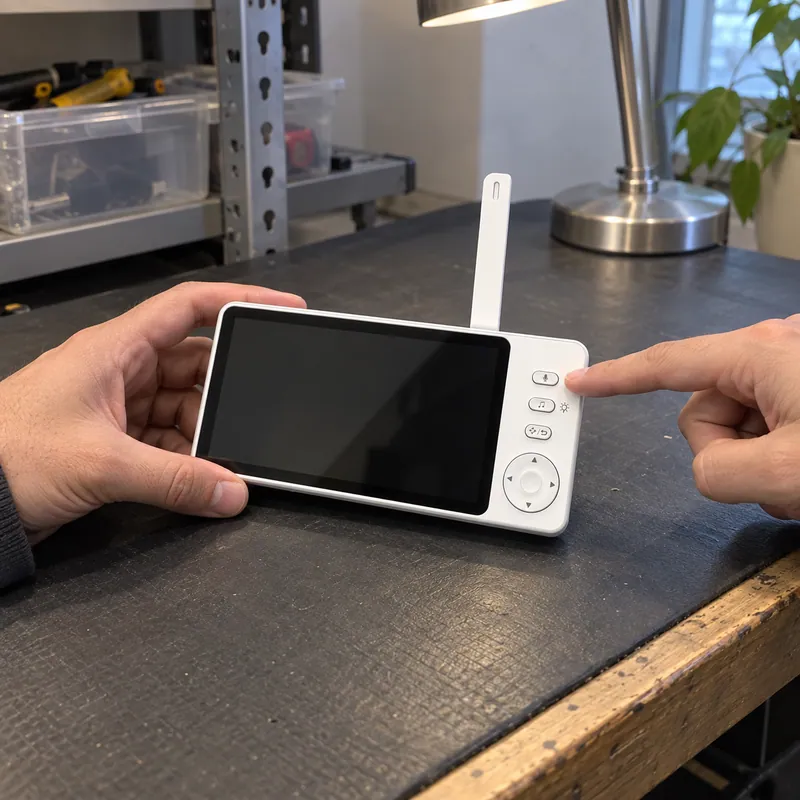
Request before-and-after checks that relate to the ordered product: physical appearance and fit, the defined button response, relevant labeling, and any agreed function check. If a result is borderline or a unit fails, retain the original observation and disposition; do not report only a later successful retest.
The quality-control and testing overview is a useful starting point for an evidence discussion, but it is not a button-life report for a model. The method and criteria remain project-specific.
When Should the Two Lanes Meet Again?
Bring them together when a durability observation could change the customer task. A button may still actuate while feedback becomes unclear, a legend may wear, a control may feel loose, or a nearby part may interfere. The team should decide whether the usability task needs a focused repeat on the affected sample or revision.
Do not force the reverse inference. A reviewer’s hesitation might come from labeling, instruction wording, or unfamiliarity rather than a durability issue. Record it as an interaction finding and assign the next decision to the appropriate design, documentation, or engineering owner.
For product-definition work, ANHONG’s development support can connect the control task, physical assembly, sample plan, and change record. Keep each approval tied to the actual version and configuration.
What Should the Release Record Retain?
Retain the selected tasks, reviewed sample identity, control map, task observations, durability method and scope, original results, failures or retests, decision owner, and approved customer-facing terminology. Link a later change notice to these records when it affects the button, enclosure, firmware response, manual, or artwork.
That trace avoids two common mistakes: assuming a new cosmetic revision inherits evidence from a different assembly, and treating a functional sample as if it represented long-term use. It also gives B2B support a reliable reference when a channel asks what a control means versus how the quality review was scoped.
What Do Buyers Commonly Ask About Button Reviews?
Does a cycle test prove a button is easy to use?
No. It may support a defined durability conclusion. Use a separate task observation for labeling, feedback, and error recovery.
Should every button receive the same review?
Not automatically. Prioritize the controls and use conditions that matter to the selected configuration, while recording why the scope was chosen.
Can a control label change after the physical test?
It can, but review the affected usability materials and release record. A label change may alter a customer task even when the hardware is unchanged.
What should a brand send to ANHONG?
Send the product configuration, priority controls, intended user tasks, requested evidence, and any agreed acceptance criteria. Contact ANHONG to define a project-specific review route.