How Should Buyers Compare Baby Monitor Battery Life Across Screen-On and VOX Modes?
Compare baby monitor battery life with defined screen-on and VOX workloads. Record brightness, sound activity, wake behavior and a consistent test endpoint.
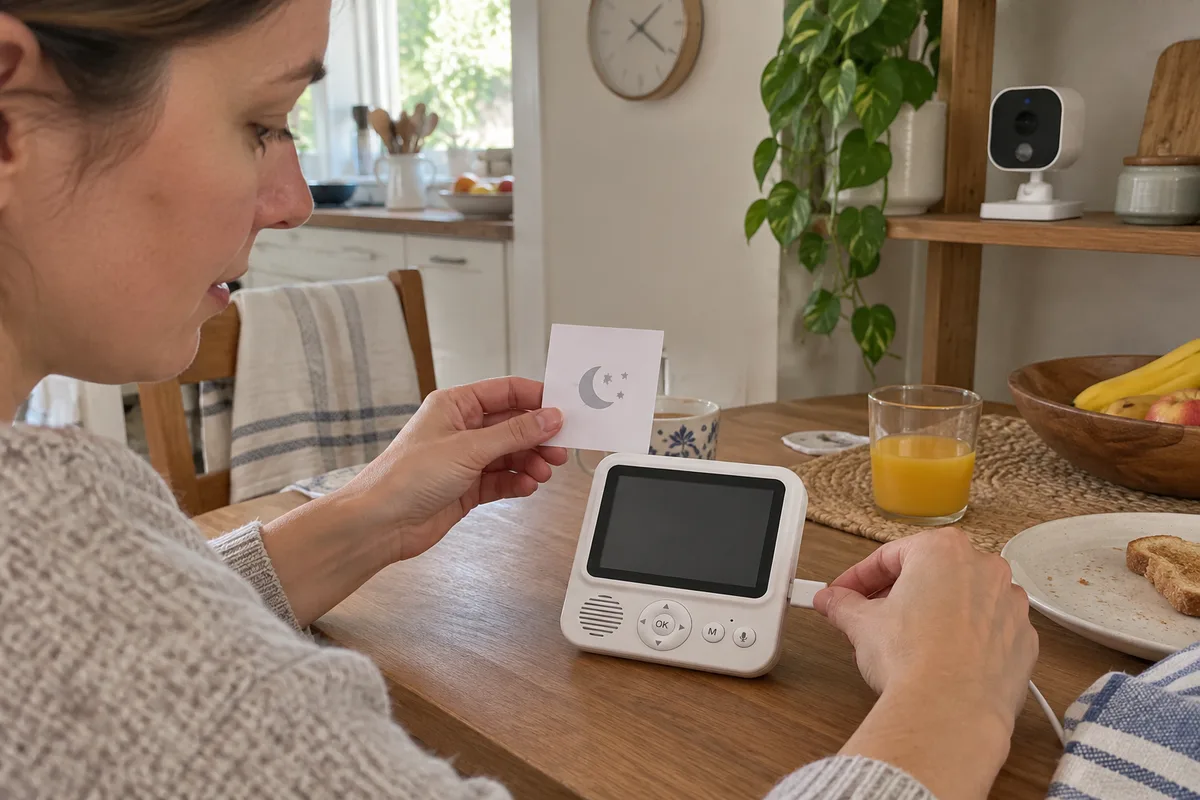
A baby monitor battery life test needs an operating-mode definition before it needs a stopwatch. Continuous viewing and a mostly quiet sound-triggered session are different workloads. Their runtime figures should not be presented as if the product spent the same time doing the same work.
I would ask to see the timeline behind the number: when the screen was on, when sound was played, what triggered a wake-up and what ended the test. That turns a headline runtime into something a buyer can reproduce.
This guide proposes a sample-comparison method. It does not publish measured ANHONG runtime or promise a particular improvement from VOX or another power-saving mechanism.
What Should a Baby Monitor Battery Life Test Identify First?
Specify which device is battery-powered during the run. A rechargeable parent unit and a camera supplied from an adapter must not be combined into an ambiguous “system battery life” claim.
Record model, sample ID, firmware, battery specification, sample age and available charge-history information. Use the intended charging equipment and the manufacturer’s documented full-charge indication. State the interval between disconnecting the charger and starting the run.
Fix screen brightness, speaker volume, camera distance, room conditions and the viewing mode. Record any automatic brightness behavior. Keep the camera power arrangement unchanged so that the test ends because of the defined parent-unit condition, not an unrelated camera power loss.
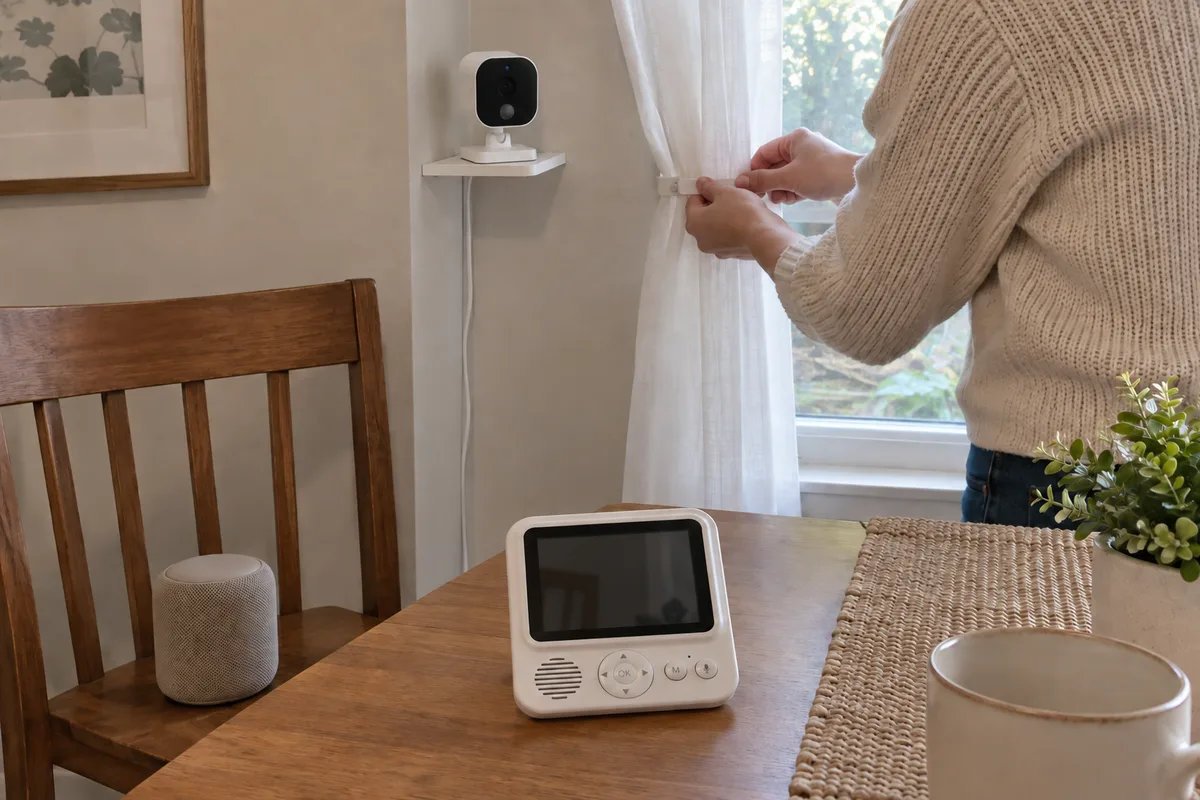
How Should the Continuous Screen-On Run Be Defined?
Keep the required live view active under the agreed settings. Define whether audio is continuous, intermittent or silent, and use the same scene and sound sequence when comparing samples.
Record unexpected dimming, screen sleep, warnings and interruptions. If an energy-saving setting turns the screen off, the run no longer represents continuous screen-on operation unless that behavior was explicitly included in its definition.
Choose the endpoint before testing: loss of the agreed viewing function, automatic shutdown or another documented product state. Record low-battery warning time separately. A warning is an event within the run, not automatically its endpoint.
A run that stops at the buyer’s planned observation limit without reaching the endpoint should be reported as “at least the observed duration under these conditions.” Do not invent the eventual shutdown time.
How Should the VOX Run Make Sound Activity Reproducible?
Ask the supplier to describe what the selected VOX mode changes in the offered product. Record screen wake behavior, audio behavior, sensitivity setting and return-to-sleep delay. Do not use a dark screen as proof of an undocumented radio or processor state.
Prepare a sound-event schedule with source position, playback level, duration and spacing. Use the same sequence for each sample. A playback file is a repeatable stimulus for this test, not proof that the product correctly classifies every real infant sound.
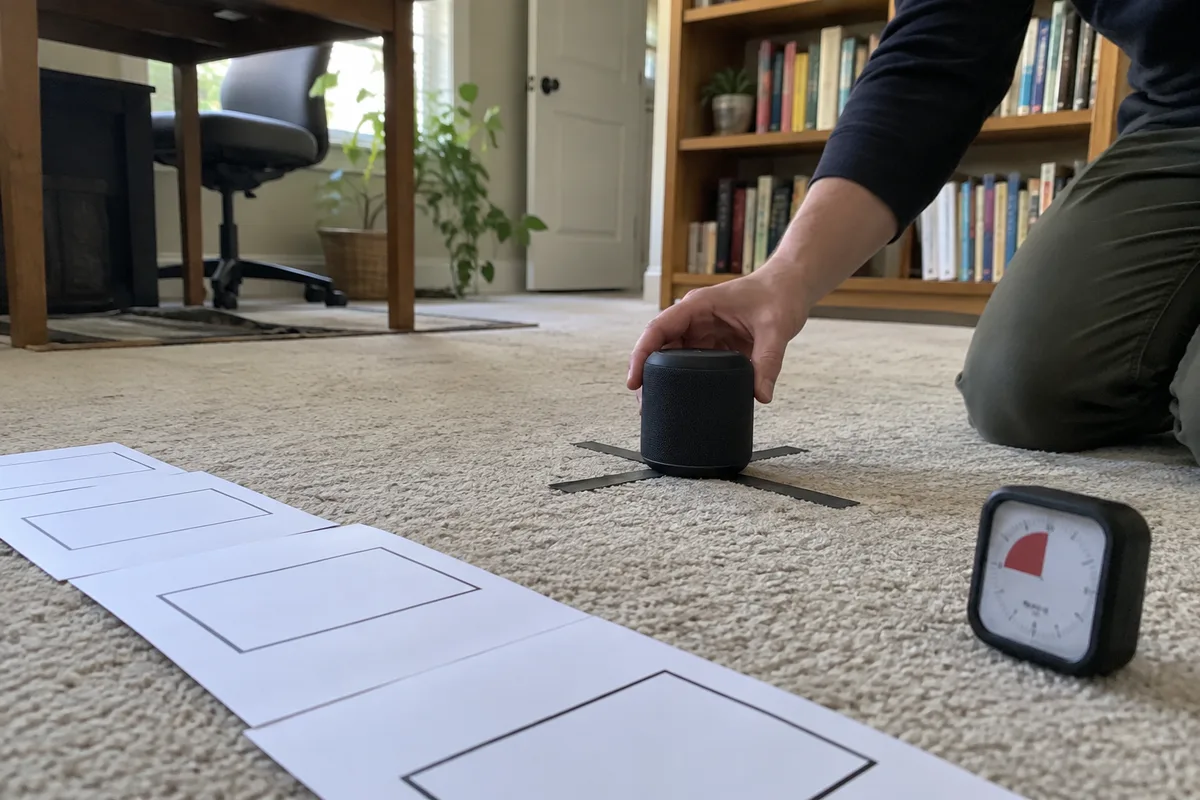
Observe actual wake-ups and actual screen-on time. If a sound event fails to wake the screen when the test requires it, record that as a functional failure. Do not reward a missed event as successful battery saving.
Keep a quiet-standby run separate from an event-driven VOX run. If the intended use includes frequent sound, add a busier schedule as a clearly labeled condition rather than extrapolating from an almost silent test.
Why Should Functional Behavior Be Reported Beside Runtime?
The purchasing decision concerns usable operation, not merely time until power is exhausted. Include the required audio output, wake response, low-battery indication and recovery after charging in the review.
If the supplier changes the firmware or a power-saving setting, repeat the relevant functional checks alongside runtime. Keep the earlier configuration and result in the record. This separates an explained design change from an unexplained difference between demonstrations.
Compare like-for-like settings where possible. Where settings cannot be matched, describe the difference. Do not normalize runtime by battery capacity alone and call the result a verified estimate of another configuration’s runtime.
What Should the Battery Test Worksheet Include?
| Field | Entry to retain | Comparison purpose |
|---|---|---|
| Device identity | Model, sample, firmware, battery specification | Identifies the tested unit |
| Start state | Charging method, full indication and start time | Makes charging conditions visible |
| Environment | Temperature, placement, distance and camera power | Separates operating conditions |
| Display/audio | Brightness, volume, viewing and audio behavior | Defines continuous-use workload |
| VOX | Sensitivity, wake/sleep behavior and event schedule | Defines the sound-triggered workload |
| Observed activity | Wake count, missed required events, screen-on time | Checks actual behavior, not just settings |
| Endpoint | Agreed end state, warning time, stop time | Prevents inconsistent runtime definitions |
| Repetitions | Samples, runs, exceptions and original records | Supports a bounded conclusion |
This is an editorial worksheet, not a standardized battery-life rating. Agree sample count, repetitions and acceptance limits with the supplier before testing. Report individual results or their range as well as any summary.
What Else Do Buyers Ask About Runtime Comparisons?
Can screen-on and VOX runtime appear in the same specification?
Yes, if each has its own mode definition and test conditions. Do not hide a quiet VOX workload behind an unqualified viewing-runtime claim.
Is the displayed battery percentage a runtime measurement?
Use it as an observed indicator. Keep elapsed time and the defined endpoint as separate records; do not extrapolate an entire discharge curve from one percentage change.
Can a supplier’s heartbeat or sleep mechanism replace a finished-product test?
Use the explanation to understand the design. Verify the offered configuration’s runtime and required wake, audio and link behavior together.
How should a changed battery specification be handled?
Record the revised configuration and repeat the relevant acceptance work. Confirm the associated product and transport documentation separately where applicable.
What Should You Send ANHONG Before a Runtime Review?
Share the required continuous-viewing duration, VOX sound schedule, brightness and audio expectations, installation distance and intended endpoint. Identify the required functions that must remain available during each mode.
ANHONG can discuss sample requirements and quality testing. A useful baby monitor battery life test pairs every runtime with a workload and every energy-saving setting with the behavior the buyer still expects to receive.
Include the runtime worksheet in the agreed quality-testing requirements.


