How Should Brands Define Product-Usage Events for a Baby Monitor App?
Define baby monitor app events by their trigger, eligible version, retry rules and product decision, without confusing event counts with customer outcomes.
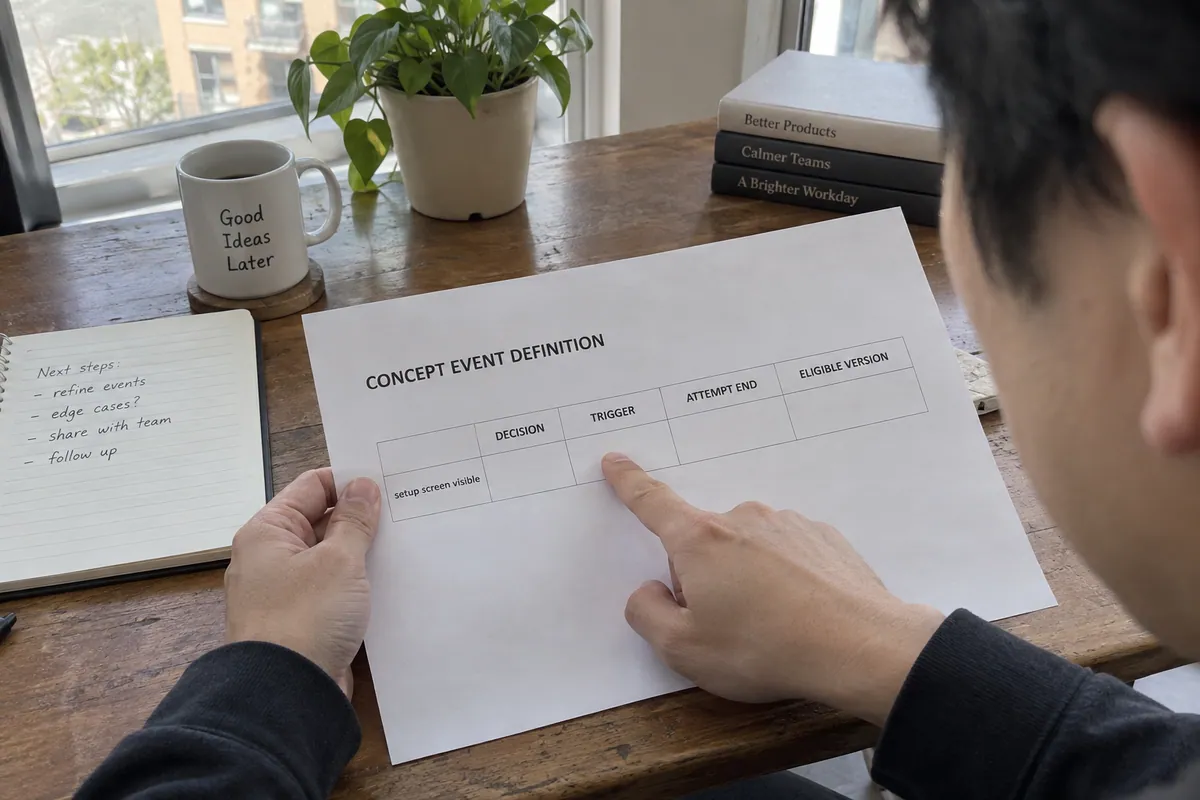
Define an app event by the product decision it will inform, the exact action or state that produces it, and what the record does not prove. “Users have trouble with setup” is a question to investigate, not an event definition. A brand needs a shared vocabulary before a development team adds measurement to a connected baby monitor app.
The method here does not require family video, audio or a record of what a child is doing. It also does not assume that an ANHONG platform already collects analytics. Instrumentation, data handling and applicable permission requirements must be agreed for the actual app and market before any collection begins.
Which decision deserves an event at all?
Start with a decision that has an owner. A product manager might need to decide whether a setup instruction should be revised. A support owner might need to know whether a documented recovery route is discoverable. Neither question automatically justifies collecting every tap, account detail or device interaction.
Write the proposed action the team would take if the information became available. If nobody can identify a decision, keep the idea out of the initial measurement scope. This is different from an evidence request for one customer complaint: an event dictionary is intended to give repeated product observations the same meaning across eligible app versions.
The decision may also be answerable without ongoing collection. A controlled sample session with consented participants or a review of approved instructions might expose the problem first. Select the smallest useful study or measurement method rather than treating event collection as the default answer.
How can an Event-to-Decision Dictionary prevent ambiguous counts?
| Proposed record | Define the trigger | Define what it does not mean | Decision it could inform |
|---|---|---|---|
| Setup screen opened | Named screen becomes visible under the agreed rule | A new customer or completed setup | Whether the intended route is reached |
| Pairing requested | User starts one documented request | A successful device connection | Where the process is initiated |
| Pairing outcome shown | A specified outcome is visibly reported | Every device or network was verified | Which branch needs investigation |
| Help route opened | Agreed help entry becomes visible | The guidance solved the problem | Whether assistance is discoverable |
| Recovery completed | The defined completion condition is recorded | Permanent reliability or customer satisfaction | Whether the reviewed route reaches its endpoint |
These are illustrative definitions, not prescribed event names or implemented capabilities. For each chosen record, add the eligible configuration, app version, required fields, exclusions, owner and revision date. Empty cells identify design work still needed before a developer can implement a consistent record.
What is one attempt, and when does it end?
A setup attempt can cross several screens, include a retry or resume after the app returns from the background. If the team counts each screen opening as a new attempt, it may interpret navigation activity as a growing number of unsuccessful users. Define the start, completion, abandonment and retry boundaries before calculating a result.
Use an example sequence in the brief: open setup, request pairing, receive an outcome, open help, then retry. Ask the product and engineering reviewers to label that same sequence independently. If they disagree about how many attempts it contains, the dictionary is not ready to support a comparison.

Also distinguish a local attempt from a customer or household. The identifiers required to join records need a separately reviewed purpose and handling design. Do not assume that a device identifier is harmless simply because the event contains no picture or sound.
How should missing or repeated records be interpreted?
The absence of an event does not, by itself, reveal what the person experienced. The app may not have emitted the record under the agreed rule, delivery may be unobserved, or the user may have left the eligible path. These are possibilities to check, not diagnoses to publish as findings.
Define how the implementation will distinguish intentional retries from duplicate delivery where that distinction is needed. Record the expected observation boundary for offline use, delayed delivery and a version that does not emit the event. A report should show which populations it can describe instead of silently treating every installation as equally observable.
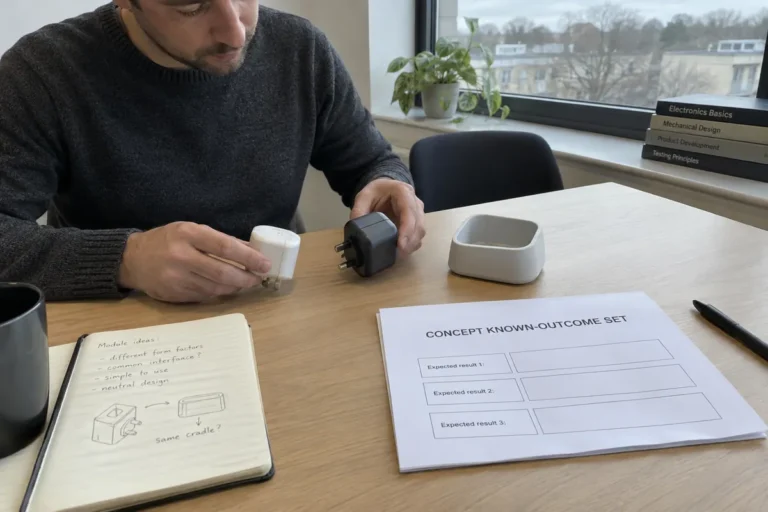
In a controlled review, deliberately walk through eligible and excluded routes using test data. Compare the expected records with the available output. Keep the test about dictionary behavior; it does not establish customer conversion, network reliability or market demand.

What can ANHONG contribute before measurement is implemented?
ANHONG's App/UI and firmware development scope can connect the proposed app event to the underlying product state. A brand can bring a product-development brief explaining the decision, the user action and the visible outcome it wants distinguished. That is more useful than requesting a generic analytics dashboard without defining what its numbers would represent.
For an OEM customization discussion, identify which party owns the app implementation and any external service. Ask what the selected platform can support and what additional work would be required. Do not infer that a standard product includes a telemetry service, reporting platform or data-export commitment simply because App/UI work is within the company's service range.
How should a dictionary survive an app revision?
Treat a changed trigger as a changed measurement definition. If an outcome previously appeared after one step but now appears after another, the same event name may no longer mean the same thing. Preserve the old definition and decide whether to use a new version, a new name or a documented compatibility rule.
Before comparing releases, check the trigger, eligible population, retry handling and observation window. A movement in a count may reflect a changed definition rather than a changed product experience. Keep that interpretation open until the relevant differences are examined.
Which event-design questions are easy to overlook?
Should button text become the event name?
Prefer a stable product concept with separate display-text context where needed. Translations and copy changes should not accidentally create different event meanings for the same agreed action.
Can a development build contribute to a launch report?
Only if its inclusion is deliberate and labelled. Keep staff, test and demonstration activity distinguishable from the population the decision is supposed to describe.
What if a feature exists only in one private-label variant?
Record variant eligibility before comparison. An absent record in an ineligible variant is not evidence that its users rejected the feature.
Who can approve adding a new field later?
Name both a product-purpose owner and the relevant data-handling reviewer. A field that is technically easy to emit still needs a reason to exist and a controlled change to the dictionary.
To turn a measurement idea into a configuration-specific implementation discussion, contact ANHONG with the decision, proposed event definitions and platform responsibilities.