How Should Brands Compare Serviceable and Sealed Enclosure Designs?
Compare serviceable and sealed baby monitor enclosures through authorised access, records, support scope, reassembly evidence and controlled revision decisions.
Brands should compare serviceable and sealed enclosure designs by deciding which post-sale actions are intended, who is authorised to perform them, and what each architecture asks of the product, documentation, and support route. “Sealed” is not automatically more reliable, and “serviceable” is not automatically more sustainable or easier to support. Either label becomes misleading when it is detached from the specific repair policy and product configuration.
This guide proposes an Enclosure-Service Decision Canvas for B2B baby-monitor programs. It is not a disassembly guide, a repairability score, or a statement that any ANHONG product can be opened, repaired, or resealed in a given way.
Which Decision Should Come Before the Housing Is Frozen?
Start with the intended service event. Is the brand considering no user access, return-and-replace support, authorised repair, a defined replacement module, or a diagnostic route that does not require opening the enclosure? State the commercial and service objective first. A team that begins with “add screws” may overlook the access controls, spare-part identity, reassembly checks, and customer communication that make access meaningful.
Then separate the people involved. An end user, channel repair partner, authorised service centre, and factory technician do not have the same tools, training, records, or authority. A housing that can technically be opened does not establish that an end user should open it. The public support language should only describe the route the brand has approved.
| Decision field | Serviceable-path question | Sealed-path question |
|---|---|---|
| Intended action | Which authorised diagnosis or replacement action is in scope? | Which external checks and return path are in scope? |
| Access authority | Who may open, document and reassemble the unit? | Who decides that a unit should be returned or replaced? |
| Configuration control | How are parts and revisions identified after service? | How is the original unit identified for disposition? |
| Evidence | What confirms correct reassembly and final function? | What confirms the selected non-opening route was followed? |
The canvas prevents a structural preference from being treated as a complete after-sales policy.
Why Should “Serviceable” Include a Reassembly Question?
Opening is only one moment in a service route. A meaningful review asks what must be protected during access, which parts may be exchanged, how the product identity follows the work, and what condition must be checked before the unit returns to service. If the project cannot define these points, “serviceable” may be only a design aspiration.
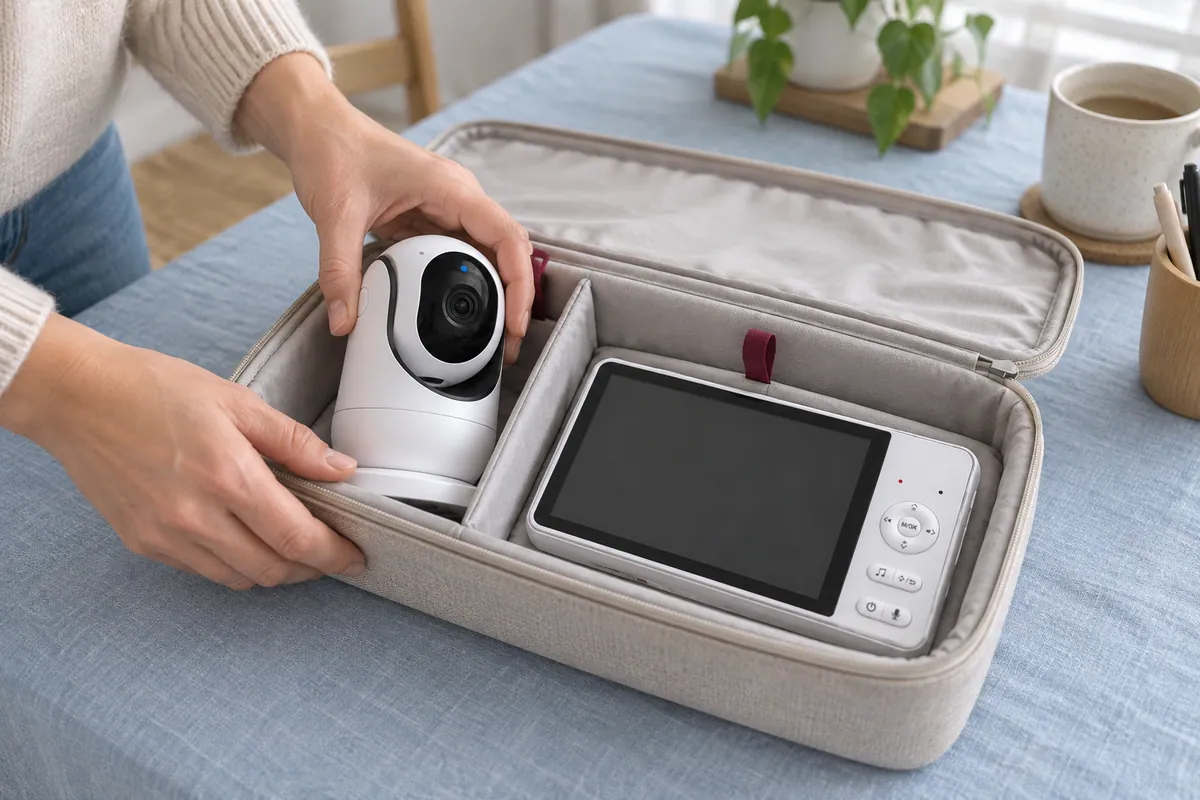
Do not publish internal fastener locations, opening sequences, or component-level instructions simply because a brand plans an authorised route. Those details may belong in controlled service documentation. The buyer-facing requirement can remain simple: specify the authorised actor, permitted scope, retained identity, and required closure evidence. That is enough to tell a supplier what operational interface the product strategy needs without making unsupported safety or warranty promises.
What Does a Sealed Strategy Still Need to Define?
A sealed strategy still needs a support decision. The brand should state which accessible observations a customer or channel partner may provide, the minimum identity information needed, the escalation route, and whether a replacement, return, or further review is possible. It should not use a sealed housing as a reason to collect unnecessary customer data or ask a user to force an opening.
For instance, a support team could be instructed to collect the accessible model identity, the described symptom, and the configuration information approved by the brand, then route unresolved cases under its service policy. That is a process example, not evidence of any specific model's warranty terms or replacement availability. The decisive input is the brand's approved policy for the selected market and product.
How Should This Choice Connect to Product Revisions?
Record the enclosure strategy against the actual revision, not only the product family name. A later change in housing construction, battery architecture, labels, accessories, or internal layout can change what the approved service documentation covers. The decision record should identify the configuration, effective date, service route, owner, and trigger for review.
This differs from an accessory-fit record and a replacement-camera pairing record. Those records ask whether named physical accessories or service cameras belong with a system. Here, the question is whether a housing strategy supports a defined post-sale action at all. Keep the records linked where necessary, but do not collapse their decision criteria.
ANHONG supports product definition, ID and structural design, hardware, firmware, samples, mass production, and B2B after-sales coordination. A brand can therefore discuss the proposed service scope with the physical housing and configuration identity in view. That scope does not establish availability of spare parts, a repair network, or a right to open every unit. Bring the target market, product revision, intended actor, and required evidence to a product-development discussion.
What Should Be Signed Off Before Release?
Freeze the selected strategy, external support wording, authorised actor, applicable configuration, required records, and decision owner. If a serviceable route needs a final functional check after authorised work, define the check and the evidence before the service material is released. If the route is sealed, define the non-opening diagnostic and disposition boundaries instead.
The smallest useful result is not a universal repairability claim. It is a clear promise boundary that support, packaging, and channel teams can use consistently. For configuration-specific OEM or ODM planning, review baby monitor customization and samples, MOQ and lead time before asking ANHONG to scope the relevant sample and documentation work. To define that scope, contact ANHONG with the product revision, market, intended actor, and service boundary.
What Do Brands Ask About Enclosure-Service Strategy?
Can a product be physically openable but still classified as sealed for customers?
Yes. Describe the customer-facing route honestly and retain any authorised access method in controlled documentation. Physical possibility alone is not service permission.
Does an authorised repair route prove that every part can be replaced?
No. Name the permitted action and the relevant configuration. Parts, tools, records, and final checks may differ by project scope.
Should an enclosure change trigger a new service review?
Review it whenever the change could affect access, reassembly, identity, or the approved support wording. Do not infer coverage from an unchanged product name.
Who owns the final service-policy decision?
The brand should name the decision owner. ANHONG can provide technical and project input, but service promises and channel policy remain the brand's responsibility.