What Should Brands Clarify When a Baby Monitor Includes a Physical Privacy Cover?
Clarify a baby monitor physical privacy cover with evidence-based wording, sample observations, and practical B2B product-definition questions.
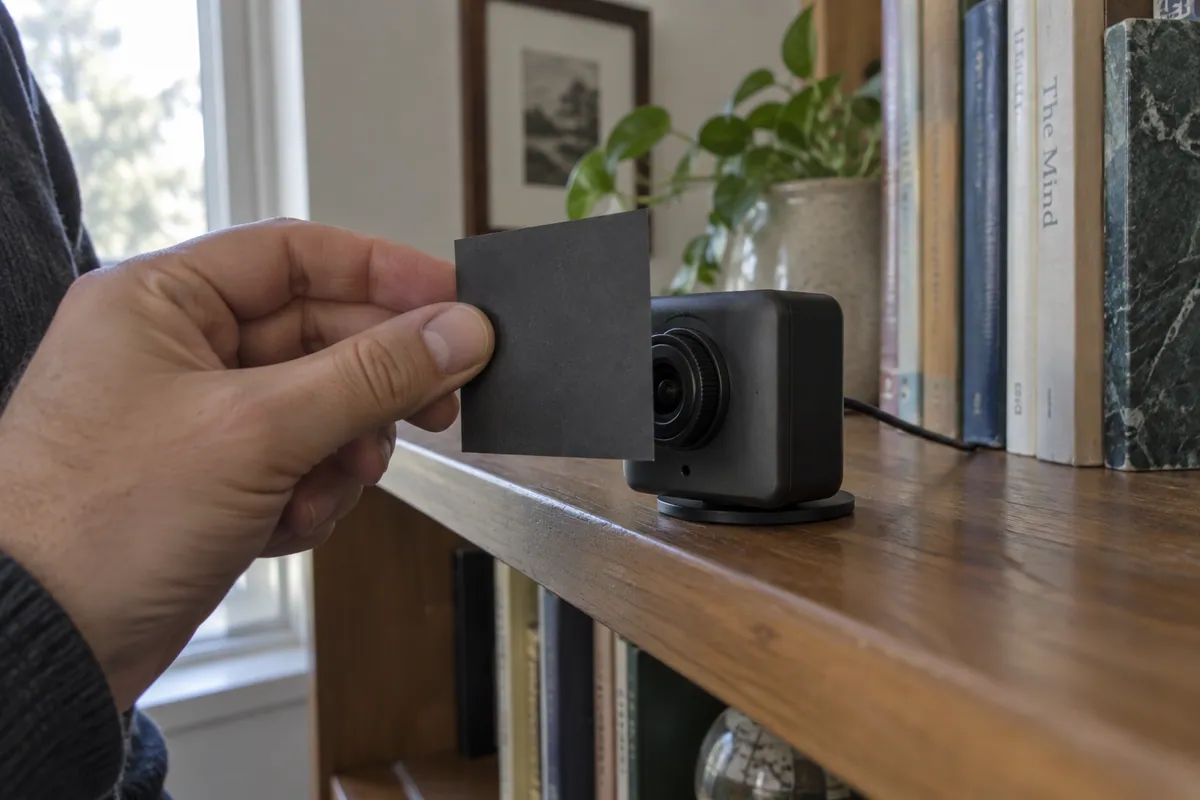
A physical privacy cover should be defined as a visible mechanical condition, not marketed as a complete privacy promise. For a confirmed camera configuration, the useful buyer question is simple: when the cover is in each position, what can the user see, what can the device still do, and what language is support allowed to use? A shutter can be meaningful because a person can inspect it. It does not by itself prove account security, network security, recording behavior, or compliance for every market.
ANHONG supplies baby-monitor platforms including PTZ cameras and can support product definition, ID and structural design, hardware, firmware, App/UI, samples, and quality testing. A brand should still confirm whether a chosen platform actually has a cover, its travel, its indicators, and its intended operating behavior.
What Is the Cover Supposed to Communicate?
First separate the physical statement from the digital statement. A physical statement might be: “the camera lens area is visibly covered when the cover is closed.” A digital statement could concern a displayed status, audio behavior, or an app notification; that needs separate confirmation. Avoid collapsing those statements into “privacy mode” unless the product brief defines exactly what that phrase means.
The distinction matters in retail copy. A customer can see a cover position but cannot inspect a cloud service or data route from the outside. NIST’s IoT guidance treats data protection, logical access, configuration, and cybersecurity-state awareness as distinct capability areas. That supports a disciplined question list; it does not certify a baby monitor or confirm features in a selected sample.
Which Questions Belong on a Physical-Cover Definition Sheet?
| Cover question | Evidence to request | Wording boundary |
|---|---|---|
| What area is mechanically blocked? | Sample photo or demonstration with the cover position identified | Do not infer blocked functions that are not shown |
| How does a user know the position? | Actual tactile, visual, or documented feedback | Do not invent an indicator |
| What happens to live-view materials? | Supplier-confirmed behavior for the configuration | Do not promise recording or network behavior without evidence |
| Can the cover be moved in normal use? | Mechanical operation review and intended-use instructions | Do not claim durability without a defined test |
This sheet is a proposed procurement aid. The completed record should include the exact model/configuration, cover position names, regional instructions, and the person approving the public wording.
How Should a Brand Review the Cover in a Sample?
Ask two reviewers to follow the same simple route. Start with the confirmed camera condition. Move the cover once through its intended position. Record the visible physical result, any actual user feedback, and the state that each confirmed viewing route displays. Then return it and record the same items. The observation should not become a made-up benchmark for speed, force, noise, or privacy effectiveness.
If the cover has a mechanical stop, resistance, or a relationship to PTZ movement, record that behavior exactly as observed and ask whether it is documented. Do not conclude that an unobserved behavior is impossible. The objective is launch clarity, not reverse engineering.
How Can Copy Avoid a False Promise?
Use the narrowest truthful sentence. “Physical lens cover” may be adequate where the mechanism is verified. “Closes the camera’s view” needs a configuration-specific basis. “Guaranteed privacy” is not adequate: it suggests a much wider outcome than a visible mechanical obstruction can establish.
The same restraint should reach sales, packaging, quick-start guides, and support scripts. A support agent needs a clear question path: Is the selected model equipped with the cover? Which position is the user describing? What does the official instruction say? Do not turn an unclear state into a universal defect or a reassurance that exceeds the documented feature.

When Should a Brand Remove a Claim?
Remove or narrow a claim when the selected sample cannot demonstrate it, when the product’s behavior differs by route, or when a regional version changes the mechanical or software scope. A smaller claim that a customer can verify is stronger than a broad “private by design” message that creates ambiguous support expectations.
ANHONG can review a cover requirement within baby monitor product development and customization. For a sample discussion, send the intended positioning, cover wording, and viewing routes through samples, MOQ and lead time or contact ANHONG.
How Should a Review Team Keep Mechanical and Digital Evidence Separate?
Use two columns in the review record: “mechanically visible” and “digitally documented.” In the first column, note only what the camera body makes visible: open, closed, partly moved, or unclear. In the second, copy the actual parent-unit, app, or instruction wording only if it is present on the confirmed sample. This prevents a team from treating a physical observation as evidence of a cloud, account, or recording state.
Repeat the observation after ordinary handling, never an improvised stress action. The purpose is to confirm that the intended user can identify the cover position and restore it, not to create a durability result. If the cover catches, has ambiguous positions, or interferes with a declared camera orientation, record the symptom and configuration. Do not diagnose a tooling, firmware, or assembly cause from one sample.
For approval, ask the brand reviewer to sign off three distinct points: mechanical scope is clear; any digital behavior used in copy is supplier-confirmed; and support wording gives a next action. A yes to the first statement must not silently approve the other two. This matters when a retailer wants a short benefit callout that readers may otherwise take as assurance of comprehensive privacy.
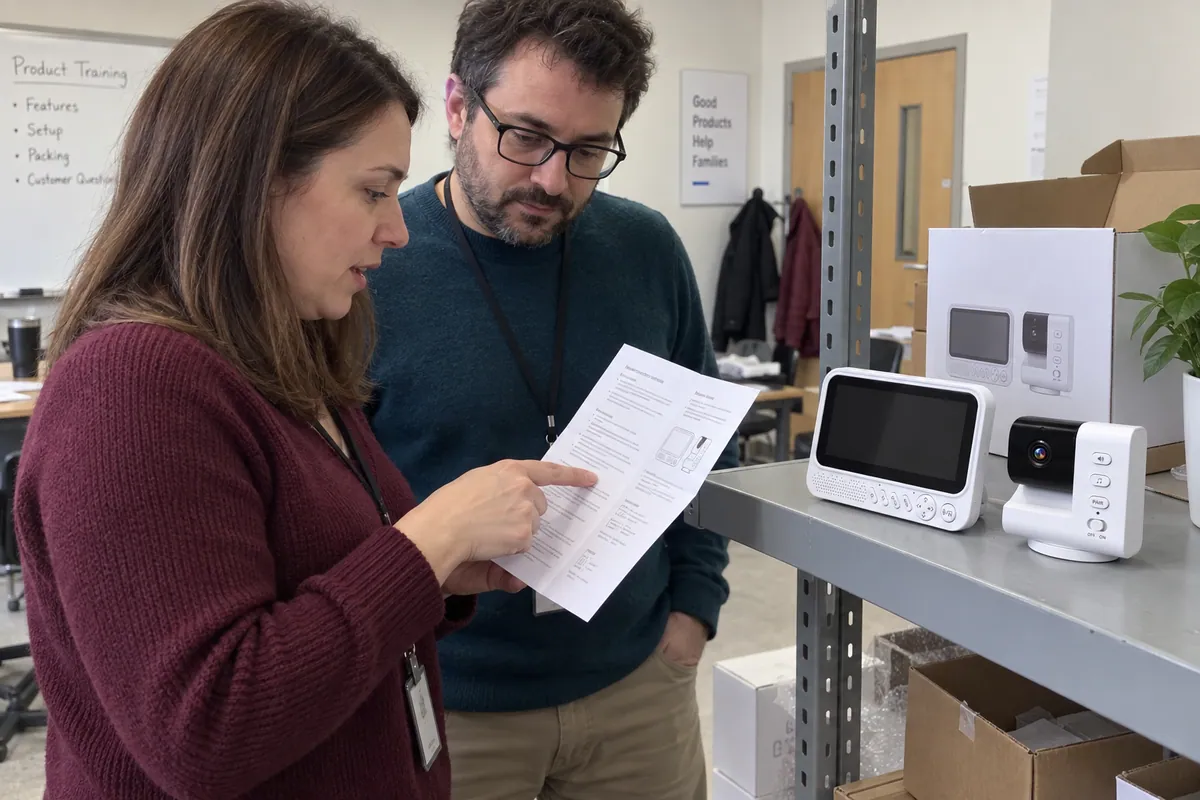
Use a negative test for copy. Remove “private,” “secure,” and “protected” from a proposed sentence and ask whether the remainder still identifies a visible mechanism. If it does not, the claim probably covers more than the mechanism can support. Replace it with a factual description and reserve broader trust statements for separately reviewed access, data, and security materials.
What Else Should Brands Ask About a Physical Cover?
Does a physical cover prove that no data is transmitted?
No. It proves only the verified mechanical condition. Data, access, and recording questions need separate evidence.
Can a cover be called a security feature?
Only with carefully scoped, evidence-supported wording. Do not use the mechanism to imply comprehensive cybersecurity.
Should the app show a cover state?
Ask whether that behavior is implemented in the selected configuration; do not assume it from the presence of the cover.
Can the same copy be used for every market?
Not automatically. Check the selected model, instructions, and target-market requirements before release.